
Abbreviate | Cindy Bradley Interviews Sarah Fawn Montgomery
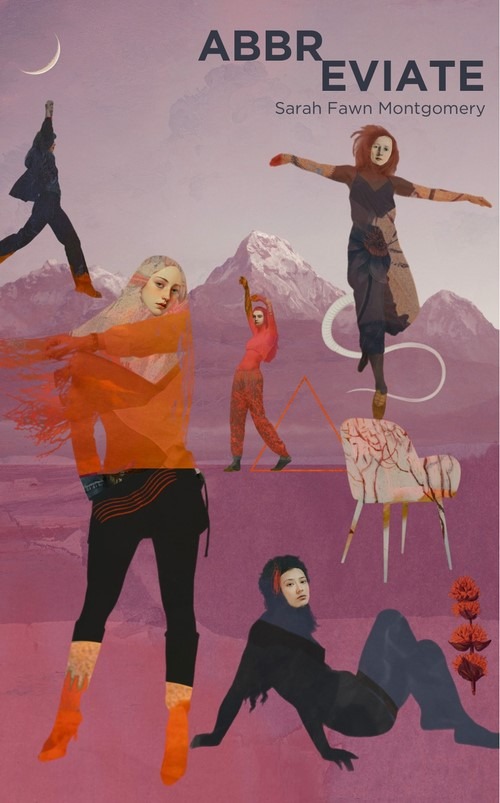
Sarah Fawn Montgomery’s Abbreviate is brilliant in its execution—a little collection of small essays that explore girlhood and womanhood and examine the ways girls and women feel small. With lyrical language, Sarah Fawn beautifully and starkly exposes the injustices girls and women have endured generation after generation. Holding a conversation with Sarah Fawn on this topic was important and a pleasure.
Cindy Bradley: Sarah Fawn, I’m so excited to talk with you about your wonderful new book, Abbreviate. I alternately devoured and wanted to linger in the pages of your small but mighty book and can’t wait to dive into our conversation. I have so many thoughts! You’ve dubbed Abbreviate your “hybrid study of smallness.” How did this hybrid study come about? Did you plan to write essays on the injustices of girlhood/womanhood, or did the essays rise spontaneously?
Sarah Fawn Montgomery: Thank you so much for the kind words and for speaking with me! I categorize this collection as a hybrid study of smallness because the pieces blur genre boundaries. Some read like flash essays, some like long poems, and some like works of fiction, though everything is rooted in the autobiographical, everything drawn from my memories and experiences, which is why the overarching genre designation is nonfiction. But genre, like so many other things, including gender, is a construct, so I wanted to play with this in the book. The collection itself is also quite short, again subverting expectations about what constitutes a book. I’ve also always been fascinated with the ways form influences meaning, so these small pieces and this small collection reflect on the ways girls and women are expected to accept smallness in the world.
Most of these pieces happened spontaneously, driven by memories I wanted to explore. It wasn’t until I published quite a few of these pieces in literary journals that I realized they were orbiting similar themes about the ways girls experience violence and the ways women are expected to tolerate abuse. Several of these pieces began as my earliest attempts into writing fiction, though they are markedly autofiction, another kind of genre blurring.
CB: “Genre is a construct.” Yes! I love this, and I love what you say about this small collection “subverting expectations about what constitutes a book.” I love how you challenge both the reader’s and the industry’s expectations with this collection. What I’d like to do is talk about a few of the individual essays and the themes they present. One of the themes Abbreviate explores is escape. In the opening piece “Stomp,” we learn that your aunt “makes her living selling escape. She paints on her smile and shows her teeth like the men can hear it over the phone.” Married to a Vietnam vet with anger issues that will soon become impossible to ignore, your aunt takes advantage of a weekend he’s away to teach you an important lesson: how to learn to explode, via a rocket launch: “She instructs me to jump as high as I can, then fall hard. She shows me how far a rocket can escape if I stomp, use my whole body to send it soaring.” I love how when you’re out in the field your aunt inhabits a large space as she “makes her body as big as she can, strong enough to ignite” and insists you learn to explode, to find an outlet for the multitudes of emotions women are conditioned from birth to hold in. And the escape that comes from this explosion. This is an essay where big movements—jumping high, falling hard, taking up as much space as you can—is seen as a good thing. I love how out in the field your aunt “uncoils” as she makes her body as big as she can; she can be herself, which is particularly touching knowing how volatile things were at home. Can you discuss what you learned about escape from your aunt and this experience?
SFM: This essay is one of many in the collection that explores domestic violence. A common refrain in simplified narratives about domestic violence is “Why didn’t she just leave?” But anyone who has experienced this kind of violence knows that it is never that simple. This essay explores my aunt’s ability to escape through imagination. She sold miniatures for a living, things like dollhouse furniture, model cars, and stomp rockets, and her movement between small and large, fantasy and reality, reinforced the concept that nothing is permanent. She could shrink just about anything down to model size, yet things like rockets, even when miniature, still had the power of their larger counterparts. And many of the things she preferred to build focused on movement, things like boats, motorcycles, and airplanes.
This idea of escaping through imagination is something that struck me early on as a child, and as you mentioned, carries and connects many of the essays in this collection. I write a lot about predatory men in this book, including family members, friends, teachers, partners, and strangers, and while the specifics of each of these experiences are unique, the need to escape is inherent in each. Escaping though imagination, including through the act of writing in this collection, has always been a way for me to believe survival was possible.
CB: You do an amazing job illustrating the nuances and complicated dynamics present in these troubled relationships. It’s evident you and your aunt share a special bond, vivid imaginations, and the fact that your aunt sold miniatures for a living, especially when viewed from the lens of your miniature book, is poetic justice.
Speaking of miniatures, “Pocketed” is a deep dive into the heart of Abbreviate, where the tiny Polly Pocket doll represents feminine feelings of being small. Polly is plastic, and perfect, with a pet dog and a cat, with compact plastic houses shaped like a star, a flower, a seashell, a make pretend world where smallness is celebrated, and everything has its place, and nothing is out of place. You write that “Polly makes anyplace a home…Your house is getting bigger, like the unhappiness is pushing out the walls. Or maybe it’s you are getting smaller.” And the unhappiness in your world is growing: one neighbor spies through the window while another insomniac neighbor claims it’s the end of the world. All that’s left for a girl to do in the midst of so much uncertainty but to shrink. You write about it beautifully:
“You crouch when you undress, try to hide from the man peering inside your pastel room.”
“You crouch smaller when you take out the garbage, bones splitting the bag, revealing the gnaw where someone sucked out the sweet marrow.”
“You crouch smallest to escape the neighbor’s arms reaching over the fence towards you, pleading, ‘Let me save you, girl.’”
Something interesting and unexpected happens as your surroundings become more and more tumultuous. Tiny Polly grows bigger and bigger while you shrink smaller and smaller until you are small enough to climb into Polly’s house, where the tiny dog and cat meet you, and the teeny bed is big enough for one. No neighbors. No fighting. You settle in and “Grab the lid, snap the compact closed. Now you are hidden, safe in this brittle plastic heart.” What a gorgeous extended metaphor that captures what Abbreviate is all about. The use of second person is such a great craft choice, creating just the right blend of detachment while pulling the reader close. I’m right there with you climbing into Polly’s pocket house and shutting the lid. How did you come up with the idea for this essay, and what does it mean to you?
SFM: This piece actually began as one of my earliest attempts at writing fiction, though it is probably more accurately described as autofiction or a hybrid work, because every detail in the piece is true to my lived experience except the metaphor of shrinking while my Polly Pocket house grows. I was really interested in writing speculative nonfiction—or fiction, or hybrid prose, or however you want to classify it—because I wanted to use this metaphor to describe the feeling I’ve had throughout my childhood and life that is difficult to explain without the use of the strange.
I’ve always felt a detachment from the expectations put on girls and women, a compulsion to shrink in order to go unnoticed and ensure safety. So many things in the world are dangerous to girls and women, and so shrinking became early on a way for me to demonstrate obedience. Invisibility and hiding were seemingly active moments of agency, though they are also dangerous in their self-erasure. I’ve also always found that children and toys are better protectors than adults, which is why the young girls in this collection protect each other, and why I find safety in Polly Pocket as opposed to the adults around me.
CB: You articulate the push/pull of shrinking and invisibility so well throughout the collection, the times when, as girls and later as women, we hide as a protection mechanism vs. proactive agency.
“Rainy days, we practice giving up.” From the moment I read this first line of “Giving Up,” I was instantly hooked. Once again, we’re in junior high school: it’s raining, and the girls are stuck inside. There are so many layers of and so many ways of girls giving up-giving up the clothing they want to wear because girls’ bodies are meant to be covered. Girls navigate their changing bodies and learn “how to shave our legs without stripping slivers of skin or how to suck in our stomachs so our ribs show like frightened wings to help us escape.” More shrinking, more escape. When it rains, “we give up the chance to go outside at all,” and watch the boys as they race along the wet blacktop, jump in every puddle, look up to the sky while the girls look up to the skylight, cram their small bodies into their small lockers on a dare. There’s a tough scene where you write about how the PE teacher tests the girls’ bodies, pinches the fat on their arms and legs, then calls out their measurements for the entire class to hear, tests to see how far the girls can bend, counts their vertebrae to make sure they’re growing straight. “When we run out of tests to fail, we line up single file down the rows of lockers, trying to call to each other over the top, though our voices vanish overhead like specters.” What a hauntingly beautiful line. That line, and this one, “We wave our hands over our heads like frantic birds, hollow bones flying nowhere” are two of my favorite lines in the collection. Your lyricism and penchant for poetics, set against the often heartbreaking and humiliating adolescent years, is just stunning. This essay floored me. I think of what so many women have given up, just even at an early age, just by virtue of being female. Can you describe your impetus and process for writing this piece?
SFM: This piece began because I wanted to write about the ways young girls protect each other when adults will not. Many times, female friendships are our first loves, a great source of intimacy and solidarity, a fierce community that is somehow silenced by the rest of the world. I wanted to explore the ways young girls protect each other, even if they will not protect themselves, because girls learn early that their bodies and minds need correction. The girls in this essay operate as both a unified collective and as isolated individuals who are learning, each day in school, that there is something wrong with them. The deficits of their bodies and the ways they must shrink in order to obey gendered expectations is never more apparent than in PE, where much of the essay takes place. I focused the piece here because the intimacy of the locker room was a naked vulnerability that counters the ways girls and women are expected to cover up outside the gym for the comfort of others.
I was also really fascinated by the presidential fitness test, a national physical fitness testing program that ran from the late 1950s until 2013. There were so many ways to “fail” this test, including being unable to jump or stretch far enough, having “too much” body fat or “too little” muscle tone, even having scoliosis. This test reinforced the idea that girls’ bodies were inherently wrong. Many girls failed various components of this testing, and it wasn’t uncommon for girls to be stressed, sick, or scared during testing time, blaming themselves when it was really the test that was at fault. I failed nearly every measurable data point and was ridiculed for not trying hard enough, though 25 years later I learned I had a genetic disability that led to this supposed failure. Still, according to the test, I was somehow at fault for my body.
CB: Middle school is such a tough time, and middle school PE, with changing bodies and flaming insecurities, is its own particular adolescent torment. You write about your middle school experience in the 1990s, and it immediately resonates with my middle school years of the late 1960s, roughly thirty years earlier, and I think of how now, thirty years later in 2025, 12–14-year-old girls are experiencing the same things, in a slightly different form. It’s incredibly sad to think of all that girls endure and are expected to endure, yet also incredibly hopeful to think of the seeds of resilience and determination that are planted in these conditions.
And speaking of the Nineties, your pop culture references are spot on! You’ve captured the angst that encapsulated the decade that saw Kate and Leo, Brenda and Dylan, Alanis, while also inserting 90s staples like Ranch Doritos, Pizza Hut, and video games like Mario Kart and Dungeons and Dragons.
The titular essay pulls these threads together and weaves a tapestry rich with details and meaning. Abbreviate examines identity and the different ways identity can be stripped away. One way you examine this is through names. You are one of five Sarahs in a graduating class of only sixty students: “You can throw a sticky hand or Day-Glo yo-yo and strike a Sarah without even trying. We are as common as hair scrunchies or American Girl dolls and their blank faces.” How to deal with too many Sarahs, too many Brittanys? “We abbreviate.” The girls become letters, but “Boys are not letters. They are too big to take up such a small space.” I’ll let the readers discover how all this unfolds, but I will say, I found all of this so interesting. And I love your best friend who holds you when you feel invisible and declares you deserve to be special. And what she does, not accepting your smallness, demanding you become mythic, “girl and creature,” truly does end up magical.
I’ve always felt that names are so important, both the names we call ourselves as well as the names we call others. Sorry for the long ramble, but like I said, I’ve got thoughts and would love to hear yours—anything you’d love to share about the ways we abbreviate, whether self-imposed or from the expectations of others.
SFM: I absolutely agree! Names are essential to our identities and to the ways we feel we are allowed to move in the world. This is why being reduced to “Sarah M.” or just “M” as a child was such a profound experience for me as I began to learn about the ways gender enforces power dynamics, while boys with the same name were referred to by their last names. Teachers also refused to call students of color by their correct names. Being abbreviated this way led me to accept erasure early on, which showed up in dangerous ways for the girls around me, leading to things like disordered eating, sexual abuse, and toxic relationship dynamics. Perhaps it is odd to attribute this violence to the simple act of abbreviation in a school classroom, but refusing to acknowledge a child’s name is the same as refusing to acknowledge the child, their agency, their autonomy. Without these, it is no wonder girls learn to accept abuse.
There are many ways that girls and women abbreviate or are abbreviated by others, even just in terms of name. We are still regularly called by the incorrect name. As I write about in the essay, I’ve been called “Sarah Fawn” for more than 25 years, yet many still refer to me as “Sarah,” no matter how many times I correct them. Being called Miss or Mrs. operates the same way. I did not take my husband’s name, and yet in the decade since we’ve been married, I have consistently been addressed by his last name no matter how many times I insist that this is not the case.
Man spreading, mansplaining, medical mistreatment, and political misogyny are also ways we are abbreviated in order to deliberately strip us of our right to space and our power. Domestic labor, child rearing, and the lack of societal support for caregivers means women are often reduced to the duties they can perform for others. Diet culture and beauty standards do the same, turning our attention to dedication to the body rather than dedication to any of the other aspects that would make us whole. There are countless other ways we are abbreviated, an act of violence that increases for girls and women of color, LGBTQ+ girls and women, and disabled girls and women, all of whom are increasingly under attack.
CB: It’s heartbreaking to think of the myriad ways in which girls and women are degraded and dismissed, leading to the diminishment and abbreviation that follows. You learned the importance of names at a young age and have been dealing with others who refuse to call you by your preferred names for more than half your life. This disregard and disrespect regarding names becomes both a blatant example and a blatant offense when the speaker is made aware of your preferences.
“Men Teach Me How to Play Dungeons and Dragons.” I’m going to skip ahead through high school and college to the last essay in your collection, where you use the popular table and video game to leave your readers with a valuable lesson. The essay opens with the first rule of the game, “to listen.” The man explaining the rules to you decides to be a powerful Wizard, you a druid healer, who exists to “fix others.” The second rule is to “follow directions,” which proves to be difficult, especially when faced with two paths, and one may be “salmon colored and scented of marshmallow.” You write: “I hurt from the effort of remaining motionless” as you try to rein in your impulse to alternately rest and wander free. “I am looking for places to deviate from the path. I am tired of walking in a straight line, and would like, instead, to explore. To build my character.” I love this so much.
“Men Teach Me How to Play Dungeons and Dragons” is an essay in which feminine intuition eclipses masculine logic, and no matter the odds and obstacles, women will prevail. I see this piece as a modern-day fable, a cautionary tale in which women rest and then rise. Can you talk about the frame of Dungeons and Dragons, and how you were inspired to write this essay?
SFM: This essay was inspired by my experience learning to play dungeons and dragons with an old friend and our husbands on New Year’s Eve just after the 2016 election. Immediately, my friend’s husband put himself in charge, dictating rules, some of which were from the game, and most of which were just his own preferences. I watched as he directed his wife how to imagine her character, correcting decisions he didn’t agree with, even though the game is one of creativity, and she was free to do whatever she wanted. When he turned his direction to me, growing increasingly frustrated when I would not obey his orders, would not use my character merely to support his own, I began to grow frustrated by his bad behavior, and I pushed back. So much of his behavior reminded me of what I’d seen during the election and what would only increase in the years that followed, and though D&D is a game of imagination, I saw the real-world consequences of allowing men like this to control women’s thoughts and actions.
During the game, I ultimately decided to reject these commands and forge my own narrative, even if it meant angering the man, which it did, causing the kind of childlike tantrum and overt aggression that many women have experienced when they question a man’s self-appointed authority. I replicated this encounter for readers by structuring the piece like the game itself, taking them along on the quest, placing them in my perspective so that they must make decisions, not only within the game, but also in their interactions with men like these. I wanted readers to experience what it is like to choose another path, even when patriarchal society insists you do not have the right to do this. Writing this essay was also a way to reclaim the experience, which was incredibly demeaning, making it instead an act of resistance.
CB: What a wonderful way to empower yourself, and women, by reclaiming this experience. Your craft choice to structure the essay like the game, taking readers along on the quest, is skillful and nuanced, and by the end, triumphant.
You’ve amassed an amazing catalogue of work, ranging from poetry collections to fiction to memoir to your new craft book, Nerve: Unlearning Workshop Ableism to Develop Your Disabled Writing Practice, a book that challenges power and privilege in the creative writing classroom and ableist writing workshop to make space for disability, chronic illness, and neurodivergence. This book is urgently necessary, now more than ever, so brava for writing it and for all your literary accomplishments. One thing we are always interested in is a book’s journey to publication. What was Abbreviate’s journey to publication with Small Harbor Publishing/Harbor Editions and on any other projects you’re currently working on?
SFM: Thank you! Abbreviate arose quite naturally because I was writing and publishing pieces that coalesced around similar themes, though I published more than half the pieces in this collection before I realized I had a book. The collection’s hybrid nature and small size, however, made it difficult to place. Not only do publishers typically prefer books that fall neatly into genre categorizations, but they also prefer works that can be categorized as full-length or chapbook, depending on how genre impacts page length expectations. I was adamant that this book, which far exceeds the length of the chapbook, but is much shorter than my previous books, retain its smallness and hybridity. Small Harbor Publishing/Harbor Editions was the perfect fit for this collection because of its focus on hybrid texts.
I’m currently writing a lot of poems that center on disability and chronic pain. I began writing these after suffering several severe spinal injuries a few years ago, which left me with permanent nerve damage in all four limbs. I’ve been incredibly fortunate that these poems have not only allowed me to process the experience and my ongoing chronic pain, but also they have been so well received by others. I’ve published around 40 of these poems and written three or four times as many as that, so at some point soon, I may focus on trying to gather them into a collection. In the meantime, I’m just enjoying the process!
CB: Speaking on behalf of your readers, we’re enjoying your process, too! You’ve lived through the experiences you write about in Abbreviate. Your friends, classmates, family members have all lived through these experiences. Often when we’re going through something, especially when we’re young, we don’t have the perspective that time and distance grant to fully understand what we went through. I’m curious what you learned from writing the essays in Abbreviate and what would you like to say to anyone who is grappling with feeling small, who is inhabiting small spaces and claiming small stories?
SFM: Writing the essays in Abbreviate revealed to me the utter violence of my girlhood. I don’t think I fully accepted this until I began writing these essays because I’d always been told that girls should be seen and not heard, should not complain or blame, should not be weak or emotional. So I kept silent about many of these stories throughout my life, and this silence created a sense of acceptance. But there is nothing acceptable about the stories I share—the domestic violence perpetuated by many generations of men in my family, sexual abuse by teachers when I was in school, sexual assault when I was in college, sexual harassment as an adult. And it became clear to me while writing these essays how much repressing these experiences normalized them, as well as how they ricocheted through my life and the lives of the girls and women around me.
If I could say something to my younger self, to the friends I’ve had throughout my life who have felt insignificant, to anyone reading who is feeling small, it would be that we have the right to take up space and that doing so is an act of reclamation and resistance. Taking up space is a form of agency in a world that increasingly seeks to take this away from us, and there is nothing more powerful in the face of this erasure than to claim our place. And when we take up space—even when we feel as though we do not have a right to do so or do not even know how—we will grow to fit. We will become who we have always been meant to be but never quite believed was possible.
CB: “We will grow to fit.” This is so beautiful, and so inspiring. Thank you so much, Sarah Fawn. Reading and talking about Abbreviate has been such a pleasure. I like to end in a fun and light way, so here are a few quick-fire questions to wrap up this delightful conversation.
Describe your happy place.
Walking with my dog so deep in the woods the sunlight barely filters through the trees and the sounds of modern life vanish so that all that is left are mushrooms and moss and the simple sounds of our steps on the trail.
If Abbreviate had a soundtrack, what songs would you include?
“You Oughta Know” by Alanis Morissette, “Spice Up Your Life,” by The Spice Girls, “Stupid Girl” by Garbage, “Fast as You Can” by Fiona Apple because so much of this book takes place in 1990’s middle school.
You write about place and landscape so beautifully. What one word or phrase depicts each of the three places—West Coast, Midwest, and East Coast—you’ve called home?
I love this question because I’ve lived in and written extensively about all three regions in my essay collection Halfway from Home!
West Coast: warm
Midwest: welcoming
East Coast: wild
Favorite recent read?
Too many to list! Some favorites I’ve read this year include Stag Dance by Torrey Peters, Disorientation by Elaine Hsieh Chou, The God of the Woods by Liz Moore, Such a Fun Age by Kiley Reid, The Three Lives of Kate Kay by Kate Fagan, Blob by Maggie Su, Colored Television by Danzy Senna, Penance by Eliza Clark, The Float Test by Lynn Steger Strong, and Audition by Katie Kitamura.
Current obsession? Could be anything—food, drink, book, song, you name it!
Gardening! Nature has always been a solace for me, and I find gardening to be incredibly restorative. Over the past few years, I’ve become as obsessive about my gardening as I have about my writing, finding the creativity in both very similar. I really enjoy playing with shape, color, texture, bloom time, winter interest, and the many other elements that go into gardening the way that I enjoy playing with the elements of craft. I also appreciate how gardening reminds us that nothing is in our control, that despite our best efforts to make something beautiful, we are still one small part of a very large world. Learning to let go and see the beauty in what nature provides is a balm for these chaotic times.
Sarah Fawn Montgomery is the author of the flash essay collection Abbreviate. She is also the author of Nerve: Unlearning Workshop Ableism to Develop Your Disabled Writing Practice, Halfway from Home, Quite Mad: An American Pharma Memoir, and three poetry chapbooks. She is an Associate Professor at Bridgewater State University
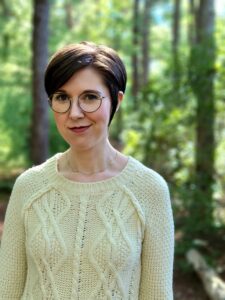
Sarah Fawn Montgomery is the author of the flash essay collection Abbreviate. She is also the author of Nerve: Unlearning Workshop Ableism to Develop Your Disabled Writing Practice, Halfway from Home, Quite Mad: An American Pharma Memoir, and three poetry chapbooks. She is an Associate Professor at Bridgewater State University