
On Love, Loneliness, and a Single Duck | Montserrat Andrée Carty
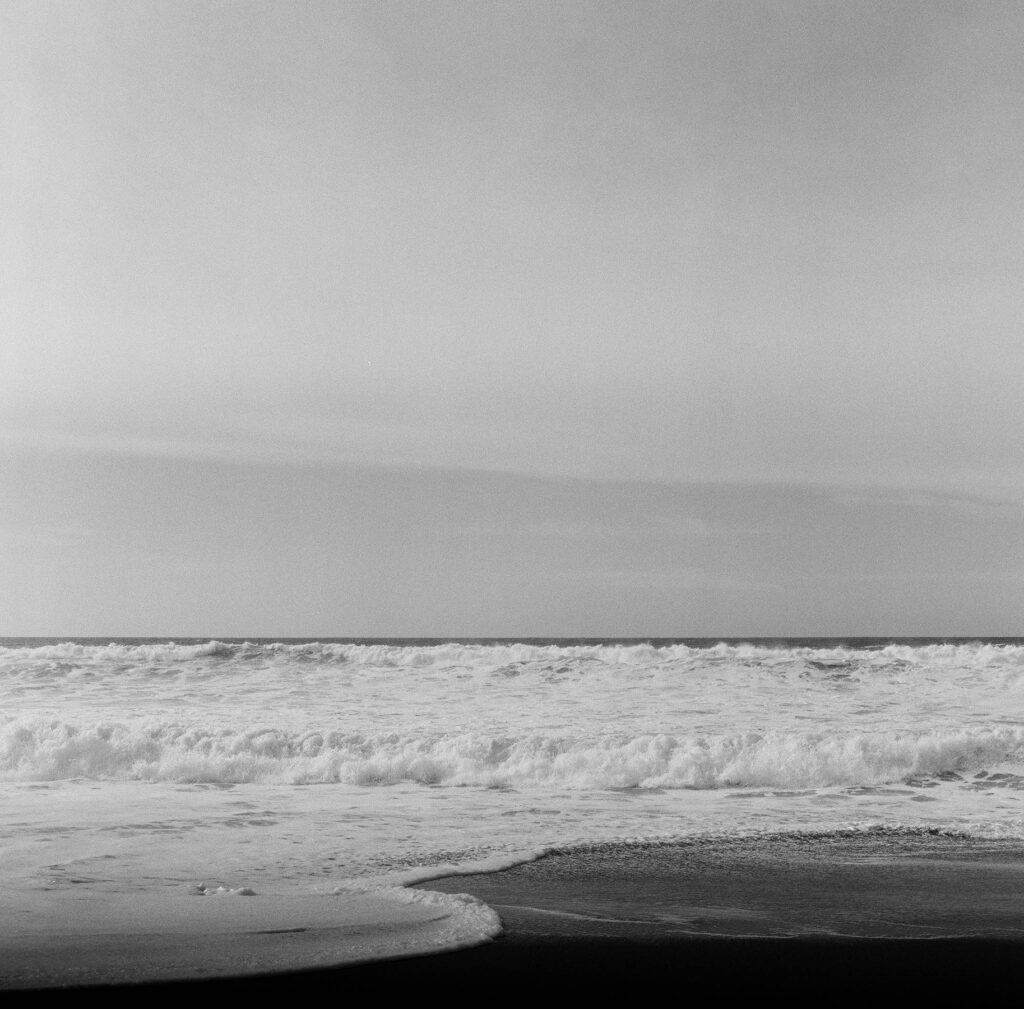
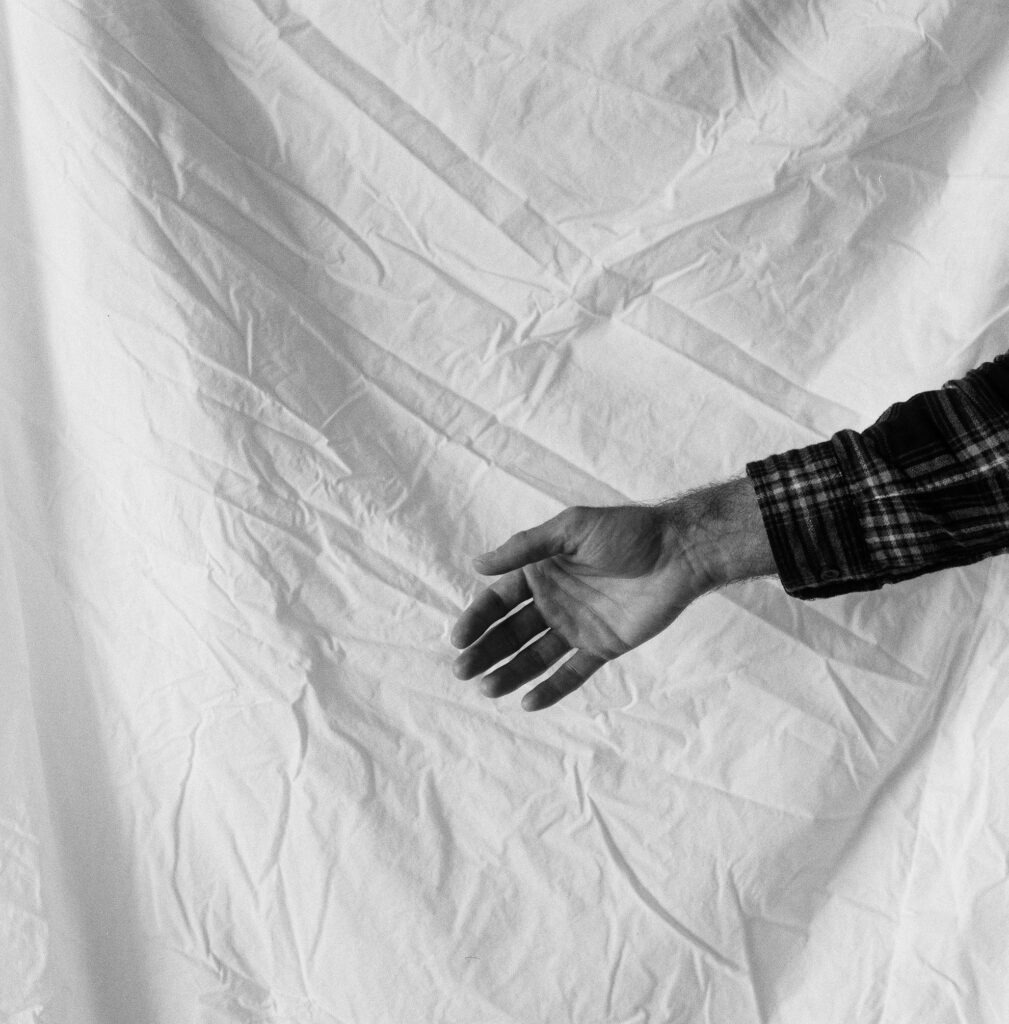
Photos by Montserrat Andrée Carty
I can’t stop thinking about a duck. I am in Deià, Mallorca, and on the path toward my friend Joan Pau’s house, where I am staying. Each day, I pass a single mallard duck. She has chocolatey brown feathers with thin streaks of white, as if they were painted on. She looks pensive, seems acutely aware of her surroundings by the small leafy pond that she seems to watch over. I kneel down toward the water’s edge, and when I say Hola Pata, she looks toward me as though she understands. As though we somehow share a connection. The village has animals I recognize, some of the dogs, cats, sheep and burros I have known for years. Sometimes, I come back after one or two years away and they are no longer here; others I meet anew each visit. There is a tuxedo stray cat I know where to find, on one particular roof, or tucked under the lemon tree when it’s raining. He gets attention every time tourists pass by which, these days, is often. The two burros on the path to the cemetery I greet each time I go to visit my grandmother’s grave. This duck though, I don’t remember from years past. Maybe because the last time, six months ago, there were many, not just the one. Joan Pau and his girlfriend Mar confirm that yes, at the pond by the house there were many ducks, but they all left, and this one stayed. Mar says the other ducks left her; Joan Pau thinks no, she decided to stay. I tend toward worry, so I think more like Mar. Either way, it makes me ache every time I see her drifting in the water’s ripples, alone.
*
Recently, I was filling out a scholarship application, and under marital status I wrote that one word that is nearly as familiar as my own name: single. One little word that begets pity, questioning from friends and acquaintances: “How are you still single?” “I know the perfect guy for you!” “We need to set up your Match account, today.” As if it were a problem that needs intervention, fixing. “Es una locura,” said my friend Alejandro, shaking his head while we were sitting in a cafe in Mallorca. He doesn’t understand and makes exaggerated gestures to emphasize this, voice quieting at “but you are so pretty–it doesn’t make sense.” As if prettiness were a guaranteed ticket to finding one’s great love. He is trying to be kind, I know, but inside I recoil. When I get those looks of pity or confusion, the constant questioning, the well-intentioned but uninvited support, I want to sneer back: Being single, selective, refusing to settle is not a problem. I am an independent woman with a full life. A life that does not lack love. Being without a partner is not something to overcome, to fear or to solve. Though there is what I don’t say, on a form, or to these voices that are loud with opinions and concerns. Something I only ever whisper to myself.
At the hospital a few years ago, after I’d nearly fainted from what I believe was heat-stroke, they gave me intravenous fluids, but they couldn’t get my levels up, and my blood pressure was still too low. I stayed the night. Stayed the night as if I was a houseguest. Those hours my body trembled in a fetal position, alone with a thin polyester blanket and socks, in that tiny, sterile room. I somehow knew, this time, my sickness was not so serious, that I wasn’t going to die here, not that night, though no one told me that was true. But I was alone, this I also knew.
A different year, I’m in another hospital bed, with a quiver running through my body that won’t stop, as though I were a child out in the cold without mittens. The shaking, is it from the bronchodilating meds pumping through me or the racing panic? It could be either. Maybe both. From age 25—when the asthma and anxiety began to worsen—to 35, there had been a variety of hospital beds, but they all looked and felt the same. A woman comes in, wheeling a cart with a computer ready to ask for my emergency contact, which will be a rotating cast of characters: Sister 1, Sister 2, Mom, Dad, a housemate, a friend. After the necessary paperwork is complete, they are gone. I’m alone again, surrounded by oppressive hospital beige, being treated with a stream of albuterol through a nebulizer that makes my heart race, and hands shake. The physical shaking, this is something that I know will pass. What doesn’t quite pass is that buried sadness that I’ll turn my head, and when my cheek hits the pillow, I will feel it—the presence of absence. There is no one there. Only a veiled vision of a kind man whose face I don’t yet know, next to me. I feel his steady hand hold my unstable one, while the other might brush a wisp of hair out of my face, and for just a flash I don’t feel alone. I hear a faint chattering on the other side of the baby blue curtain. A woman I can’t see has just been told that she must abstain from sex for 48 hours. “Forty-eight HOURS?!” she yells. Try four years, lady, I think. Once I have clearance to leave, with a plastic hospital band still hugging my wrist, I wait alone in the dark street for my Uber to arrive.
*
The longing, it’s not only in emergency situations, of course. It’s when I have an exciting piece of news I’m bursting to share but my sisters are out to dinner with their partners, my friends are with their kids or partners too, and well, Instagram isn’t the place I’m seeking to share the news. It’s when I put on a new shade of lipstick and yes, I did it for me, but oh, I’d love to have a guy I’m crazy about tell me the scarlet red is beautiful on my lips. It’s when I feel eager to prepare a meal for two late at night, to place on a table market flowers and tea light candles. To make someone soup from scratch when they’re not feeling well, to listen to every tiny detail of his day, to hear his favorite lines from the book he’s reading. To circle my hand across a curled back when he’s wrestling sadness. It’s when I sit in the aisle seat and the couple next to me holds hands during a shaky landing. I can’t help smiling at the love between their fingers, but something inside me aches a little, too.
Evening arguments about finances or dishes. Knowing every freckle, every shade of a person’s sadness. I want to start a life with you—or I hope our kids get your dimples and intelligence. The holding back hair when I’m sick, the holding of hands during airplane landings.
I have never known this kind of love.
Sometimes I let myself daydream about my future romance. Of a man who is kind, honest, good. Whose arms wrapped around me feel like a homecoming. But in my most insecure, self-pitying moments, I can’t help but think, when I feel the depth of that love for the first time, it will already be well-worn for him. He will, more likely than not, have already experienced a love of my life with someone else. Ours will be a secondhand love.
*
It’s been a decade since I had a serious boyfriend. There have been brushes of romance, dinner dates by dim light, handholding at dusk in the back of a van, on city streets, too. I’ve felt flutters of excitement, the ecstatic feeling of this might become something special, but it’s been that long since I had the steadiness of a relationship. In those days, even though it wasn’t the relationship I really yearned for, I looked at wedding dresses, shopped for rings. Tried on a life that didn’t fit. They say to girls in the United States, “Every little girl dreams of her wedding day.” A white dress with frills, bridesmaids, and engagement parties were never something I recall wanting. Love, though, is a different story.
When it began, where it came from, and when it stopped, I don’t quite remember, but for some part of my early teenage years, I held a routine. Before drifting into sleep each night, with eyes closed and consciousness slowly slipping away, I’d run through the things I was feeling thankful for. Thank you for my health, I’d whisper. Thank you for a bed to sleep in, for gymnastics. And while these items would shift from season to season, I’d sign off with a wish that stayed the same. In the way a child, promising she’s been good this year, asks Santa Claus for one big important gift, I came to the table with my one great desire: “Please, bring me love.” And though I didn’t kneel or clasp my hands, it was something like a prayer. Even when this routine faded, the asking for love never did. I simply found other vehicles for my plea. When an eyelash slipped to my finger in the bathroom, when the flicker of birthday candles warmed my face, when I stumbled upon a wishing well full of pennies, it was love I asked for, a secret wish I recycled. Hungry for love, not knowing my place in the world, in my school or my home. I imagine it was romantic love I was wishing for, but I can’t be sure. What I know is that love seemed to be the antidote to the loneliness I felt in those fragile years. But slowly I came to understand it wasn’t necessarily a boy’s hand that would be the answer, it was being seen and understood, an authentic connection that I desired most. And maybe this is why I can’t stop thinking about the duck.
*
I hear people say: “I just haven’t bumped into my person yet.” And in some ways, this is how I feel. But I know, too, that I am no victim of circumstance. I have passed on lovely, kind, available men with easy love to give, and I become frustrated with myself: how could I both want something so much and fear it in equal measure? “I never thought you were available,” said one friend who I crushed on for half a decade when I gathered the courage to ask him why nothing ever happened between us, despite our professed mutual attraction. By then it was too late (“and now, I have a girlfriend,” he said softly). What is it in me that fears this intimacy I crave? I still do not know. I speculate: perhaps, most likely, something in my wiring from childhood. But if it is wiring, then I hope I can find a way to rewire this part of myself that holds back in fear. At weddings when it’s time for the bride to throw her bouquet to eager hands, I stand in the group, but stay on the side, making no effort to catch it but holding some hope that it might fall into my palms anyway. “No te esperes un Príncipe” my friend Anna, who is twice my age in both numbers and wisdom tells me. But what if it’s not a prince I’m waiting for, just someone I feel excited about? Because these days, in my bed each night, a weathered book open in my palms, I am alone, but not lonely. Even in the moments I long for a partner, settling for a man I don’t feel attracted towards and safe with—whose warm arms don’t feel like shelter—feels worse to me than being alone.
When I was a young girl, my dad took me fishing on a camping trip in New England. When I caught my first trout I was elated, jumping up and down, but when it got closer, I squirmed, dropped the fishing rod and ran away. A few years later, there would be a freckle-faced boy whom I had crushed on for a year. When he summoned the courage to ask me to the sixth-grade dance, I declined his invitation. “See I told you she’d say no,” he said to a friend nearby, defeated. Why did I say no when I wanted to say yes? Was I so afraid of rejection even then that I had to reject him first? This haunts me now. Not because I fear I let go of the love of my life that day in sixth grade, but because I see that it was the first misstep on a fraught path, a foreshadowing of my dating habits to come. The sad reality was that, in the years ahead, I could not allow myself the pleasure of reciprocated romance and pined instead for the unavailable man who was sure to disappoint. The one who might ask me to the dance but not show up.
*
I am thinking of the mallard again. Ducks, I learn, often pair seasonally, if not for life, depending on the breed. Around the corner from the pond with the sole duck is a field of olive groves where I know I will find two sheep—one brown, one white. They will walk up to me as soon as I come near—likely thinking I have Mallorcan bread for them. Bread or not, they look at me, and we exchange something that feels like affection. Two women visiting from Barcelona see me speaking to my animal friends and ask me if they are my sheep. No, not mine, I say.
*
“My love, I couldn’t do this life without you.” “20 years!” we’ll see as a caption under a beautiful photo of a couple on social media. It’s in every romantic comedy, in commercials, laced through lyrics to our favorite songs. We all, it seems, carry an ache to find this cinematic love, and once we have it, we must shout it to make sure everyone else knows, too, we are now OK. But this aching, I wonder, is it really for a romantic partner? Or is it simply societal messaging telling us romance is the only Rx when loneliness creeps into those tender corners of our being? If my sister or a friend had come to pick me up that late night at the hospital, would I have felt the loss of a man’s love? When I recount that evening to a dear friend, he tells me that if I need anything he would always come pick me up, adding that I can stay with him and his girlfriend any time. When we see each other weeks—even months after our last get together, he will remember the details of stories I shared with him and notice that I trimmed my bangs. Sometimes, he can tell how I’m feeling about something before I even know it myself. I, too, can swiftly pick up on his emotional landscape, and tend to our friendship because it matters to me, deeply. This quiet attention to each other feels like love—a platonic kind, but it is still love.
*
It is an obvious thing to state, but our society isn’t set up to celebrate or encourage singledom. I sometimes forget this, until I talk to a friend who tells me in relief that her taxes are so much easier now that she’s married, or when I need to find a roommate to be able to afford my small apartment, or when I must give up my seat on an airplane or train for a couple to sit together. I do my own taxes, search solo for housing, and say yes, of course, when asked to move so the couple can sit together. I actually do these things without thinking much about them at all, but as I write this, I can’t help wondering, what if life was set up for us to accommodate those that are unpartnered, too? Would this take some of the pressure off those of us who remain unpartnered for longer stretches of time?
In my early 30s, I landed in a Nashville hospital during a work trip. I had a concussion and was reeling with intense vertigo and anxiety when the MRI showed a pea-sized mark on my brain. It could have been a small stroke, or it could be nothing. As I’m prone to catastrophizing, my fear was that it was the former. On the way to the hospital, I spoke with my father in Boston who tried to soothe my nerves with his gentle optimism. It was something like seven hours later as I lay on a hospital bed in the hallway, waiting for a room to open up, that I suddenly saw my father’s face looking left and right, a weathered backpack slung over his shoulder. Dad? Dad! I cried out and then he came toward me.
A year later he will call me to tell me the doctors found something on his brain scan, too. This time there is no question of what it is. A tumor. He will be ok, but I don’t know this yet. He will make a joke the night before the surgery: “I’m going to ask them to insert a chip to boost my IQ when they’re in there!” I, on the other hand, will be so overwhelmed with worry, and with fear of losing him that I make myself sick—fever, cough, and nausea. For all its beauty, what is love but the promise of grief? Fear, for those we care about most, and grief when we lose them, or they lose us first?
*
Before my visit to Deià, I stopped for a few days in a little village in France where two horses walked toward me in a field. One, majestic with rich brown skin and eyes looked right at me, and the other, smaller and speckled white and brown, followed. In the evening, I went again to see them, where they stood side by side like the sheep. I said to the horses’ owner: “They are always together.” “Oh yes,” he said, “horses cannot be alone. If one is left alone in a field they will die.” This tugged at me. I’d read that loneliness is more fatal to the human heart than smoking. That it is the leading cause of heart disease. Is this why nearly all my single friends spend any spare hours swiping left and right? Why acquaintances and friends alike worry that I am not partnered? The horses’ owner didn’t tell me the horses need a romantic partner to survive; they simply need companionship.
*
A few years ago, my friend Marta was about to reach a milestone birthday, and her husband emailed me, collecting notes of love. Marta and Tony have been together for over a decade and have the kind of relationship—companionship, friendship, undeniable attraction—that I hope for. While I jumped at the chance to send my note, I also remember feeling a quiet pang of envy that my friend had her sweet husband to orchestrate this touching gesture of love.
One year later, on my fortieth birthday, my sister Claudia presented me with a gift. I knew by her expression as she handed it to me that this wasn’t an ordinary, run of the mill present. As my fingers peeled back translucent tape and brushed aside colorful Happy Birthday wrapping paper, I found in my hands a large homemade book. Its cover was black velvet, with a giant 40 in Claudia’s handwriting in gold glitter ink. I looked up at my sister’s face, tears already making pools of my eyes. Open it! she said. Each plastic sleeve held message after message, photo after photo from people I love—from all stages of my life, from all corners of the globe, gathered together by my two sisters. A book of love, I’ve come to call it. I had someone, too. Would it have been any more meaningful if this gift had been given to me by a romantic partner rather than from my sisters? Not even a little bit.
I don’t think I’ve bumped into “my person,” but then again maybe I have. Don’t most of us have people who haunt us, who could have been the one we shop for furniture with, if circumstances were different? But what if my person is changed to plural, to become my people, and why not include animals, places, and art in this field of love? There is a rescue dog with smooth black fur and two brown patches that mark her eyebrows. She walks with a slight limp from an unknown trauma and is hypervigilant. When there are loud noises around her, she becomes small, her dark eyes dart from side to side. I instinctively wrap my arms around her, burrow my face into hers, and whisper “you are safe, you are ok, and you are so loved.” It won’t be long before she has nuzzled her warm head onto me, resting her worry on my belly. No, she cannot be my emergency contact, but the love between us feels deep.
The truth is, love is available to us all, but we might not get every kind of love, and certainly not at the same time. Today, my loves include Roma, that tender dog, my sisters, who I think of as the true loves of my life. I have friends who send me “just thinking of you” texts regularly, a father who will take a last-minute flight to be by my side, who lets me be there for him when he needs it, too. A mother, who puts such care into meals we love (Sopas Mallorquinas, Tortilla de Patatas, Paella, Croquetas) and at her home in Mallorca, taught me how to peel each tomato just right, feel when the paella was gathering its layer of socarrat, and when the tortilla was ready for its flip, so I could bring that nourishment to others, as well. There have been teachers and mentors who offer such kindness in a myriad of ways, and the list goes on. The romantic partners I’ve cared for I could count on one hand. But the love of non-romantic types could fill a notebook. My sister has a boyfriend who cooks her elaborate meals and does the dishes, but she is aching to leave. Today, she is partnered, and I am not. But who is lonelier? At times, I have been the one aching to leave. And that is a special kind of loneliness.
*
I have held such deep tenderness in my heart for an orange tabby, for a friend’s mother who once sent me a card saying, “I never had a daughter, but if I could choose one, it would be you,” a dog named after a bird—Marabou, a neighbor, a little girl who drew me a picture, a boy whom I sang to and with before sleep, a stranger’s kindness, the ocean’s edge. There are stretches of time where I assuage loneliness and find the deepest connections within the pages of books. People, animals, nature and art have all made me feel alive with meaning.
I am greedy for love. I want to give and to receive it in all these shades, including the romantic kind. Perhaps that tension is the reason I am writing this. Today I am unpartnered (and let me pause here to tell you that spell check underlines this word, wants me to change it to “partnered”; even the dictionary doesn’t accept the notion) and brimming with love. My hope––to find a man with integrity, kindness and who I am attracted to––comes to me with the knowledge that I may have more internal work ahead to be as ready for this kind of romantic relationship as I think I am. Despite this, I refuse to believe any of the loves in my life are less than one I could have with a partner. They are just different. Soulmates come in many forms. I have not loved less than my friend who has been married for twenty years.
The duck still drifts through my mind sometimes. What if she didn’t choose to be alone? Was she lonely? Maybe she was perfectly happy on her own. Maybe I am projecting. Maybe, for some of us, it’s complicated. But somewhere along the line, I stopped tossing this quiet plea for love into the air, knowing that I’ve had it in me, and around me, all along.
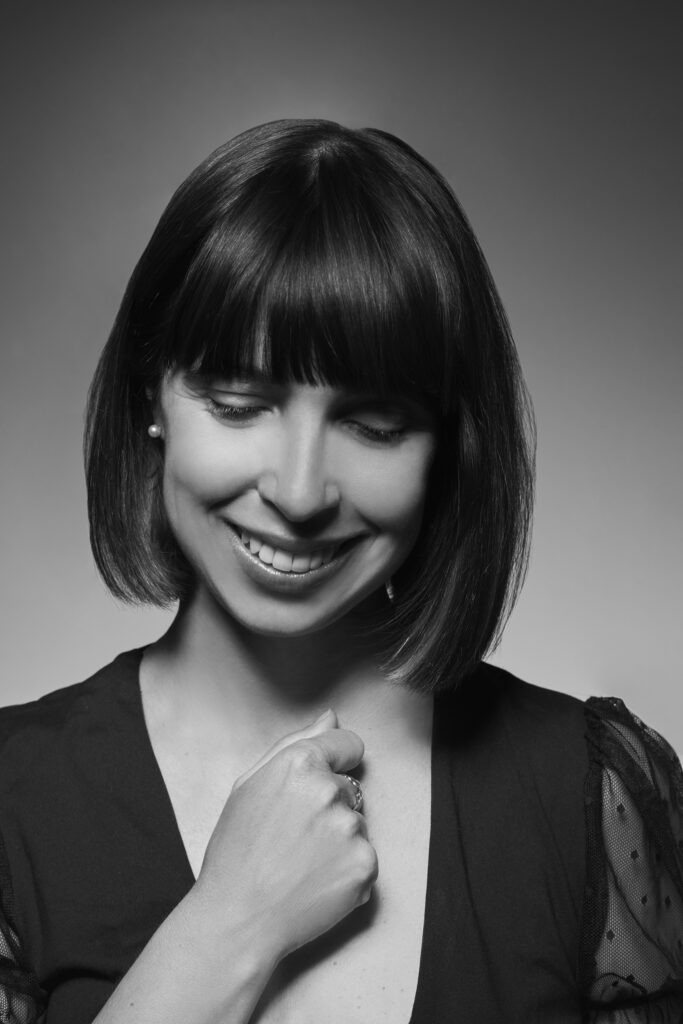
Montserrat Andrée Carty is a Spanish-American writer, photographer, and hosts the podcast “Musings of the Artist.” She holds an MFA in Writing from Vermont College of Fine Arts. Her writing has been published in journals including Longreads, Poetry Northwest, StoryQuarterly, Internazionale and Bellingham Review. She received 2025 nominations for Best of the Net and Best New Poets.