

The Fledgling | Lucinda Guard Crofton
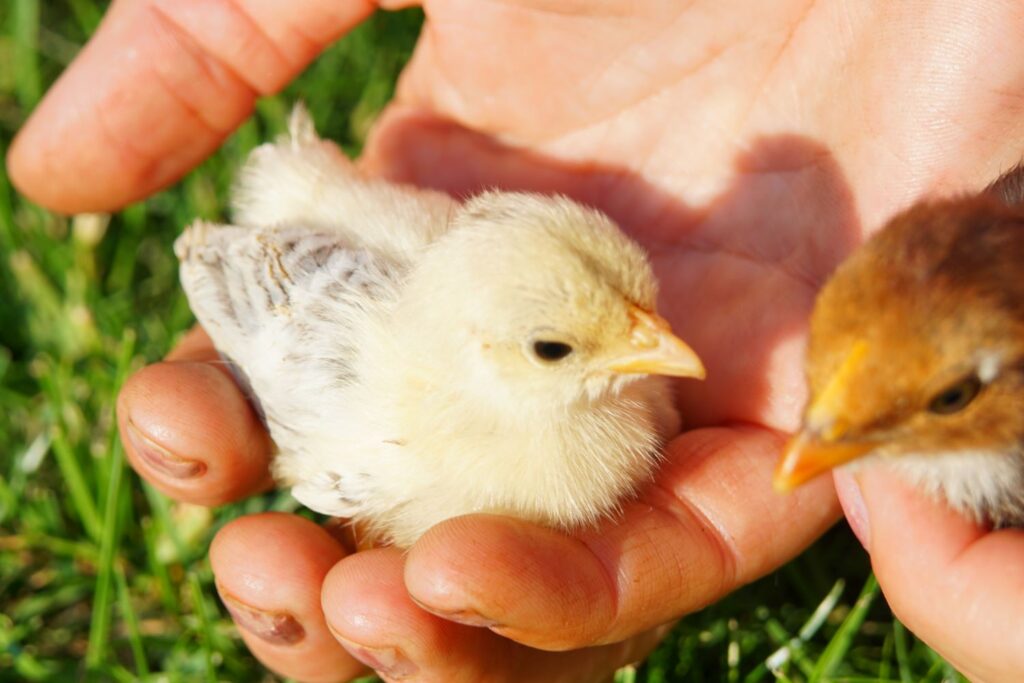
Photo by Giftzwerg 88 – Own work – Wikipedia
Early one morning, I woke to the call and response of two loud roosters. I lay in bed confused by the cacophony. It made no sense to me because the night before, as always, we had closed up our one and only rooster and his flock in the coop. I rubbed the sleep from my eyes and looked out the bedroom window. Yesterday’s sheets were hanging on the clothesline. And there, in front of this makeshift curtain, I spied the boy dancing in his gym shorts and mud boots. No doubt his sweatshirt pockets were full of eggs he had just collected from the henhouse. I watched as he kicked up his legs and fluttered his bent arms in what looked like pure joy. Directly across from him the rooster hopped, flapping his wings up and down. First, one crowed loudly, and then the other followed in a perfect imitation.
***
It feels like only yesterday I was busy mother–henning the boy. I ran around clucking and fussing and tried my damnedest to keep him safe and sound. Naively, I thought if I made him a soft nest it might make up for everything that had landed him under our roof. Our children were grown and flown, leaving us with empty rooms. Why not share our house, our farm, our healthy lifestyle? How hard could it be?
After school, the boy would run straight to the chicken coop and look for eggs. Initially, I worried when this city boy treated the hens as toys. What if he squeezed too tight? What if he hurt them? What if they pecked or scratched him and drew blood? But even when he put a hen on top of his head and paraded around like he was wearing a hat, or clutched a bird tightly to his chest as if she were his teddy bear, the flock accepted him unconditionally.
“What does the chicken say to get across a busy road?”
“EGGS-cuse me please!”
On good days, we cracked egg puns and he sprung chicken riddles on us. It was always a bad day when yet another promised visitation with his mother was cancelled or changed at the last minute. All of us were frustrated by the riddle of ever-changing plans and the meaningless scrawls on the calendar. I didn’t know how to help him when he shut down. In desperation, I would send him outside on a search-and-destroy mission. His task would be to search the barn and barnyard for old eggs. I can still see him teetering on a hay bale throwing a rotten egg with all the strength his small body could manage. His missile landed with a resounding splat far short of the tree he chose as his target. He would keep on digging between the square bales until he found another brown-shelled offering to pitch, or until I called him in for homework.
“How did the chicken prepare for a test?”
“She didn’t. She winged it.”
School work was a constant struggle. He didn’t know his multiplication tables, and he didn’t care. The boy became adept at finding new ways of trying to wriggle out of the ten minutes of daily math practice we insisted upon. This was the exact same kid who studied an old catalog from Murray McMurray Hatchery for hours on end. He could tell you in detail about the many breeds of chickens, what they looked like, what color eggs they laid, and which ones he thought we should add to the flock. Our novice farmer tried his hardest to convince us that if we were a proper farm we’d have a rooster as an alarm clock.
“How do you know if it’s too hot in the chicken barn?”
“The chickens are laying hard-cooked eggs.”
My husband and I had spent the last year providing respite care for a steady stream of children who came for a night or two. We thought we were fully prepared to foster a boy who needed to be removed from his home. We impatiently waited for his arrival until finally, he was ripped away from his screaming mother and dumped here. Despite our many questions, we knew little about him or his circumstances. But one thing was certain––he didn’t ask for this. Still, it wasn’t until much later that I fully appreciated how unsettling it must have been for him to be uprooted and dropped into a brand-new place to live with complete strangers and unfamiliar routines.
“Why couldn’t the egg get good reception on her TV?”
“Because the channels were all scrambled!“
In many ways, our home might as well have been a foreign country. We had TV, but no video games, internet or cell service. Something as simple as watching a movie required a trip to town to check a DVD out of the public library. I took the boy to the grocery store but refused to buy most of the ultra-processed foods he craved. Our compromise was Cheetos. He methodically licked the orange crumbs off his fingers and painstakingly wrote it on the shopping list every single week. He was happy to eat the familiar school breakfast and lunch instead of our food. He craved soda pop, not tap water. The fridge held milk and unsweetened sun tea. We had no store-bought Smucker’s “Uncrustables.” Here, PB and J sandwiches were made from homemade crusty whole wheat loaves and seedy jam. The boy discovered our peanut butter was covered in oil and had to be stirred. He could no longer slather mounds of sweet jelly on a thin layer of Jif spread onto squishy white bread and eat in front of the TV. In our house, food was forbidden in the living room except for special occasions. We ate all of our meals sitting around the very same oak dining room table I sat at when I was his age. Thank goodness for pizza night. Everyone pitched in and helped make pizzas from scratch. He thought this was fun because punching the dough was encouraged and each person could choose their own toppings.
“What do you call a bird that’s afraid of its shadow?”
“Chicken!”
Bedtime started as a nightly ritual of tantrums and tears. “I’m not tired.” “I want to go home!” “You’re not my mother!” One night, my husband and I were watching the ten o’clock news when a paper airplane floated down the stairs bearing the laboriously written message “I hate you!” (I still have that missive tucked in a book.) Gradually, putting the boy to bed turned into my favorite hour of the day. We read and reread every story about chickens we could find and memorized both “Chicken Little” and “The Little Red Hen.” The boy became an expert in the fine art of stretching out story time—a new experience for him (the piles of books that is, not the stalling). He quickly figured out when picking a book, size mattered. The fatter the book and the more questions asked, the longer it would be before lights out.
I shamelessly eavesdropped during my husband’s turn to put him to bed. One night in lieu of reading a story, they looked through a book about raising chickens. The two of them were totally engrossed by the pictures of an egg developing into a hatchling, growing into a nestling, then sprouting wings and turning into a fledgling. This turned into a heartfelt discussion of the age–old question: Which came first? The chicken or the egg? My husband patiently explained it was a conundrum. Regretfully, I interrupted their philosophical discussion to point out not only was it long past bedtime but tomorrow was a school day.
The next morning, the boy told me the answer was obviously The Egg. He’d prove it if we’d only let him have an incubator. I found myself torn by his request. I wasn’t a big fan of raising chicks. The babies were cute balls of fluff but required lots of care. After hatching they would stink up the basement while they lived in a kiddie pool filled with shavings. One always ended up squished to death which meant holding a shoebox funeral. More importantly, I remained clueless whether the boy would even be living with us the twenty-one days it would take to hatch the eggs, let alone long enough to see chicks grow into pullets.
“What makes chickens good at percussion?”
“ Drumsticks!”
I reminded myself daily that his stay with us was only temporary and it was futile to think about the future. Then, the boy meticulously drew a blueprint for an improved chicken coop. He asked my husband if they could build it over Easter vacation which was still months away. I made phone call after phone call in a frustrating attempt to find out what the County’s plans were for him. I wanted to believe he would be permitted to finish out the school year while still living with us.
“Why did the chicken cross the playground?”
“To get to the other slide!”
I had no control over the ever-changing schedule, but I could perform chicken magic. After school, I pulled our pick-up into a friend’s driveway and handed the boy his barn boots. The two of us walked inside a huge chicken coop, easily three times bigger than the boy’s borrowed bedroom. When we left, there was a full cage in the back of the truck and a smiling boy in the front. In addition to a great big handsome Buff Orpington rooster who was already crowing, and we couldn’t resist a few gorgeous laying hens to fill out the coop. He chose a black and white Barred Rock, a black Australorp, and a beautiful red and brown Sultan with feathers on her feet. By the time we arrived back home the boy had named them Buffy, Chicken Little, Blackie and Henny Penny.
“Why did Humpty Dumpty have a great fall?”
“ To make up for a bad summer.”
Right before School Picture Day, the boy went on his first overnight stay with his estranged dad. The details of the estrangement are murky, as is much of the boy’s earlier life. Apparently, the boy grew up hearing lie after lie about his absent father. Until recently, he was scared to be around this virtual stranger. But now, he was his hero because of all the junk food and toys he bought him on visits. As best as we could piece together, the plan was to reunify them. The boy returned to our house rocking a Skullet Mullet, with his newly shaved head sporting a comb down the middle, looking for all the world like a rooster. I hated that surprise haircut and was convinced it would be one more thing his mother would complain about. I was equally certain the kids at school would make fun of him. But all of them loved his new look. It was one of many things I was wrong about.
***
We were all sitting in Family Court, but not together. The boy sat out of our sight, next to a caseworker. His mother, father, and I were sitting in the gallery—far apart from one another. The judge informed the boy that she wanted to take his wishes under consideration. In front of everyone, she asked him, “Who do you want to live with?” She might as well have asked him, “Which came first, the chicken or the egg?” It felt like a trick question. He was supposed to state publicly whether he wanted to return to his mother and stepfather and their unpredictable and violent life, or move out of state with the father and stepmother he barely knew. The boy looked at the judge, appeared to gather his courage and told her he wanted to stay with us. There was a hush in the courtroom as his solution sank in. I tried not to feel hopeful. I knew we were only a temporary family and not actually considered a viable choice. A short time later the judge issued her expected pronouncement: the boy’s father would have full custodial rights.
Leaving the courthouse remains a blur. I remember the caseworker whisked the boy away while his mother wailed. I felt shut down as I made the long drive back home alone. Not knowing what to do with myself, I went to the barn and searched between the hay bales for old eggs. I chucked rotten egg after rotten egg with all the strength my body could muster. One after another, they smashed against the tree with a resounding splat.
***
These days, it’s my job to take care of the flock. When I forget the egg basket, I put the eggs in my sweatshirt pockets and hope I remember to take them back out. We have a new rooster—Reggie. He, too, crows at all hours of the day. Now and then, I swear I hear an answering echo: the reverberation of my heart.
#
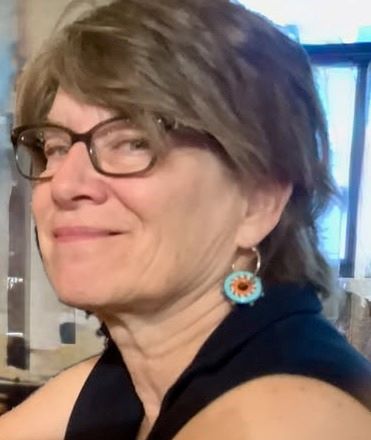
Lucinda Guard Crofton lives on a farm in the Driftless Area of Wisconsin with her husband of many years. She comes from a long line of storytellers. Her creative nonfiction has appeared in Streetlight Magazine, Brevity Blog, Short Reads, and Amsterdam Quarterly. She is currently working on a memoir about growing up a free-range urban child of the Sixties; joining the back-to-the land movement’s second wave; growing old, and navigating the medical system.