
Bloodlines| Randi Schalet
Photo by Luminitsa, Flickr, CC BY-NC-SA 2.0.
First Blood
“You got the curse,” Dora said.
“No, I don’t.” Something felt wet between my legs.
“You bled through.”
I stomped into the bathroom, slamming the door, and pulled my flannel nightgown over my head, twisting it around. The stain was dark, reddish-brown.
I heard Dora’s footsteps. The bathroom door opened a crack. She shoved a box of bulky white pads at me.
Dora had lived in our house from the time I was seven, Monday through Saturday. When my mother was at work, we used to kneel beside my bed and read from a miniature leather Bible she hid under my mattress. She went through the phone book alphabetically, writing postcards to our neighbors, warning them that the world was ending.
When I told Dora I was backsliding, she looked straight through me, then turned away without speaking. After that, I would wait until I heard her go downstairs before I went into the living room.
I called my mother from the phone in the kitchen so Dora wouldn’t hear. “Can you come home early?”
“My baby’s a woman!” she screamed into my ear. “You know what that means. I can’t leave. We’ll have ice cream later.”
“Don’t worry,” I said, winding the phone cord until it bit into my wrist. “I’m going to youth group tonight.”
Later, in the temple’s social hall, everyone danced with their arms linked, clapping twice over one shoulder, twice over the other—the only dance I remembered. I loved the sound of everyone clapping, but I stayed outside the circle, afraid blood was seeping through my pants.
“I got my period,” I whispered to my friend Jodi.
“I’ve had mine since summer.” She must have seen how scared I looked. “You get used to it. It’s just something you have.”
As soon as I saw Jodi’s mother, I followed her stiffly out the door, worried the pad would slip. I wasn’t sure I’d put it on right.
At school, they’d split us up for sex ed: boys one evening, girls the next. In the auditorium we watched a black-and-white film about periods—a girl in baggy gym bloomers telling us not to swim or bowl during “our time of the month.” When the lights came on, we acted like it was all a joke. It gave the boys something to make fun of—men-stru-ation. They dragged out the word like a taunt.
The kitchen was dark when I came in, silent except for the refrigerator turning on and off. Dora was in her room above the basement, her door bolted. My younger sisters were sleeping. I usually liked it when my mother worked late. I could eat SpaghettiOs straight from the can. I could stay up as long as I wanted.
I couldn’t wait to get this thing out of my underwear. I wrapped the swollen pad in toilet paper and tossed it in the trash. I folded some paper towels and wedged them between my legs. Then I heard my mother’s key in the lock and stopped.
Going to the City
“We could get married,” Gordon suggested. He was red-haired, Mormon; his parents had married young.
“Then how would I go to college?” I was sixteen, and we’d been going out only a couple of months. We’d slept together once—after I climbed out of my bedroom window on my birthday. I’d already decided on Bard. Its catalog showed a girl in the art department slathering orange paint across a large canvas, her arm raised, revealing a thick thatch of armpit hair. I’d never seen anything like it.
I found the Bill Baird clinic in the Yellow Pages. I looked up the bus schedule to the city. I didn’t know abortion had only recently become legal in New York. We split the cost. I used my bat mitzvah money.
Gordon slouched in a plastic chair in the waiting room, his freckles standing out against his pale skin, one knee bouncing until the chair rattled. He was the only boyfriend in a room of girls clutching their purses. A girl in a blue smock with an ERA NOW button pinned on motioned me through a swinging door. I turned and gave Gordon a small wave.
In the exam room, I was handed a thin paper gown and told to undress. Diagrams of women’s bodies papered the walls. I looked at them, trying to learn something.
The nurse pulled the curtain around the gurney. My legs slid into the stirrups. “This will take thirty seconds,” she said. I was six weeks pregnant. There was pressure. It was over.
Afterward, someone handed me a paper cup of ginger ale and a round plastic pill dispenser.
“You’ll bleed for a week or two,” the nurse said. “No tampons. Pads only.” She handed me some long white pads and a belt to clip them on.
I sat by the window on the ride home, my stomach cramping as the bus bumped along, the pad foreign between my legs. I couldn’t believe how things could change, then change back again. At least I could stop sneaking down to the basement to throw up. I traced hearts on the fogged window, wiping them away before Gordon could see. The bus lurched and I grabbed the paper bag with the pills and instructions before it slid off my lap. I knew I’d break up with Gordon.
My mother was watching TV in the living room with her new boyfriend, diamond pinky ring, a smug grin.
“Come in here,” she called. “Say hello.”
“No, Mom, homework,” which was a joke since I never did any. I went to my room, shut the door. The TV laugh track bled through the walls.
No one knew. The antiseptic smell, the cold metal of the stirrups, the nurse’s soft voice, Gordon staring at the floor—all of it sealed inside me. Later, when abortion stories were something women shared, I told mine too.
Not Enough
Twenty years later, I wanted a child more than I’d ever wanted anything. My body didn’t want the same thing. Most months, no eggs—just useless lining.
I set my alarm so the readings would be exact. As soon as I woke up, I put a thermometer under my tongue, trying to place it in the same spot every morning. I graphed the numbers on index cards, watching for the small rise that meant I’d ovulated. Color-coded lines marked each failed cycle—my own small science.
Stuart, my friend and sperm donor, was patient. We used ovulation kits, and he even brought a microscope from work so we could search for “ferning”—those delicate crystals in cervical mucus that mean ovulation is coming. My body kept giving me signals that led nowhere.
I showed him the index cards, hoping he could figure it out. He sat across from me at the kitchen table, tapping his pen against his thigh, flipping through them as if they might suddenly make sense.
We’d known each other for a couple of years before I took a chance and asked if he would be my donor and possibly a co-parent. Over dinner at a quiet Thai restaurant, we talked about how it might work, and how it might not. Then he started asking practical questions—money, time, what if one of us met a significant other. I answered carefully, keeping my voice steady, trying not to scare him off.
We started inseminating with a syringe on our own. After six months of failures, I hired a doula to insert the semen at the opening of my cervix. She sat beside me on the bed and pulled on latex gloves.
Around that time, a friend announced her second pregnancy, barely a year after her first. An “accident,” she insisted, as if wanting two children so close together would have been wrong.
In a quiet part of me, I wondered if I should have taken what I’d been given, or at least not acted as if there would always be another chance. If I’d had a baby at sixteen, my redheaded child would be in college now.
Each month, I was sure I was pregnant—tender breasts I’d pinch under my shirt, a bloated stomach I’d caress as if I were pregnant, then the devastating letdown. Blood arrived like a reprimand. Stuart was supportive, but the problem wasn’t something either of us knew how to fix.
I began to think about other options. Late at night, I studied adoption profiles, reading each child’s face as if it could predict my future. Pages of school-age kids, sibling groups standing close together: the hardest to place. I didn’t tell Stuart. He wanted a child with his own genetics. I still hoped I’d get pregnant and didn’t want him to stop believing it could happen.
Among all the profiles, one girl stood out, a five-year-old described as “spirited” wearing a white lace top too grown-up for her. She looked as if she were expecting something good to happen. I studied the photo the way I’d studied my temperature charts. There wasn’t a lot to go on.
I pictured her in the warm clothes I’d buy: lined boots, a waterproof jacket zipped to her chin. I could practically feel her small mittened hand in mine as we circled the pond near our condo. I didn’t know that “spirited” was agency code for stubborn, but I wouldn’t have cared. Thinking about her steadied something in me.
The day I met her, sitting cross-legged beside her on the floor of her foster home, she called me Mama. I’d brought a box of markers and drew a picture of the pond, big fluffy swans drifting across it. A week later, taking her out alone, she was already acting like this was her life. She was in charge.
In the car she reached over and changed the channel to Radio Disney, turning the volume up. I didn’t know it would become the soundtrack of my life—bright and busy, impossible to tune out. Stuart was kind, but he never bonded with her. He and I became real friends, which we still are today.
Warning
Bleeding after menopause is always bad news. Ignoring it was like smelling smoke in bed at night and rolling back over.
I told myself it was just spotting—a scratch, hemorrhoids, some tiny tear, a faint pink swirl that vanished when I flushed, sometimes a brighter streak, then weeks of nothing.
For months, I saw traces—some days more, some days none. I waited for it to stop.
After sex, there was blood on the sheets. I covered it and said nothing.
I prided myself on never going to doctors, on believing ailments would go away on their own. My weeks were full. There was always something more ordinary to handle.
One morning I noticed blood in the toilet just before meeting a friend for breakfast. I almost asked her what she thought—the words right there. But she wasn’t a friend I saw often, and it felt awkward to mention.
At my annual physical, I finally had the Pap smear I’d avoided for half a decade. During the exam, I bled “briskly.”
The doctor’s face tightened. She glanced at the clock, then met my eyes. The nurse printed a referral; the doctor pressed it into my hand.
“Ultrasound. Now,” she said. “If you can’t get an appointment, go to the ER.”
“The emergency room?” I asked, sitting up on the gurney and pulling the blue gown around me.
“Go this weekend.”
Referral in hand, I stepped outside the office. The sun was shining. The same dusty car waited in the lot, but I kept hearing her tone, and I was frightened.
When I told a friend about the diagnosis, the first thing she asked was, “Did you have your yearly Pap smear?” She wanted to prove I’d done something wrong. She needed to believe that cancer doesn’t just happen.
But Pap smears screen for cervical cancer. Mine was normal. The cancer was uterine.
I’d thought stubbornness was strength, secrecy a kind of control. I bargained with silence until it betrayed me. Then there was no bargaining left, only a radical hysterectomy and the kind of attention I never wanted.
Bloodless
There’s no mystery left in my body. No womb, no bleeding—just puckered scars where the laparoscope entered. Over time, other organs will shift and fill the hollow.
Cancer wasn’t something I’d ever imagined. When it was diagnosed, I thought stage 1, maybe stage 2—common, both would have avoided chemo. When I asked, the doctor hesitated, then said stage 4. I was in a hospital bed, recovering from surgery. He was on the phone.
“4A or 4B?”
“4B,” he said. “Not what we were hoping for.”
I was embarrassed, like I’d missed something obvious. I realized I was going to die from this.
“It’s the worst number there is,” I told a friend.
“Quality of life,” the doctor said, the unspoken truth: not quantity.
After that, everything blurred—numbers, scans, printed appointment lists. I’d always avoided the medical system, and now I needed a schedule to manage it all: chemo, then radiation, and finally brachytherapy—radiation delivered directly into the vagina with a medieval-looking metal instrument. It hurt. I cried while the nurse squeezed my hand.
Friends offered rides, but I drove myself. “Don’t waste a workday,” I told them.
I closed my office and began doing teletherapy. When my hair fell out, I wore a wig the hospital offered for free. Most of my clients didn’t notice. Listening had always pulled me away from my own worries. Now I didn’t want it to. I didn’t have the energy to focus on someone else.
Chemo dismantled my ordinary life. The cast-iron teakettle was too heavy. Folding laundry took all afternoon. A neighbor left an orchid by my door, miniature purple and yellow blooms. A friend folded towels while we talked, her fingers tapping a nervous beat on the headboard. I wanted to tell her to stop.
During an infusion, my sister sat in a hospital chair beside my recliner. We pretended it was a normal visit, barely pausing when the nurse changed the chemo bag. The liquid was bright red. “More poison,” I said.
Later my sister asked, “Tell me what you want. Do you want encouragement? Do you want me to push?” She suggested a walk around the block, but I’d tried and knew I wouldn’t make it far.
I wanted independence. Help felt like doubt, and it made me angry.
My daughter pulled back—not returning texts, not asking about doctor visits, pretending she was too busy to stop by. She’d lost her first mother. She couldn’t tolerate the possibility of losing me. I told her it was taking away from our time together. She didn’t answer.
Most people did the opposite. They stepped closer. A friend cheered “Yippee!” when the oncologist gave me good news—a reprieve for now—something I actually wanted to share. I hadn’t expected it; I’d been preparing for the worst, calculating how much time I had left.
When I told people the treatment had worked and I was in remission—“no evidence of disease,” the pathology report said—they were genuinely happy. Their relief unsettled me. It felt like an intimacy I hadn’t agreed to. I could bear it only in small doses.
Survival was never just cells dividing or not. Self-reliance didn’t protect me; it only kept me from comfort. I’m still learning to live with dependence. Generosity isn’t pity. It’s the willingness to share the weight of being alive.
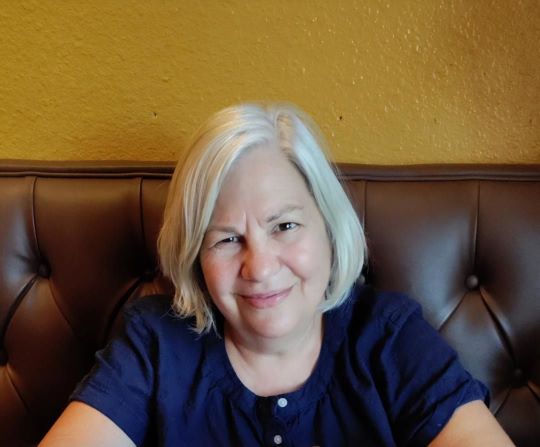
Randi Schalet is a retired psychologist and writer based in Berkeley, California. Her nonfiction has appeared in Chicago Story South, Peauxdunque Review, Rumen, Prime Time Magazine, The Write Launch, and Belmont Story Review. Bloodlines traces a woman’s life from adolescence through abortion, infertility, adoption, and cancer. Her poetry chapbook, The Last Things I’ll Remember (Finishing Line Press, 2026), is forthcoming.