
Cabbage is the Flavor for Poor People | Wendy Fontaine
New England boiled dinner
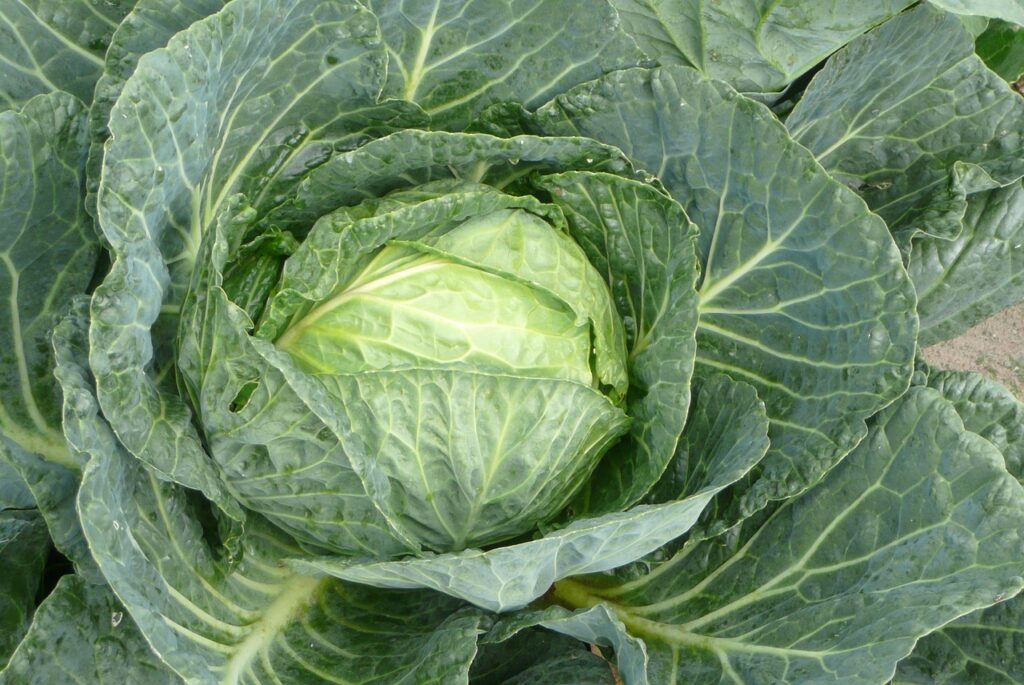
My mother turns on the stove before she’s even out of her church clothes. Within minutes, she’s plopping ingredients into a pot that covers two burners. Potatoes, onions, turnips. Ham because ham is cheap. Sometimes carrots. But always, always cabbage. The jumble of meat and vegetables simmers for hours, until the carrots go soft, and the cabbage falls limp and pale, and everything smells like the sulfur spewing from our paper mill in town.
Steam fills our trailer home, which is parked on blocks on a dead-end street behind the high school. I can see the mill’s smokestack from my bedroom window. I can hear the train barreling by, carrying chemicals into the plant for the night shift. My parents don’t work at the paper mill. They work at the shoe factory, making loafers for people who live in Connecticut and Martha’s Vineyard and other places we’ve never been.
Mainers don’t wear loafers. They wear work boots. Sturdy, leather, with steel toe reinforcement. Anything can happen to your toes in a factory. My dad buys a new pair every year, and he never takes them off. He wears them in the garden, in the living room, at the stove when he lifts the lid to stir the boiled dinner. The hard rubber soles track dirt and caked-up mud into the kitchen. I sweep the floor behind him to get the grit out from under my feet because I hate the feel of it. I hate dirt and I hate cabbage, and I especially hate New England boiled dinner, even though the rest of my family loves it. To me, it tastes like poverty.
Red hot dogs
My father sets a saucepan of water boiling, then adds red hot dogs one by one until the water turns pink. We are all home on a snow day. A real Nor’easter. No school, no work. The roads are slippery. We’ve already shoveled eight inches from the driveway, then a path to the mailbox and another path to the propane tank out back in case the heat runs out.
We know the hot dogs are ready when the crimson skin begins to split. Dad fishes them out with a fork, then drops them sideways across slices of white bread. White bread is what we use in lieu of buns because who has money for buns? Next, my brother and I zigzag them with ketchup. Maybe some relish. Maybe some yellow mustard. We fold the white bread and dig in.
Red hot dogs snap when you bite them. That’s why some people call them red snappers. Dad buys them at Future Foods, the grocery store on Main Street, where they are wrapped in cellophane and sold in the meat case next to end cuts of bologna and olive loaf.
Dad buys beer at Future Foods. Sometimes a 12 pack. Sometimes a 24. There may not be money for buns but there is always, always money for beer. He buys bologna and fries it up in a pan when Mom isn’t home. Mom hates bologna. She hates hot dogs too. She says she can smell them a mile away.
Bread in a can
Sometimes we eat our hot dogs with baked beans. And sometimes, if we are lucky, there is also brown bread in a can.
Brown bread is a splurge. Something that gets slipped into the shopping cart during a week with overtime pay or a report card with all As. It comes plain or with raisins, but nobody in my family likes raisins. Well, maybe Mom does, but only if they are baked into cookies or scattered through bran cereal.
At home, we pop the top with a can opener and lay the bread on a cutting board. Mom slices it along the ridges that formed during the cooking process, when the bread got steamed inside the can. The result is a dark, rich circle of chewy molasses and rye, kind of like pumpernickel but sweeter.
Baked beans and brown bread are made at the B&M plant down in Portland, Maine, a place my family rarely has reason to go to. There’s a mall there. An airport, too. We’ve never been on a plane, though. Our vacations occur on road trips, to the campgrounds in western Maine or the White Mountains of New Hampshire. But if you’re driving up 295, on your way back from Old Orchard Beach, where my Aunt Marilyn takes me every July, you can roll down your window and smell brown sugar and molasses wafting through the sea-salt air.
American chop suey
The name implies an Asian dish, but there is nothing Asian about our chop suey. It’s made with ground beef, tomato sauce and macaroni. No bean sprouts. No water chestnuts. Our grocery store probably doesn’t even sell water chestnuts. The most exotic thing at Future Foods is soy sauce.
We eat American chop suey at least twice a week. It’s cheap, easy and fast on a weeknight. When the paper mill went on strike in 1987, macaroni cost 33 cents a box. Ground beef, just over a dollar a pound. Mom could feed the whole family for less than two bucks.
My father considered crossing the picket line for better pay, but he decided against it. The fathers who did were called scabs, and the picketers made their lives hell. My friend Jenny and I were in eighth grade during the strike, when her stepdad started working at the mill. One night, they got a bottle rocket thrown through their front window. Another night, someone spraypainted the word “scabs” onto the side of her house. Sixteen months later, the strike ended but the bitterness remained. People in my town still remember which side of the line you were on.
Navel oranges
Every year, my mother stuffs oranges into the bottoms of our Christmas stockings.
Large ones with thick, lumpy peels. Three for a dollar at Shop and Save, the grocery store one town over. Future Foods’ only competitor.
Large as softballs, they take up space at the end of that stocking, space that no longer needs to be filled by Lifesavers or Lip Smackers or rubber bracelets in neon colors. We get candy too, of course. Chocolate coins. Chocolate kisses. Chocolate Santas wrapped in silver foil.
We’re supposed to eat our oranges while we wait for Mom and Dad to get up, have their coffee and clear the fog from their heads. We do as we’re told, my brother and I, sneaking a foil Santa or two when no one is looking.
No matter what is happening at the shoe factory, no matter how tight money happens to be, there are always, always presents under our tree. Mom wraps each gift in fabric scraps from her craft closet. Holiday paper, she says, is a waste of money.
I used to think putting oranges in Christmas stockings was something poor people did. Later, I learned it’s a tradition dating back to the Great Depression, when fresh oranges were expensive and hard to come by. Finding an orange in your stocking meant good luck. It meant someone was looking out for you.
Make-your-own pizza
Friday is payday, and that means pizza. My parents buy shells from Lucarelli’s on their way home from work, and we gather in the kitchen to pile on the ingredients. Pepperoni, cheese, onions, ground beef. Always, always fresh button mushrooms for Mom and Dad. To them, fresh mushrooms are a delicacy, a well-earned treat after a week of making shoes.
The pizza shells are made in town, at a small commercial bakery down by the lumberyard. My Aunt Donna works there. Her fingers are always dry from all the flour. From all the kneading and patting and scrubbing and cleaning. At the end of the week, if business has been good, she gets fresh rolls to take home to her family.
Our television blares the evening news while Mom and Dad pile their shells high with mushrooms. Dad pops a beer. Mom has a Tab. They are practically giddy about the coming weekend. Two days off. No alarm clocks, no time clocks. No foremen looking over their shoulders.
While our pizzas cook, my brother and I drink orange soda and eat salty cheese puffs straight out of the bag. The puffs crackle on our tongues. Bright orange cheese powder gets everywhere. On our shirts, on our lips. Under our fingernails, too. But we don’t care. It’s Friday, and Fridays taste like freedom.

Wendy Fontaine’s work has appeared in Jet Fuel Review, Short Reads, Sweet Lit, Sunlight Press, The Belladonna and elsewhere. She has received nonfiction prizes from Identity Theory, Hunger Mountain and Tiferet Journal, as well as nominations to the Pushcart Prize and Best of the Net anthologies. A native New Englander, she currently resides in Southern California. Wendy also serves as the flash editor at Hippocampus Magazine.