
Callback to the Cube Champ | Becky Blake
Winner Summer Writing Contest 2024
On the first night of my women’s stand-up comedy class, I slink, late, into the back of the small dinner theater. As feared, I appear to be the oldest person here, except maybe the instructor. Dawn has large black glasses and messy curly hair. She looks like the stand-up comic version of a mad scientist.
“A lot of observational humor comes from real personal experience,” Dawn is saying. “So tonight, that’s where we’re going to start, with a story from your real lives.” She pauses to stare around the room with an ominous expression, then breaks into a toothy smile. “Okay, who wants to go first?”
One by one, women volunteer to get up onstage. Most share stories about things that are happening in their current lives: dating snafus, bad jobs, or family drama. When it’s my turn, I find myself talking about a board game I played a lot when I was a kid. I don’t know why I decided to share this innocent story from my distant past, but by the time I return to my seat, my mind is overflowing with memories from these early years.
At the end of the class, Dawn reviews our goals for the next eight weeks: we’re going to learn how to write a joke, and then we’ll each come up with a tight 3-5 minutes of material to perform at our public graduation. She tells us to come back next week with a list of joke premises and a way to record ourselves. “There should be an app on your phone,” she calls out, then shoots me an encouraging grin. I smile back. She seems to have guessed that I was thinking of bringing a tape recorder.
So, when I was a kid, I was pretty stressed. And recently I think I figured out why. I was in my parents’ basement, and I found one of my old games: Perfection. I don’t know if you folks remember it, but it’s this game where you have to fit all these different shaped pieces into the right slots before the timer goes off. And if you don’t make it, then the whole game explodes in your face. The popping up part was especially bad for me because I was nearsighted, so my face was always really close to the board. Anyway, finally I mastered it, and I was relaxed for like two or three months: the nightmares stopped; I didn’t jump out of my chair and pee a little bit every time the toaster popped up. Then it was Christmas, and my parents gave me this other game I didn’t know existed: SuPerfection. And I was like, oh my god, how many levels of perfection are there? I mean, I thought that perfection was perfect—the top of what a person could achieve—but no, then I find out there’s another level. And I’m just like, wow, this is never going to end. Nothing I do is ever going to be good enough.
In Week Two, I sit at the back of the theater again. I pull out a notebook, a pen, and my phone, which now has a recording app installed. I’ve bought myself a pint of IPA, and I drink it fast as my classmates take turns trying out their joke premises. These women include a marketing assistant, two actors, a flight attendant, a kindergarten teacher, and an art student. Many of my classmates have brought in material that focuses on their physical experiences: personal anecdotes about their bodies at their worst and messiest, and about sex—the kinds they like and the kinds they hate. In telling these stories, they toss aside politeness in favor of taboo subjects which they describe in graphic detail. I’m impressed by their openness, and wonder if it’s a feature of their age, or a result of the supportive, bro-free zone Dawn has created. Maybe some of these young women are releasing their unfiltered innermost thoughts for the first time.
I glance down at my open notebook. A couple of my possible jokes were about dating and sex, but these scenarios now feel like watered-down, middle-aged versions of the younger women’s vivid stories. When I cross these ideas off my list, what’s left are a bunch of memories from my tween years. These nearly-forgotten experiences have taken on a new vibrancy this past week—as if they are trying to get my attention, flashing their strange, dorky light into my eyes.
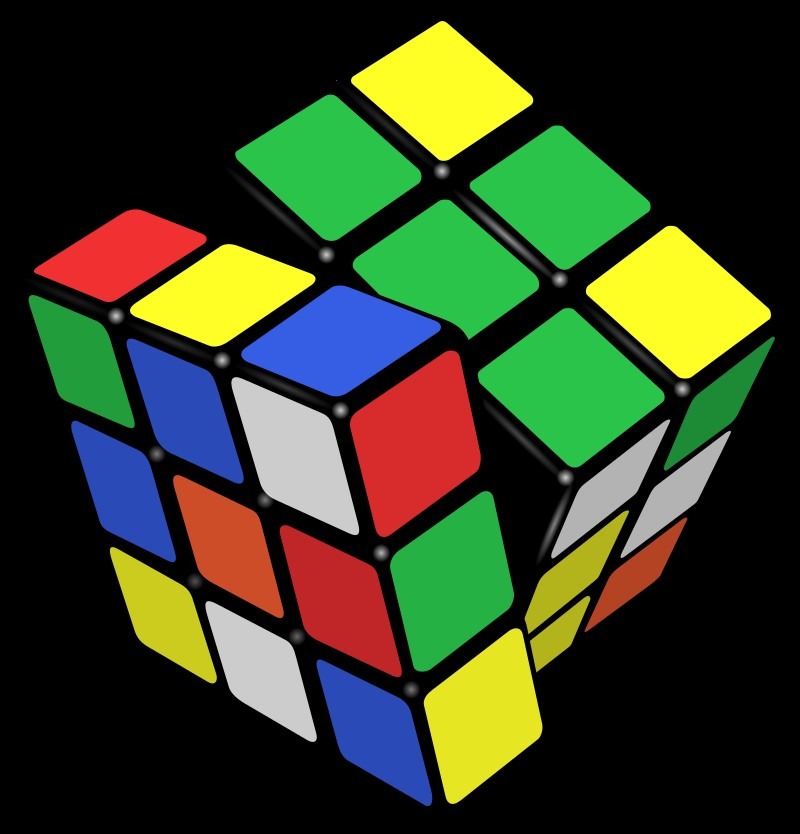
I feel like I really thrived as a tween. Like it was this sweet spot in my life when I was super-confident. I had my humorous sweatshirt collection. I was a Rubik’s Cube champion. I could do that special Montessori finger math. Basically, I was in this bubble of nerd bravado. And then puberty hit, and I realized: hey, I’m going to be a virgin forever if I don’t get rid of these goofy sweatshirts. So I did it. Miami Mice. Itty Bitty Titty Committee. My giraffe sweatshirt with the spotted neck painted down one sleeve…all of them, gone. But even after this purge, I was still having trouble with boys. The first time I really liked a guy, I wrote him a piano score with quotes from The Godfather as lyrics. The song was called “Make Me an Offer I Can’t Refuse.” But when I gave it to him, he was just like “Um, could you please piss off?” And that’s when I knew: none of my current life skills were going to be transferable when it came to attracting boys. I was going to get an F in this subject instead of an A+. And there were no flashcards I could study to learn why Yvette had so many hickies on her neck, or why she got to be Class President even though she couldn’t spell.
Each week in comedy class, we record ourselves performing. Then at home, we review our recordings, listening for the laughs. Dawn teaches us to bring these laughs closer together by cutting out any filler in between. We also strive to get our first laugh as quickly as possible. “The smaller the setup, the bigger the punch,” Dawn says.
These editing techniques feel familiar. As a writer I try to start my stories as close to the action as possible and delete any boring parts. Over a lifetime of storytelling, this process has become automatic. It kicks in even when I’m telling a friend about my day, inspiring me to slightly tweak the timing of events to give my story a more compelling arc. I’ve recently noticed that my memory also compresses time for effect. When reading through old journals, I’m often surprised to discover that things didn’t happen when I thought they did. In many cases, my memory seems to have functioned like an accordion, bringing together peak occurrences and squeezing out all the empty air in between.
Guided by Dawn’s editing tips, my classmates and I tell increasingly punchy stories. Much like the funny bits in our jokes, we ourselves draw closer together until we end up sitting in a group in the center of the theater, instead of at separate tables. It’s a rare feeling of belonging for me. Despite our different ages and backgrounds, we are all women who think we’re funny.
Maybe if comedy had been a sport when I was growing up, I might have actually played on a team.
So, I failed gym in Grade 8, and I had to go to remedial sports camp to get into high school. It was a month-long sleepaway camp, and they made us do a different sport every day. Which is how I know I hate 29 different sports. On our last day though, the activity was water sliding, which I discovered I kind of like. But that’s only because it takes zero effort. (You just push off and then gravity does all the work.) I think tobogganing is somewhat fun for the same reason. Luge—I haven’t tried it, but I might be good at that. Basically, I only like sports I can do while lying down.
I am worried that a full set of tween jokes might be too much for an audience. So, during the second half of the course, I try out some material about other topics: an exaggerated interaction with a customs agent; an overly ambitious New Year’s resolution; an imagined encounter with a hypnotist in an elevator. These mostly made-up jokes always get fewer laughs, as if my classmates are unwilling to let down their barriers and enjoy themselves unless I have also risked a moment of honest exposure.
But how do they know if it’s a true story or not, I wonder, squinting into the semi-dark theater from the stage. Am I using a different tone of voice? Is there a micro-movement that’s setting off their inner lie detectors? Maybe true stories have a particular structure, and the audience can sense when this shape is missing or simulated. Or maybe I just seem less energized because made-up jokes feel safer: clever but not genuine. Like they come from the head instead of the heart.
To give the audience the vulnerability they seem to require, I keep writing jokes about my youth, remembering in the process that becoming a teenager had been an especially lonely time. Maybe because we moved to an isolated place the year I turned thirteen. Or maybe because coming-of-age is just bumpy for everyone. Whatever the reason, a distant younger version of myself is now piping up in a loud voice from the backseat of my past. She seems to have something to tell me.
My transition from tweenager to teenager was super-frustrating. I spent way too many Friday nights with my parents. We used to go to the drive-in a lot, and if the movie was Restricted, then they’d take away my glasses so I couldn’t watch. It didn’t make any sense; I could still hear. I mean Endless Love? Okay, that was mostly just breathing. But Porky’s? I was like, hey guys, I may be myopic, but I can still understand English, and “gloryholes” are way worse in my imagination, believe me! A lot of times at the end of a movie, I’d protest if I thought my parents had taken away my glasses without a good reason. For Silkwood, I was like, “Three swears, a 5-second sex scene, and a tiny bit of union violence? That was a learning opportunity, denied. Don’t you guys know that feminist biopics always get rated R to diminish their audience? You played right into their hand!”
As our graduation show approaches, a few of us start to meet up mid-week between our final classes to finesse our material. We are careful to critique only the form of the writing, rather than the content. We know that just behind the laugh, the real experience likely wasn’t quite so funny. Some of us are here to share difficult stories, turning them inside out in search of meaning, or at least some comic relief.
Even though we’ve already heard each other’s jokes many times, we still make sure to laugh at all the funny spots. Our laughter points to the ideas and moments we care most about in each other’s stories. Sometimes we’re also able to suggest a tagline that could come after the punch, or even better, a callback that ties two jokes together in a surprising yet satisfying way.
During one of these mid-week meetups, I take a risk and try out some jokes about my love life. I’m not sure if this material will fit into my set, but my classmates quickly point out that my dating stories are pretty nerdy too, and that there seems to be a link between the romantic rejections I weathered as a tween and the ones I’m experiencing now in my forties.
I think I might be a nightmare to date. Any time a guy likes me, I feel like I have to test him, to see if he’s the type of guy who can handle my weirdness. So, at some point early on, I’ll be like, hmm…what happens if I start using the word “vis-à-vis” in every one of my text messages? Or if I play him The Godfather piano score I wrote in Grade 8? Or if I ask him to help me crowdsource a new children’s boardgame called Good Try that never explodes in your face? If a guy isn’t phased by that level of strangeness, then maybe I’ll sleep with him. But that doesn’t mean the tests stop. They just escalate until eventually, I’m like woah, why is this dude willing to put up with so many tests? Obviously, there’s something wrong with him.
For our graduation show, the theater is packed. I’ve invited writer friends, neighbors, plus a few work colleagues. I used to be an actor, so I haven’t been too worried about performing in front of an audience. But as showtime approaches, I discover I’m more nervous than I’ve ever been before a performance. I have never shared material that is this true or personal.
Dawn has slotted me in as the final comic. We watch from backstage as the other women entertain the generous crowd with jokes about multiple orgasms and getting high and hating Tinder. When it’s my turn, Dawn gives me a supportive nod as we listen to a classmate introduce me. Then there is nothing to do except step out from behind the curtain and move forward into the spotlight. When I reach the microphone, I can’t quite bring myself to look at the crowd, but I send a shy “hi” in the direction of the floor. One of my best friends is in the audience and she offers a laugh by way of encouragement. After hearing this familiar sound, I begin to relax; I can just tell my stories to her.
Performing my set is one of those rare time-bending experiences that seems to go on forever while also being over in an instant. Each joke feels like a ball I’m tossing to the audience. Sometimes my underhand throw goes wild. Other times we’re right in sync, and the crowd tosses me back a laugh.
After the show, my friends buy me congratulatory beers in the theater bar. All around us, my young classmates are celebrating, smooching their hipster boyfriends and hugging their still-young parents. Two of my classmates have made me promise to go to an open-mike night with them in a few days’ time so we can keep tightening our sets, but I’m not sure I’ll make it. It’s past my bedtime on a worknight.
“I could never do stand-up,” says one of my colleagues. “It looks terrifying.”
“It was scary,” I admit. “But it’s been on my bucket list for a long time.”
With each passing year, I’ve been making a bigger effort to work through the items on this list. Maybe as I get older I’ll also feel the urge to revisit my past more often, the way I’ve been doing over the last eight weeks: slowing down to discover what details might be hidden in the folds of my most-told stories, and listening for echoes that tie two time periods together in a surprising yet satisfying way. Perhaps the nerdy character I’ve called back tonight has been waiting for years for me to notice her, yearning for a chance to step out from behind the curtain and remind me that I used to be a funny, quirky kid who took a lot of risks with her heart. This reminder of who I was—and who I likely still am—will be helpful to keep in mind while I search for new love. As comedy class has taught me: sharing my true self with people is the best way to connect.
Dawn walks over and clinks her beer glass against mine. “You did it,” she says, and I nod. Then we stand, side by side, surveying the room full of laughing people. Bedazzling the crowd, my fellow “comedy girls” sparkle with newfound confidence. They beckon Dawn and me to join them and, in a minute, we will. But for one moment more we stay just where we are: a pair of myopic, funny, middle-aged women looking back at our younger selves.

BECKY BLAKE is the author of the novel Proof I Was Here and the monthly
CNF newsletter Truly Important. She teaches Creative Nonfiction online for
the University of Toronto’s School of Continuing Studies. She recently moved
from Toronto to Texas where she’s working on a memoir-in-essays and a new
novel.
Website: www.beckyblake.ca
Newsletter: https://trulyimportant.substack.com/