

Dreams| Tommy Vollman
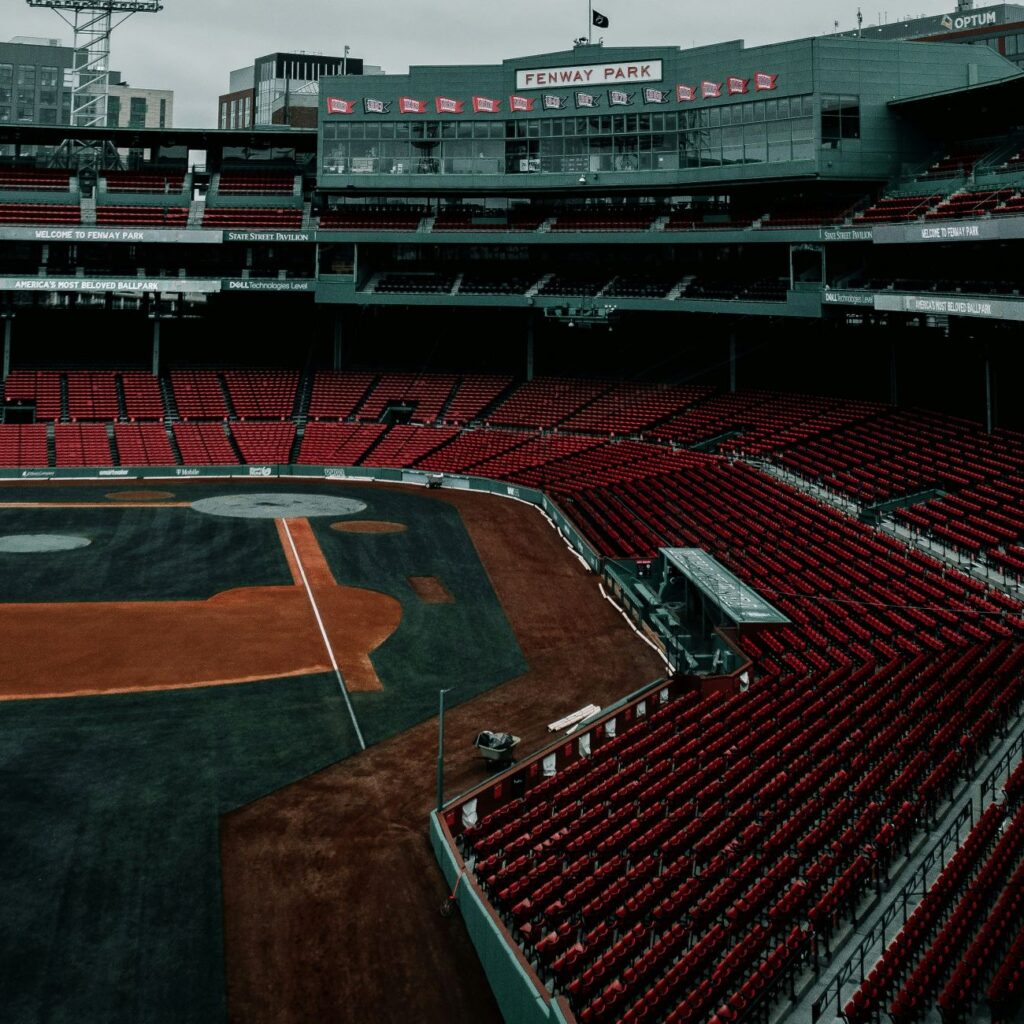
Art by Andre Tan, Unsplash
I woke up sideways and in a slight panic, the hotel top sheet still tightly tucked at the foot of the bed. My sleepy eyes lingered on the turned-plaster ceiling, and I considered the cascade of choices that brought me to room 21 of the Super 8 Pocatello. Slowly, I gathered my bearings. Fifteen hundred miles east, school was in session, but my books lay idle on the desk in my empty dorm room.
Sixteen days ago, I left Milwaukee—nine weeks into my college’s spring semester—and headed west to play baseball. I streamed through eleven games spread across Billings, Orem, and Ogden, but in Pocatello, I crashed, and whatever momentum I’d briefly gathered completely and wholly disappeared.
In many ways, my crash was inevitable: I’d fooled myself into believing that a $600-a-month, free agent contract was somehow sustainable. Reality, it seemed, was hell-bent to show me otherwise. At eighteen, I knew just enough to nearly hide the fact that I knew almost nothing at all.
***
The end of my baseball career snuck up on me like a late afternoon shadow; my last at-bat tucked beneath the blanket of cold April air that covered Pocatello’s Bill Derham Field. My breath streamed silver as I dug in and twirled my bat, the smell of pine tar and clay rich in my nostrils.
I earned those final pitches—three pitches to last the rest of my life—the sum total of which was an inside-out line drive to left-center, a hit followed by a head-first slide into second base. I stood up and dusted off like I’d done hundreds of times before. The moment held a stark familiarity save for one glaring, impossible-to-ignore aspect: I knew at that very moment, as much as I knew anything, that I was done. I knew then that I had, in fact, just taken my very last at-bat.
I played out the rest of the game in center field, packed my car, and headed east, back to Milwaukee and my dorm room, back to the friends and classmates and city that hardly knew I left.
There’d be no Rookie Ball season, no late spring and long summer grind, and no more dreams of earning one chance—one spot—just to earn another and another and another after that. In a sense, I suppose I simply gave up, quit, and drove away. Giving up, though, was not something I had ever done.
***
That first night in Pocatello—the one at the Super 8—was awful. And the next one, in Omaha, was even worse. I had made a choice to leave baseball behind, but leaving proved easier said than done.
On the third day, I planned to drive straight through—Omaha to Milwaukee was seven hours of easy highway—but I couldn’t. I surrendered to Dubuque, and the calendar in the hotel lobby reminded me that I should’ve been in Billings, playing my way on to Butte.
Maybe, I thought as I crashed sideways on the hotel bed, I’ll just stay here. Maybe, my thoughts grew darker and deeper, I’ll just disappear.
Instead, I fell asleep and dreamed.
***
In some sense, I suppose I knew I was dreaming, asleep on top of a still-made hotel bed on the outskirts of Dubuque, but my mind put me at Boston’s iconic Fenway Park, smack in the middle of the morning. My dream—or whatever it was—assembled quite nicely; the pieces easy to place against one another and organize. Gone were the tricky currents that usually plagued my sleep and made it so difficult to navigate my dreams. Before long, I sat in a vast swath of empty green seats about halfway up the lower stands on the first-base side, just behind the dugout. The stadium stood mausoleum-silent save for a gentle tide of bird rustles rhythmically partitioned by the click, click, tick of the sprinklers that sprayed wide ribbons of water into the velvet sea of grass. The sun cut a semi-circle just above the Green Monster—the mammoth, 37-foot-tall left-field wall, and the temperature hung absolutely perfect. Fenway Park spread out exactly as I’d always imagined it: cramped and crowded but well beyond lengths of my comprehension. If I hadn’t known better, I’d have characterized it as formidable.
I gazed at the towering Pesky Pole, then let my stare arc around the right-field wall all the way to the Monster. My eyes got lost in the contrasts and harsh geometry—straight lines and diagonals cut, painted, and rolled with precision and specificity—impossible to take in all at once. I imagined my cleats tracking across the outfield, eyes on a fly ball despite the sky’s protest. I could almost hear the clay and crushed aggregate as I crossed onto the warning track: schick, schick, schick.
Those things—all of those things—had been my dreams for as long as I could remember.
What were they, I wondered, now that I’d left them?
I glanced to my right toward the unmistakable grind of metal cleats on concrete, the sound of something doing precisely what it’s not designed to do.
A man approached.
He weaved his way through the rows of empty seats—neither rushed nor slow—his cleats the continued harbinger of an awful, ear-wrecking sound. He was thin and fit with a spry, wiry build—about 5’10”, 180 pounds. His smile shone wide and vibrant, and he wore a Boston uniform—their classic home whites—the words RED SOX unmistakably arched across his chest.
I didn’t recognize him, though. He was too short to be Jim Rice or Ellis Burks. I couldn’t place him to save my life.
I twisted further in my seat to steal a glimpse of his jersey number, and when he turned to gaze at the field, I saw it: 19. I ransacked my mind for his name.
“What?” he said as he strolled through my row. “You were expecting who? Yaz? Jimmy? Who?”
I shrugged. To be honest, I hadn’t expected anyone. I hadn’t even expected to be at Fenway. It felt right, though, to be there, as if Fenway Park—and nowhere else—was exactly where I needed to be in those confusing, drawn-out moments.
“Dana,” he said as he sat down next to me, an empty seat between us. “Dana Williams.”
He extended his hand, and I shook it.
“Tommy,” I smiled. “Tommy Vollman.”
“You a ball player?” he asked.
I nodded. “Yeah—well,” I added, “I was. I mean, not anymore,” I fumbled.
He squinted as if to angle past my strangeness. “Been there,” he followed. “Man,” he said, “I been there. Got called up in ’89,” he continued. “June 19th against the White Sox. Back down July 2nd after Toronto.”
I shook my head. “Damn.”
“Yep.” His voice grew a little sharper. “And I can see you doin’ the math.”
I smiled.
“Thirteen days.” Dana paused. “Eight games and five at-bats.” He shifted in his seat and leaned toward me. “One hit—a double—one run, and easily the best stretch of days in my whole life.”
I nodded once again.
“Precious days,” he followed.
I wanted to ask him more, to know why he’d used that word: precious. But before I could, he continued, and the moment was gone.
“And most importantly,” he said, “two innings out there.” He pointed to left field.
“You played in left?”
“Yep,” he smiled, eyebrows arched. Against Texas. We were losing bad. Ended up 10-3, I think, and Jimmy came out. Turnpike gave me the nod in the eighth. Played two innings in front of the Monster.” He paused, then added, “Felt like a lifetime.”
I tilted my head, and Dana continued.
“Something happens out there, out in left. When you stand in that grass, beneath that thing, time slows down and wears a circle around you.” He grinned and looked right into my eyes. “You become aware,” he said, as if confiding in me, “that these are your dreams. These moments,” he sighed, “are absolutely everything you’ve dreamed.”
I stared down at my boots, and silence became an eight-lane highway that stretched between us.
“You dream, Tommy Vollman?” Dana asked, finally. “Do you still dream?” he stressed.
I squinted out at the Monster, not daring to look him in the eyes. “Yeah,” I lied. “I do.”
I shifted again, more uncomfortable by the second, and turned to face him. I didn’t know what I planned to say or even what I would’ve said if I’d had the chance. But it didn’t matter. In a flash, Dana Williams was gone and so was Fenway Park—the Pesky Pole, the Monster, the patient click, click, tick of the sprinklers—all of it, gone, and I was awake, my morning eyes cloudy at first, then focused on three red numbers: 1:37.
I was back in the hotel room, back in bed in Dubuque, where I’d never left.
My mind wheeled a million miles an hour. Anxiety threatened to tear me clean in two, but before it could, the darkness devoured me whole.
***
I grew up afraid of the dark.
As a kid, I often spent weekends at my grandmother’s house. I don’t think I ever made it through a night there without a terror of some sort driving me from bed. I’d wander out in the hallway—panicked and out-of-sorts—and every time my grandmother gathered me up, took my hand, and walked me downstairs to the couch. There, beneath the quaking amber light of a fluted floor lamp, her voice cascaded stories about baseball: Ted Williams and his .400 swing, the grit of Thurman Munson, Clemente and how often he very clearly hit off his front foot. Other times, she’d simply marvel about the sheer power of Henry Aaron. There were stories about Johnny Bench, Charlie Hustle, and the dynamic Big Red Machine. While she spoke, her gentle fingers traced shapes and spirals on my forehead. Sometimes, she talked about Josh Gibson, Cool Papa Bell, and Buck O’Neil—players she saw with and against the Tigers at Crosley Field when the Reds were on the road.
For my grandmother, baseball was far more than the fodder of bedtime stories; it was spiritual, a consciously balanced state of mind.
***
One night, on what must’ve been close to my grandmother’s last, she told me about Bob Gibson and the things he did in 1968. By then, I was plenty old enough not to be plagued by the strains of my own bad dreams.
“Fiercest competitor anyone ever saw,” she said. “He’d hit a batter, then come down off the mound just to see if they wanted to make something of it.”
Her hazel irises shifted in the low light, and I realized I’d never before seen my grandmother’s eyes when they weren’t set behind her sleek, oval lenses. The sight seemed strange, if not alarming.
“Someday,” I whispered, “I’m going to be like them.”
“Like who?” she asked.
“Like one of them,” I repeated. “One of the ball players you always talk about.” My eyes fell, closed, and a certain softness shaped the words I spoke. “Just like one of them,” I added.
For a moment, my grandmother sat quiet. With my eyes still closed, I imagined her smile.
“Dreams,” she said, my hand so tender in hers, “are what happen when you’re brave enough to let yourself believe.”
I shifted, and my breath pushed deeper, more relaxed.
“And I hope you do,” she continued. “I hope you become whatever you dream.” She paused and exhaled. “Don’t ever give up, my sweets,” she whispered. “Don’t never ever give up.”
***
My grandmother died a few days before I turned ten. She passed away as she watched the Cincinnati Reds beat the Atlanta Braves in fourteen innings. I kind of hope she died after the Reds won and not before.
***
Outside, a lazy rain scratched at the windowpane. I still had nearly three hours to Milwaukee, three hours until I’d be back where I so recently left. And though in many ways I’d given up, in others, I hadn’t. The truth was tangled and complicated, but that didn’t concern me. Instead, I troubled over the questions Dana Williams asked, questions that escaped my sleep and haunted me as I woke: You dream, Tommy Vollman? he’d asked. Do you still dream?
I sure as hell hoped I did. And, I hoped I hadn’t actually given up. But I couldn’t see or shape anything further into the future, so I rolled over, closed my eyes, and searched for something—anything—to prove I was still brave enough to believe.
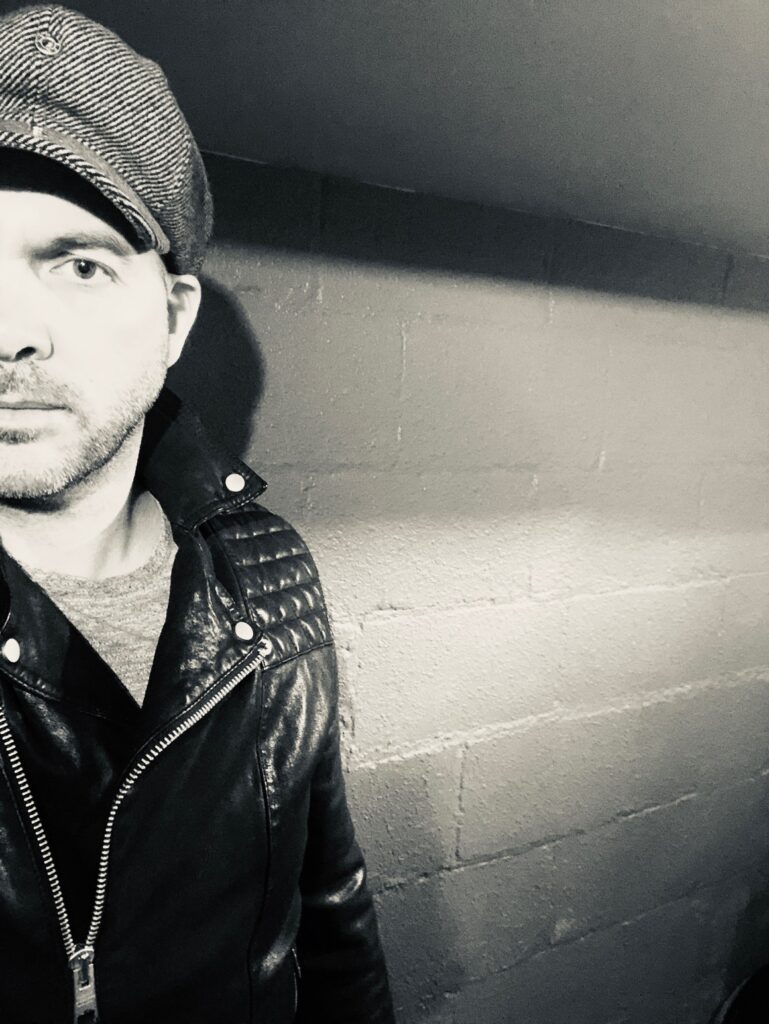
Tommy Vollman is a writer, musician, and painter. For many years, he was a baseball player. He has written a number of things, published a bunch, recorded a few records, and toured a lot. Tommy’s work has been nominated for the Pushcart Prize and the Best of the Net. His stories and nonfiction have appeared in The Southwest Review, Two Cities Review, Hobart, The Southeast Review, Red Rock Review, and North American Review, among others. He has some black-ink tattoos on both of his arms. Tommy really likes A. “Moonlight” Graham, Kurt Vonnegut, Two Cow Garage, Tillie Olsen, Willy Vlautin, and Albert Camus. He’s working on a short story collection and has a new record entitled “Cloverfield.” He currently teaches English at Milwaukee Area Technical College and prefers to write with pens poached from hotel room cleaning carts.