

Family Tree | Deborah Linder
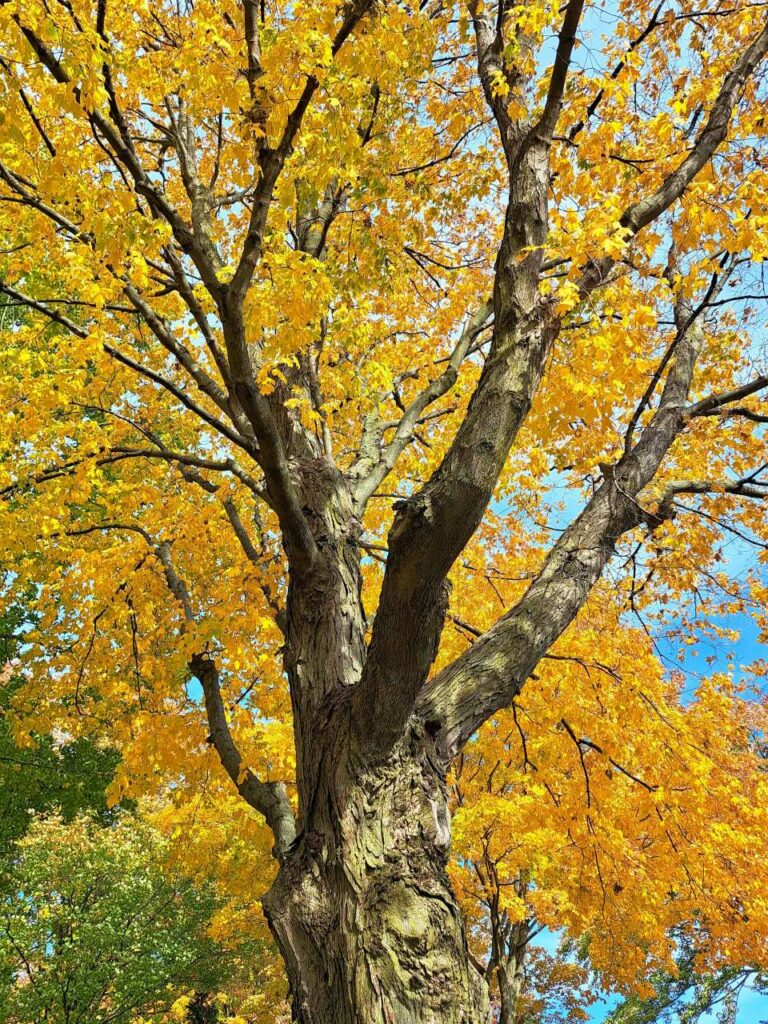
Photo by Christi M, Unsplash
My in-laws showed up unexpectedly that day.
When the doorbell rang, I confronted my father-in-law, my first mother-in-law, and my third mother-in-law. They were stacked haphazardly beside the door in three boxes with sinister “Cremated Remains” stickers affixed to them, along with Priority Mail labels and metered stamps that showed just how very expensive it had been to transport them from California.
The mail carrier’s truck was already careening out of the driveway. And who could blame her? She’d probably have nightmares imagining the tragic event that had produced the trio of packages just placed on our porch.
In fact, there had been no tragedy, just a succession of disease and medical emergencies that were not uncommon, or even unexpected, among octogenarians.
My father-in-law had died two years earlier from complications of laryngeal cancer. His first wife, my husband’s mother, died the following year after being hospitalized from a fall. Wife Number Three had died a mere two weeks later from a massive stroke. But by that point, it had felt as if she was simply waiting her turn in line while the Grim Reaper called out “Next!”
During that terrible period of catastrophe, our family bobbed along a fast-moving current of grief, trying not to capsize with each late-night phone call.
If you’re keeping count, there had been a Wife Number Two, but it had been a brief marriage, and we had long ago lost touch.
Now, I hoisted the boxes into the house. Figuring the heaviest to be my father-in-law–he had once been a 6-foot 2-inch charmer–I positioned him between his two wives, propping them all against the wall. Standing back, I surveyed the lineup.
Welcome to Michigan, I told them.
All that dying had taken place in Southern California, where every member of my husband’s family lived–or had lived–including his only sibling, M.
My husband and I had once lived there too, but we had moved across the country nearly 30 years earlier. There had been no single reason for our exodus but rather a confluence of ideas that had seemed to make sense at the time – a better job, a region with a lower cost of living, a longing for a climate that encompassed four distinct seasons.
Young and mobile, we were poised to seize the opportunities.
For a long time, we didn’t consider the costs.
Distancing ourselves from family was one casualty of our moving plan but certainly not our reason for doing so. I loved my in-laws. I found it fascinating to identify which of my husband’s quirks came from his mother (a preference for dim lighting) and which traits he’d inherited from his father (a passion for jazz piano). When we’d navigate the traffic-choked sprawl to visit them in Orange County or a distant part of L.A., I liked hearing about my mother-in-law’s recent theater excursion (how she loved Les Miserables) and swapping rescue pet stories with my father-in-law. (He once lured a dog off a freeway ramp by tossing it a burrito.)
And of course, there were M and her kids. It was fun to babysit our young niece and nephew, teaching them swear words and buying them bongo drums. Later, M reciprocated with our newborn son, minus the salty language and noisemakers.
We knew we’d miss my husband’s family. And yet, as an only child who had lost almost all family years earlier, I understood the special kind of freedom that accompanied loss.
The night before we’d left California, we’d thrown ourselves a going-away party. People wandered through our empty condo, their voices bouncing off the barren stucco walls. So many good-byes! A veritable congregation of well-wishers converged for our send-off: work friends, family, neighbors, my husband’s childhood pals, even our favorite neighborhood librarian. It was a bit like a funeral, I imagined, except we were around to appreciate the kind words of those who seemed sorry to see us go.
We’d provided special name tags for the partygoers. Fashioned out of construction paper in the shape of little moving vans, they also held our guests’ answers to the question: “If I could live anywhere, I’d move to _____.”
Was it surprising that most people opted for places they’d never even visited? That, among votes for Tahiti and Katmandu, “Grandma’s House” seemed like a better choice? That no two family members selected the same destination?
My husband and I had fun at that party. Then again, it’s easier to leave than to be left behind.
After we moved from California, our immediate family– my husband and I and eventually our two sons–became like a breakaway republic. The flags we staked during our subsequent moves represented new rules and new liberties. While we missed large festive gatherings with a clan, we created our own holiday traditions, some of which involved traveling to a different hemisphere, some that involved Philly cheesesteaks.
We were determinedly mobile, wary of stagnation. There were always new places to explore and more to experience. Upward. Onward. Better. We didn’t want to settle, in either sense of the word.
And if our children never knew their relatives beyond occasional visits, well, we were lucky to have made friends along the way that felt like family.
Years passed.
Living near them, it was M who carried the load of the aging parents. M who spent the decades scouting out retirement communities, and then, assisted living facilities. And M who confiscated the car keys, programmed the remotes, shepherded the patients to doctors’ appointments, and reset their digital clocks twice a year. Later, M scheduled the cremations and planned the memorial services. Serving as executor for each of the estates, she sorted through papers, photographs, and three lifetimes of memorabilia.
And while my husband and I did our best to help, we were always several time zones away, and probably emotionally distant as well. We had called four states home since leaving California, and those long-distance moves had muted the conversation among us.
Besides, we had rationalized, M–in addition to being generous and patient–was exceedingly efficient. She was an expert at identifying problems and then, finding solutions to fix them. In fact, more than thirty years earlier, M had decided her roguish little brother needed to get serious and settle down. She’d invited him to her office, orchestrated an introduction to one of her single colleagues, and then let nature–and 20-something hormones–take its course. (The colleague happened to be me.)
Now, separated by miles and connected mostly by memories, it took three deaths to realize how small a part of each other’s lives we had occupied.
When the last estate had been finalized, M called to request our advice. “What should I do with the ashes?” she asked.
My husband and I were baffled. The ashes? We both glanced at the fireplace and then back at one another. Ashes? And then, the sudden grim realization: Oh, of course. The remains, another responsibility we’d managed to ignore.
“They didn’t leave instructions?” my husband said. “Isn’t that part of the deal?”
But no, it seemed that none of them had cared much about the afterlife– neither spiritually nor residentially.
We speculated about where each person might have chosen to spend eternity.
We bet that my father-in-law, an enthusiastic gambler, would have opted for Caesar’s Palace. He also loved the desertscape of Death Valley, although that seemed a bit macabre.
My husband’s mother had loved to travel, but–Santa Fe or Big Sur?
And while the third wife had kin in Pennsylvania, she and my father-in-law had shared a starry-eyed, last-call love that had kept them tightly entwined in their later years. Wouldn’t it be cruel to separate them now?
We had no answers, but all agreed that three remains-scattering pilgrimages sounded exhausting.
We considered other options.
Apparently, it’s possible to have cremains transformed into all sorts of products–jewelry, fireworks, pencils. Even bullets. But nothing seemed appropriate for our loved ones. I confess I had a secret fascination with tattoos made from ash-infused ink. Wouldn’t the iconic “Mom” on a bicep be the ultimate homage? But as I gazed at my husband’s smooth and unblemished arm, I kept the thought to myself.
After more research, the siblings decided to honor the family by burying the cremains beneath memorial trees.
This seemed like a fine solution. M had a pretty California backyard with a pool, and I pictured how the new trees would enhance the space.
“You’ll get more shade,” I said.
“They’ll keep watch over you,” my husband added.
There was a brief silence.
“No,” M informed us. “I’m sending them all to you.”
Finally liberated, M was ready for change. Her own daughter’s family–complete with granddaughters–lived a few hundred miles up the coast. Now she and her husband had decided to move there, too. It was M’s turn to seize an opportunity.
A mere two days after that conversation, the boxes arrived.
I wish I could report that my husband and I dealt with them immediately, but–unlike M–we were neither efficient nor motivated.
After a few weeks of walking past them in the foyer, we carried the boxes down to the basement. With a pang, it occurred to me that a Michigan basement–damp, dim, and fully underground–would be a Southern Californian’s idea of Hades.
Eventually, we summoned a landscaper.
When he arrived, we explained about the family grove. He listened and then reminded us, “You know, those trees will always be here.”
He paused and gave us a meaningful look. “Even when you’re not.”
“That’s fine,” we assured him. My husband and I had finally stopped moving around the country. We intended to stay in Michigan.
We told him the trees could be a living memorial now, but when someone else eventually lived here, they would just be–trees.
He shrugged and we walked the yard together. We decided that two of the trees would be positioned in a sunny spot facing west and the third would face south, at least fifty feet away. While my three in-laws were friendly enough – celebrating birthdays and Thanksgiving together at M’s house – it seemed considerate to keep the divorced spouses apart.
We discussed how the soil would be amended to counter the high pH and dilute the sodium content of the cremains. Otherwise, we learned, the fledgling trees would likely die.
And no, I had never once imagined I’d have a conversation where I’d fret about dead in-laws killing infant trees.
The landscaper promised to place the order.
And then one brisk autumn day, the landscape crew arrived without notice. Three spindly saplings were huddled in the back of their truck. We had toyed with the idea of matching the trees to their counterpart’s personalities– ornamental? fruit-bearing? evergreen?–but in the end, we simply opted for oaks.
The crew dug the holes, prepared the soil, and then knocked on our door.
I carried out the three boxes, each now identified by the initials of the deceased. The landscapers moved discreetly to another part of the yard. Since my husband was at work, it was up to me to slit open the plastic bags and pour the gritty dust into the earth.
I whispered a few words at the first site and then moved on to the next.
When I was finished, the crew lowered the trees into place and filled in the spaces around them.
Commemoration seemed in order. Since I hadn’t prepared for a wake, I rifled through the freezer and pulled out a box of popsicles.
Outside, we all stood around chatting, and I told the group that none of my in-laws had ever been to Michigan before. And yet here they were.
Later, when I was alone – well, sort of – I wandered from tree to tree. I wanted to tell the new residents that we’d be taking care of them now. That my husband and I would finally be doing our part.
Gold leaves shimmered among the trees in the yard, some holding tight to their twigs, while others, more shriveled and faded, swirled to the ground. A chilly breeze had begun blowing. Clouds moved fast through the sky. Winter didn’t feel far off.
It wasn’t lost on me that these Californians had hated the cold, and soon the ground they had been placed in would be frozen for months. I wanted to implore them to follow the same advice I had offered my sons during our family moves: Consider it an adventure. Just give it a try. Bloom where you’re planted.
You didn’t have to be a cheerleader to muster a rah-rah. It had worked with the kids, as far as we could tell.
But as I stood there, another cloud appeared, a dark cloud that had flitted across my thoughts–my life–for years. Our sons were grown now, flourishing in their families and careers. They were also hundreds of miles away. They would not be returning home to live, as many of my friends’ children did. Where would that home even be? My husband and I did not begrudge them their own opportunities, even as we might have longed for their presence nearby.
And what that meant for our own aging selves, I simply didn’t know.
But for now, there was work to do.
I crossed the yard, turned on the spigot, and headed back to my father-in-law’s oak. As I yanked to uncoil the hose, the water sputtered and then coughed out a ragged trickle of water.
Even this was not going to be easy.
I still wasn’t sure how we might have been more present in the lives of those elders, how we might have been there for them when we lived elsewhere.
I imagine there was a lot we could have done differently, done better.
But here, perhaps, was one last opportunity, an opportunity for grace.
I knelt to the ground. Carefully unspooling the kinks in the hose, I squeezed the notches in the rubber and pressed its length smooth.
I’d never been much of a gardener, but I knew what it took to survive.
For a moment nothing happened.
But as I stood up, the water, finally freed, gurgled from the hose and poured forth. It darkened the blanket of dirt, moisture bleeding into earth.
Beneath it all, there were roots.
They were hidden, fragile, as yet unanchored.
Still, beneath it all, there were roots.
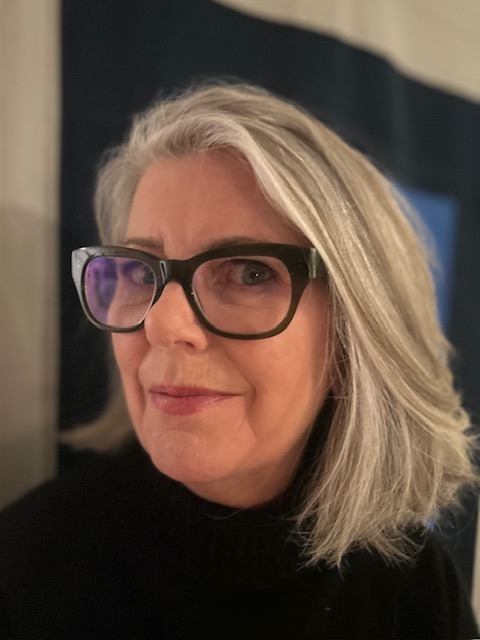
Deborah Linder writes fiction and creative nonfiction from her home in Ann Arbor, Michigan. Her work has appeared in publications that include The Washington Post, The Christian Science Monitor, Full Grown People, Smithsonian, Remedy Quarterly, and the margins of her favorite cookbooks.