
Love, Actually | Gayle Greene

Image by Marc Olivier Jodoin, Unsplash
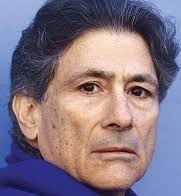
I dreamt about Edward again last night. I sprang him from the hospital, where he lay dying, hospital gown and all. I wanted to get him home, wherever home was, to keep him alive. I knew he was dying, also he was spoken for— there was a wife, she would come and take him to his real home, which was not with me. But meanwhile, I wanted him with me. Once when I was a kid, I found a wounded bird; I knew it was dying but I picked it up, cradled it, whispering to it, trying to tease it back to life. It felt like that.
There he was, not at all surprised to find himself with me, taking me for granted, as he always had. As I had him. Lord, how a dream can bring a person back, the visceral clarity of him, his voice, unmistakably Edward’s, slight British accent from early schooling. There was a guard in the other room—he actually did have a guard, it was dangerous, being Edward— but in the dream, it was someone keeping watch so we could have these moments.
“You ought to get a better bed,” he said. “Oh, is it uncomfortable?” I said, knowing full well it was, he’d always said it was. “Sorry, I didn’t know you were coming.” And the dream went on, making less and less sense. And I woke.
I lay still, trying to get back to the dream, for it seemed a miracle that he’d found his way back, for he was long dead and our time together, half a century ago, and we’d both had many lives since.
I’d steeled myself to go to that party, to walk into that crowded Upper West Side scene where I knew no one. I walked in, and there was the most attractive Jewish man I’d ever seen. I did a double take at the same moment he did a double take, our eyes locked, and by the end of the week, we found ourselves in bed. I don’t remember the steps by which we pulled this off, but there we were.
Jewish, he was not, though born in Jerusalem— Palestine, it was then; Palestine, he called it still. I could scarcely figure out where he was from, Cairo, Lebanon, Alexandria, his history complex beyond anything I could imagine, layered and textured by cultures and experiences of which I had no ken.
It was understood that this was clandestine. I was older than most graduate students, I’d been out in the world, and he was never my professor, but he was a professor. Not so secret, it turned out, for, decades later, a biographer contacted me. What could I tell him? Nothing. We’d had no life outside. He wanted to know what I knew about his marriage, the marriage that ended just before we met. Nothing, I said; and if I had, I’d never have told. I gathered she’d not been the sort of woman he needed. But then neither was I.
But it set me thinking—what did we talk about? Edward was not one for small talk, nor was I. We talked about the books and music we loved. We wondered, what was the point of writing about literature. He said he saw literary criticism as a prolongation of the work, though he’d rather be writing novels than writing about them. He was as fascinated by where I came from as I was by the storybook places he told me of; he seemed to have some notion of California as the wild west with telephone poles. I marveled that he slept so little. Me, too, I sleep like that, only it makes me miserable. He said his mother’s life had been ruined by insomnia, but he was glad not to sleep. I wondered what other ways I might be like his mother, and wonder to this day what energy source he’d tapped into to need so little sleep.
I was in awe of him though never in love with him. I was in love with somebody else, and I assumed he too was seeing others— we were post pill and pre-AIDS, things were easier those days. At the time, I assumed he was in it for the sex; now, I think not. I was not— sex with this other guy was a whole other thing. Those were the days I was rewriting the world to make this “other thing” equate to love. It occasioned much grief, this rewriting of the world to make myself believe I loved where I did not even particularly like or admire. Against that madness, Edward was a ballast.
Alienated doesn’t begin to describe the way I felt at Columbia, few friends, no faith that the PhD I was working for would get me a job. I was not what you’d call “brilliant,” not the type picked out for honors or a prize. Things always seemed too complicated to me for a rapid response; the only way I knew how to say what I meant was to write it, and that took so long. Sexual attractiveness was the only power I knew, so it was nice, having this secret of Edward in my bed, not yet a star, though on his way to stardom.
One night when the Modern Language Association meetings were in New York, I was sitting in a hotel bar, feeling grim. Usually I loved the MLA. I’d sashay from party to party, schmoozing, which, with a few drinks, I did well. But something happened that year that made me realize that the job market was not on my side. I was blocked on my dissertation, drinking too much, depression licking around the edges. So I sat in that bar, dragging on a cigarette— who knew, maybe someone would chance by who’d change my life, the right man to make a happy ending, right? Like in the novels.
But it was Edward who chanced by, and, seeing me alone, sat down. I’d seen his name on the program, he seemed to be everywhere on the program, a rising star. And he said rather sternly, “you won’t get anywhere picking up someone in a bar, Gayle. Go home and write. Write your way to where you want to be.” Or words to the effect. It’s the only time I remember him offering me advice. Not that I’d asked.
I nerved myself up to ask him for a letter of recommendation. That was wrong— I should not have presumed on our relationship, but he was the only professor I knew. He nodded and said yes, which sort of surprised me. He knew nothing about my work, such as it was— what could he write? Years later, I saw that letter. It was short, something to the effect of, she is quiet, you might not realize how intelligent, she herself does not know, has a quiet strength and intelligence that will, in the course of time, shine. She does not know. So, he’d had a faith in me I did not have in myself. Those words reached me at a time I needed them. Actually, there was never a time I wouldn’s have needed them. It set me wondering, what else had gone unsaid between us.
As luck and stubbornness would have it, I landed a job in California. I was ecstatic to be back on my native turf, teaching literature, after years of remedial English on the lower rungs of CUNY. But, my god, I thought, how will I ever meet anyone like Edward in this small college town? I never did, of course. There never was anybody like Edward. He was (as a New York Times reviewer described him) “one of the most interesting men of his time.”
For years, we’d meet when I went back to New York, and sometimes he’d come to California, and always we’d pick up as though from the day before. And I could see, with the tiniest twinge of jealousy, that he’d known what he needed and married a woman from his world; and I saw, with considerable satisfaction, the arc of a life well lived, and lived courageously, as he became a powerful spokesman for Palestine, taking brave and noble stands. But then I too, though less purposefully and less courageously, had, by this time, a life well lived.
The last time we met, he came to our town to lecture, a big deal in our little pond. As we found one another in the throng after his talk, he demanded, “Where were you last night?” I sort of loved that he’d taken for granted I’d be there, as though there weren’t other places I might need to be. We hugged, a long hug, in full view of all the people who’d come to hear him speak, a history of intimacy in that embrace. “I have cancer, you know,” he said with some urgency, as though it was important that I know. Of course I knew, everybody knew, and I could see—he was paler, thinner, strain in his face, a vulnerability in his eyes I’d never seen before. But he’d kept his hair, amazingly, through rounds of chemotherapy, and he was still Edward, the intensity and grace of Edward.
I sat by him at the lunch, saying nothing, letting the chatter wash over me, just happy to be by his side, wishing we could sit there forever. He was back, there was that old chemistry, but changed, somehow. His metabolism had always been set to a higher register than mine, hummingbird-like— metabolically mismatched, we’d been, but illness had tamped him down, brought him closer. Too soon, lunch ended, farewells were said, we hugged good-bye. He gave me a long, slow look, as though he was memorizing something, and walked away.
So I lay, holding on to the dream, savoring the piece of him it had brought back, and I knew, that was love. Not like in the novels—the novels lie. Love comes in so many guises that you may not know it for love till you remember how it hurt, watching him walk away.
Gayle Greene is professor emerita, Scripps College, Claremont CA, where she taught for 40 years. She’s published nine books, four of which have the word “feminist” in their titles. Others include Insomniac, an account of living with insomnia and an investigation into sleep science; Missing Persons, a memoir about the loss of a family and an elegy for the Santa Clara Valley before it became Silicon; and The Woman Who Knew Too Much, biography of British physician and epidemiologist, Dr. Alice Stewart. Greene’s most recent book, Immeasurable Outcomes: Teaching Shakespeare in the Age of the Algorithm, is a defense of the liberal arts that argues that giving up on the humanities is giving up on humanity. It received an Independent Publishers gold medal and the Northern California Award in general nonfiction. Her articles have appeared in academic journals such as Signs, Contemporary Literature, Renaissance Drama and mainstream venues New York Times, The Nation, Ms Magazine, Los Angeles Times. She is at work on a book about aging. Her website is gaylegreene.org