

Santa Monica Sunset | Sharon K. McClain
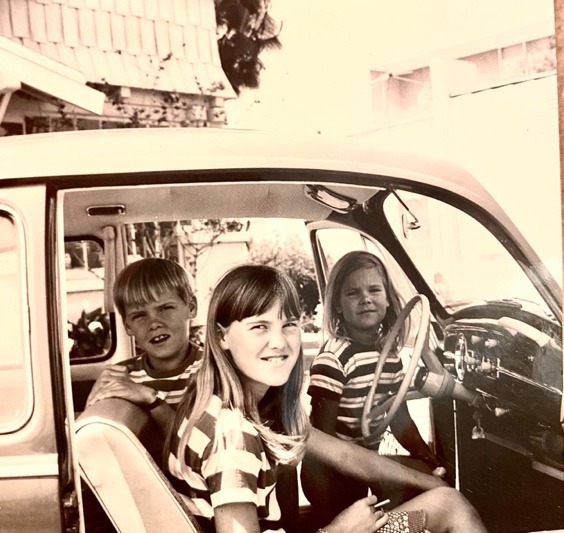
Teresa, Steve, and Sharon, Santa Monica
In my memory, it’s a Saturday morning in May 1965 and Santa Monica’s coastal fog spreads over city blocks, like a thick quilt muffling sound—the occasional car, the neighbor murmuring sweet to his dog. My six-year-old body snuggling in a cocoon of my favorite blankets, I’m hovering on the edge of a dream, a distant foghorn crooning. High up on the wall a small square window reveals a shady green rubber tree, quivering with birdsong that almost soothes me back to sleep until the aroma of coffee and toast wafts in from the kitchen. Then a familiar barrage of angry-man-yowling ruins it all, jerking me awake. Throwing the covers back, I jolt out of bed and creep to the hallway, peering into the living room.
“God damn it, Gwen! I’ve told those kids not to touch the vibes, or the mallets!”
My stepfather Bob’s shrieking lament shatters the quiet as a vein branches down his temple.
“I know, Bob,” Mom replies meekly, gazing at the vibraharp as she piles her blondish tresses into a sloppy bun atop her head.
“They should know better,” she tucks in some loose strands of hair.
Mom’s high cheekbones and blunt bangs frame the alarm in her almond-shaped eyes. Those brown eyes have the power to anchor me, if only I get the chance to gaze into them. I want to be near her as much as I can, but so many others vie for her attention, especially Bob. On the rare occasions Mom is accessible, I love to snuggle into her neck, inhaling her scent—spicy and sweet, from her Revlon Aquamarine lotion and Avon Topaz perfume. She doesn’t look like the other moms who wear floral house dresses and the short, permed poodle hairdos of the 1960s. Our mom who is often mistaken for our older sister looks cool in pedal-pushers or miniskirts and form-fitting poorboy tops. A walk down the street with her results in catcalls and date propositions, which I hate. I want her all to myself. But Bob has first dibs. The rare times she can focus on us, she’s more like our playmate, joking, making up funny songs and skits. Last week I was allowed to sit with her in the front cabin of Bob’s two-ton truck instead of getting loaded into the back like cargo with Steve, nine years old, and Teresa, eleven. A sea of Bob’s crushed paper coffee cups and beer cans rippling at our feet, Mom braided my hair while humming a melody that sent chills down my spine. I felt safe. Loved. But afraid to move, in case it broke the spell.
***
The vibraharp—also known as “vibes”—is a percussion instrument used in jazz music for improvisational solos. The instrument plays a significant role in creating the mid-century modern “Tiki Lounge” sound of the 1950s and 1960s. Resembling a xylophone, but with an electric motor, the metal keyboard bars produce a vibrato tone as the mallets strike them. Bob frequently plays with two mallets in each hand, outstretched claws grabbing hungrily for a more complex chord. Clutching the wooden handle of one of his favorite mallets, Bob thrusts it through the air, like zigzag brush strokes creating some frenzied abstract painting. The round head of the mallet is made of thin threads of orange yarn, tightly woven around a cork center. Two loose strands of the yarn have come undone, whipping about the orange mallet sphere as it slices wildly through the air.
“Someone fucking messed with my mallets! Do you know how much these cost?” he demands of Mom, navy blue eyes darting crazy-like.
“Gwen! Look at me when I’m talking to you! Whoever did this will have to earn the money to buy a new set!” Strands of brown hair flail wildly around his normally perfect slicked-back Pompadour.
“OK, Bob,” she mumbles, eyes nervously transfixed on his. She partially swallows the next phrase, “Don’t forget the rent is past due.”
From the day the vibraharp comes into our world, we are sternly warned never to go near it, but I’m fascinated by its glowing tremolo tones. When home alone, I tap on the keys with fingertips, then boldly with one of the colorful mallets—but never the orange ones—they are Bob’s favorite. I secretly play simple tunes like Happy Birthday and Jingle Bells, even though I might get caught. I think that if I can somehow show Bob my skill on the vibes, it might put him in a better mood. He’s not all bad, but he can flipflop in an instant from manic humor to rage. Bob starts food fights that end with pancakes stuck to the kitchen ceiling and wild races down the street while hurling pasta at us. A master of pantomime and mimicry, he can make us laugh so hard that we pee in our pants. With an IQ way above average, sadly he lacks the focus to hold down a job.
The sizeable gold-toned vibes occupy a corner in our living room, where the occasional passerby can witness Bob’s wild musical sessions through the open front door, waves of syncopated blue notes flooding into the quiet suburban neighborhood. Intoxicated and stripped down to his boxer shorts and black socks, Bob blasts the likes of Miles Davis, Freddy Hubbard, and Art Blakely on KKGO, L.A.’s preeminent jazz radio station, while his mallets ricochet across the keyboard’s metal bars. It’s probable that he damaged the mallet himself during last night’s reckless exhibition. With endless passion for this instrument, he has already dragged it through several evictions.
***
Teresa and Steve settle in at the breakfast nook, shoulders slouching. Meanwhile, Bob stalks Mom in the backyard while she tugs stiff dry laundry from the clothesline, dropping socks and t-shirts like spears into the plastic basket, while his deafening lecture continues on the proper care of vibraharps. Bruno, our German Shepard, barks an accompaniment to Bob’s discourse.
“I wanna get outta here,” Steve mutters as he chews his toast, spread with a white opaque coating. We’ve been out of butter for over a week, so we use Miracle Whip to cut the dryness of the “day old” bread that the bakery lets Mom buy at half price as a favor.
“Gotta get away from him,” Steve continues, wiping a smear of mayonnaise from the corner of his mouth.
Blasting through the back door, Bob protests about mallets and disrespect and overdue rent while I slink into a corner. Despite the imposing rant, his voice has a melodious resonance giving the impression he might burst into song at any minute, which is confusing. And frightening. A rage opera. Voice ripping across octaves, he gushes his grievances, puncturing any hope for a peaceful Saturday morning. Finally, collapsing in a chair in the living room next to the tower of his Playboy magazines, he absentmindedly sips his coffee, body limp as he stares off into space.
***
“Let’s go to P.O.P.!” Teresa whispers, squirming in her seat at the kitchen table.
“Yeah! I wanna go!” I add, biting my hang nail, a habit I still can’t shake years later.
“We don’t have enough money!” Steve argues. “And how are we gonna get there?”
Springing up from the table, Teresa leaps to the kitchen sink and tosses her plate into the soapy water. “We’ll walk. And we’ll sneak in. Some kids at school were talking about a couple different ways you can get in without paying.”
“But it’s so far,” I protest while twisting a strand of my blond hair.
“It’s not,” Teresa insists, as her plate clangs against the edge of the dish drainer.
“We can do it. It’s only three miles away. Let’s see if any of the other kids wanna go.”
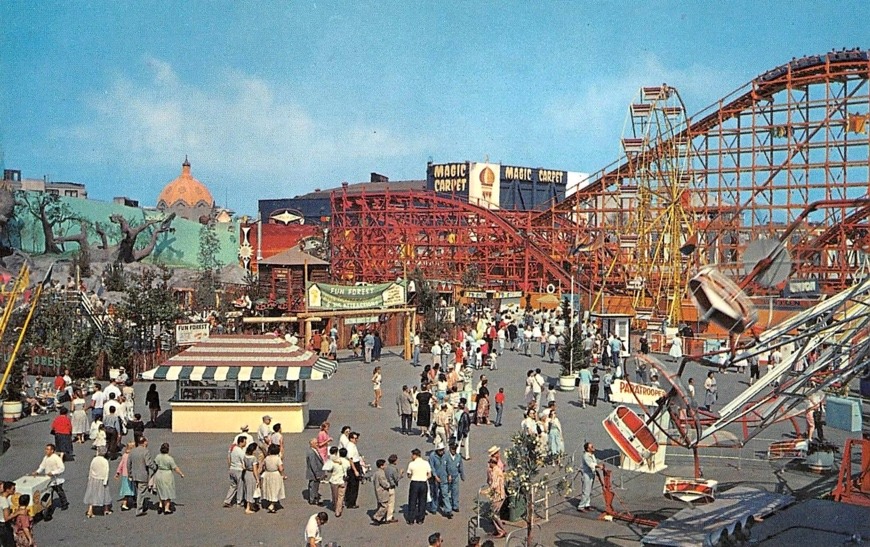
P.O.P. is an acronym for “Pacific Ocean Park,” a nautical-themed amusement park located on the coast between Santa Monica and Venice, extending out into the sea, supported by several piers. Visually appealing with its smart, stylish, mid-century modern design, rides have marine-motiffed names like Ocean Skyway, Sea Circus, and Deepest Deep. A Disneyland with mermaids, King Neptune’s Courtyard, and three giant seahorses perched atop a column of bubbles greet you at the park entrance.
Our first visit to P.O.P. occurred a couple of years earlier with Bob when he started dating Mom. It started out fun, but now I realize he was probably hungover and became cranky and distracted, so we had to leave early. Back home, when Mom insisted I change out of my fancy black patent leather Mary Janes, I refused. As punishment for disobeying Mom, Bob slung me over his lap with a force that knocked the wind out of me. Fierce blows landed on my bare skin, delivered by huge, muscled hands. Our apartment could not contain his wild bellows.
***
With Bob not able to hold down a job and Mom a stay-at-home housewife, we kids have a shortage of funds. Our recreation is low-cost or no-cost and almost always involves walking or riding our bikes or skateboards since our car usually has serious mechanical issues. We don’t get an allowance, so we earn our money through various means. With the flotsam and jetsam that dots the shoreline, we build miniature dioramas on the half shell and sell them door to door. Mini shell-scapes of ocean scenes—a tiny fisherman statue perched on a driftwood twig under a dried seaweed tree on the pale blue concave of a clamshell. Or a miniature garden made from plastic flowers, once part of a child’s toy lost at sea, arranged in an abalone shell. We peddle our wares to the neighbors, each handmade item carefully displayed in a shoe box and marked at 75 cents each. Teresa occasionally babysits for the neighbors, Steve has a paper route, and I can earn $1.50 for several hours of housecleaning for Grandma Pedie Pie who lives around the corner. Even though we stash our money with plans to buy toys or school lunches, Mom and Bob almost always take it to help pay bills. Mom regularly sends Steve on his bike to buy groceries with a long list but not enough cash, so he steals what he can to feed us. Blocks of cheese are nutritiously dense and easy to hide, so he slips them under his windbreaker. Once we discover P.O.P., we become obsessed, and on the rare occasions we can scrape together the 75 cent “Junior” entrance fee, we spend hours there.
***
Teresa runs across the street to the weather-beaten white house where Nicki, Roy, Martha, and Liz live with their parents and pounds on the front door. I’m intrigued by visits to their home where their mother, while singing Hungarian folk songs, machine-rolls her own foot-long cigarettes. Although she eventually trims them down, I am fascinated with those super long smokes. Liz has a penchant for slicing open the mouths of her dolls, which simultaneously attracts and repulses me. This family has an oral fixation. Martha and Nicki answer the door and upon hearing the day’s plans, agree to join us. Steve telephones Clark and Martin who make our group a total of nine kids ranging in age from nine to eleven years. I’m the baby of the clan and often straggle behind.
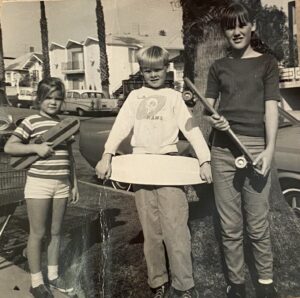
Teresa is always the leader of our neighborhood gang, so we rely on her to make the big decisions. Despite her slight build, she is incredibly strong, physically and mentally, and can persuade and intimidate all of us. When scaling the steep 100-foot cliffs above the beach over Christmas break, several of us got spooked and froze. The eroding terrain was difficult for our child-sized hands and feet to get a good grip, but Teresa convinced us to continue frogging up the last 30 feet of sandy incline until we dragged our exhausted little bodies over the top of the bluffs, hands and knees abraded and stinging.
The plan is to meet at 10:00 a.m. at the corner of 5th Street and California Avenue, minutes from our house. Nicky and Roy are late, and by the time we agree on the actual route, it’s almost 11 a.m. Making our way the one block to Wilshire Boulevard, we turn right at Zucky’s Delicatessen, a neighborhood staple since 1954. Customers are nestled into orange and brown plaid booths, hovering over plates of steaming eggs, waffles, and sausages while the mayonaissed toast I ate dissolves in my belly. I ask when we’re going to eat as my stomach grumbles.
Teresa is irritated. “You should have had breakfast back home.”
The futility of that statement hurts as Steve and I know the kitchen had been void of groceries.
Heading west on Wilshire, we trek the five blocks to Ocean Avenue, the multi-lane thoroughfare that parallels the coastline. We pass all the familiar landmarks including the Thom McCann shoe store where I linger at a display of shiny go-go boots in jewel tones, and Thrifty’s Drugstore, home of the five-cent ice cream cone. Cars and buses whiz by, and my mind wanders to the cold creamy strawberry cone that I occasionally sneak while walking home from the Third Street Promenade outdoor mall. Then, The Dog House, the cartoon-looking structure that sells hot dogs. A whimsical canine caricature on the sign beckons to me and I imagine biting into the soft squishy white flour bun, tangy relish and mustard oozing in my mouth, teeth sinking into the warm savory hot dog. Mom, a nutrition fanatic, forbids us from eating here, even if we have the money. By her standards, that hot dog meal breaks too many clean eating rules.
As I try to avoid the cracks in the sidewalk, Bob’s snarls reverberate in my head, a playback tape on loop that I can’t stop, as nausea swells in my gut. Does he know I played with the vibes last week? Would he blame me for the damaged mallet? Would I have to get a job? I revert to counting by twos in my head, a mantra on repeat that distracts me from my too-tight dirty red Keds, and the dread of returning home later that day. I remember the time our rent was three months late and Bob locked Steve outside the house, demanding that he get a job to help out or he couldn’t come home. Hours later, sinking into a beer-guzzling daze, Bob forgot his threat while Steve slipped unseen through the back door, still an unemployed fourth grader.
“I’m going on the Ocean Skyway ride first!” I almost scream. I remember the ariel view from those bubble-shaped gondolas, suspended above the tiny, insignificant park-goers. Sun glinting gold on the little swells that dot the great expanse of deep teal, a sense of timeless suspension on warm currents of sea breeze.
“Me, too!” Clark smiles broadly.
“No way, that’s a baby ride! We’re doing the roller coaster, then the Magic Carpet ride,” Nicki yells. The older kids agree. We spend the next half hour arguing the attributes of our favorite rides, working ourselves into a frenzy as we hurtle westward.
Seagulls squawk and circle overhead as we run across Ocean Avenue. The morning fog or “May Gray,” still chokes the sky as the muffled moan of the foghorn drifts up in lazy intervals. Heading south toward Venice, Nicki and Roy keep breaking away from our group, running ahead, distracted by window displays, or panhandling change from passersby. Heading south toward Venice, Nicki and Roy keep breaking away from our group, running ahead, distracted by window displays, or panhandling change from passersby.
***
There are two ways to get into P.O.P. without paying. First, a kid at school says you can enter the park from the back exit of a German diner that sits on a narrow street lined with cottages and small family-owned restaurants, faded from decades of relentless exposure to sun and salt. He makes it sound easy. The second method of illegal entry involves a trap door under the pier that provides structural support to the amusement park. According to playground chatter, this option involves navigating the dark, damp underbelly of the pier while trying to block out the stench of excrement, alcohol, and seaweed. Knowledge of the tidal schedule is mandatory, or you can get trapped by high tide. “Bums” as the unhoused are called, make this area their home, and throw threats and rocks at trespassers. At the trap door, the sand slopes up leaving only three feet of space. You have to force that little door open fast and pop up like a jack-in-the box. If successful, you will find yourself amid park-goers in one of the busiest sections of P.O.P. The restaurant route sounds safer and dryer.
The east side of Ocean Avenue is lined with cozy bungalows and well-maintained art deco hotels in muted pastels built in the 1920s. Further down the avenue stand clusters of apartments constructed several decades later, in the sleek design of mid-century modern architecture. Once the thoroughfare meets the Santa Monica pier, the environment changes significantly to half-empty parking lots, grimy gas stations, and sleepy family-owned markets. Despite the fog and less desirable area, beachgoers arrive with their gear in tow—rafts, umbrellas, and picnic baskets of food—surveying the sand for the perfect spot to set up. I wonder what’s in their baskets as my stomach growls acidic from hunger and a low-grade angst. When will Mom buy more groceries? Will I have to change schools again? Sneaking into P.O.P. sounds scary and what if we can’t make it to the back of the restaurant? What if they call the police? If we try the route under the pier, what if high tide comes in and washes us away? The surf’s soft roar distracts me, and I wish I was body surfing those waves.
Our little tribe shuffles along the gritty, stained sidewalk, counting V.W. bugs to pass the time. Steve and I practice the whistle we learned the previous summer at our grandparents’ house at Big Bear Lake.
“Mine’s louder!” My middle and index fingers press against the underside of my tongue while I blow a shrill tone.
“No way! I win!” Steve threatens to wipe his spitty fingers across my arm.
Teresa hums a familiar melody, then breaks into one of our favorite commercial jingles.
Steve and I join in as backup vocals.
“Whadda you want
When you gotta eat somethin’
And it’s gotta be sweet
And it’s gotta be a lot
And you gotta have it now
Whadda you want?!!!”
Belting out lyrics faster, louder. It almost sounds like an argument. People stare, concerned. Our manic yelps end with:
Candy-coated popcorn, peanuts, and a prize
That’s what you get in Crackerjacks!!!”
I wish I had some.
***
Three miles feels like an eternity, and although an overcast pallor still clogs the sky, it’s warm and slightly humid, and my feet burn in my cramped tennis shoes. My six-year-old brain cannot process distance or time or job hunting. I think about The Hot Dog House. I think about our dog, Bruno. Would Mom and Bob leave him behind, like they left Charlie when we snuck out of the Malibu house the year before? I tug hard on the sun-bleached ends of my ponytail, white hot sensation igniting my scalp. Chewing the hair between my incisors, I’m mesmerized by the texture of the individual strands grinding together, leaving a faint aftertaste of sea salt and Breck shampoo.
“Sharon, hurry up!” Teresa grows impatient as I lag behind, enveloped in the sensory experience of trichotillomania.
It’s almost 1 p.m. as we approach the outskirts of the P.O.P. property, and the sun begins to permeate the cloud cover. We are keyed up and sunburned from the fog’s potent UV rays.
“Look! There’s the top of the roller coaster!” Nicky can barely contain himself and sprints down to the corner.
“Come here, Nicky! We gotta stay together,” Roy glares at his brother. Our pace quickens as we realize we’ve finally made it!
Climbing up a cinderblock wall for a better view, I scrape my knee but squeal with excitement as I watch people stream into P.O.P.’s main entrance. I notice a little girl and her parents. The mother carefully straightens a bright red bow in her daughter’s brown hair, then gently places her hand on the girl’s cheek. The father looks first at his daughter, then at his wife while smiling tenderly, which makes my stomach feel funny, almost like I’m carsick. I try to look away, but I can’t. With a parent on each side holding their daughter’s hands, they approach the P.O.P. entrance while she skips and laughs. I don’t think that father plays the vibes.
P.O.P. opened in 1958, but by 1965, when we frequent the place, the owners are losing money, unable to stay on top of safety and security, and the decline is apparent. A darkness lurks on the periphery, and trash and debris collect in the crevices. The subculture of forgotten souls under the pier multiplies, and it becomes a place for illicit and illegal activities, including drug and alcohol use and the selling of sex. Rides are not maintained or properly staffed, and people get hurt. The Magic Carpet ride breaks, leaving park goers suspended in flimsy carts looking 25 feet down at a miniature town made of little houses and trees. Later, we hear about an incident in which someone falls to their death, crushing the tiny village. Round the World in 80 Turns is a ride that whips visitors about in carts in the dark, while projecting scenes from different countries onto multiple screens. Eventually, management will shut down the attraction due to customer complaints of nausea, and back and neck injuries.
***
The German restaurant is almost empty, and Nicki and Roy fly recklessly across the stained red and white linoleum floor to the worn green Formica counter, landing abruptly on two of the stools. Hastily tearing into packets of soda crackers that are neatly stowed in little white rectangular glass containers, the boys spin wildly on the stools, scattering crumbs like spray shooting off rotating sprinklers. The rest of us reluctantly follow and perch nervously on the remaining stools. When the lone waitress attempts to take our order, we each request a glass of water. The look of disapproval on her face reveals she is losing patience, and we had better get on with our plan. One by one, we will head to the restroom in the rear of the diner, but instead of returning to the counter, we will walk out the back door and into P.O.P.
“Steve, let’s go first! Now!” Teresa’s whisper is strained as she grabs Steve’s arm and heads to the exit door. If they get in, who will I go with? Who will take care of me if our threesome splits up? I make fists like tiny white-hot grenades until my nails dig deep into my fleshy palms, knuckles cramping. Teresa and Steve return in minutes, with faces fallen, reporting the presence of a tall chain link fence, topped with spiney barbed wire. A collective sigh of disappointment deflates our group as we slump at the counter.
“We can’t get in?” Martha’s voice cracks with emotion.
“Shut up, Martha!” Teresa paces, brows furrowed with frustration.
Tears blur my vision, and I cram extra cracker packages into my pockets—these are the kind we are not allowed to have at home since they’re made from processed white flour—then I count the little green dots in the Formica countertop.
“We’re going in! You guys can do what you want!” Nicky growls while Roy’s head bounces in the affirmative like a dashboard bobblehead. They were the biggest risk-takers in our gang, and years later we will learn that they both end up in prison for felony theft and drug crimes. The brothers speed out the back exit, flail onto the fence, hurl themselves over, and land in a pile on the other side. The following Monday at school they will tell us they suffered a few scratches and clothing tears, and hung out at P.O.P. until almost dark, hitchhiking home.
I creep near the restroom and peak out the back door, through the web of wire. There’s the back side of King Neptune’s Courtyard looming high, the aqua wall grimy and splotched with erosion. Litter spills out of trash cans and a multitude of loose wire hangs from the wall, whipped by wind gusts, like a tousled, unkempt mane. The smell of popcorn and fried batter teases my hunger, and my hand encircles several packs of my hoarded crackers.
“Get out of here now you kids! Or I’ll call the police!” The waitress has had enough, chasing us out with a broom.
We spill out of the restaurant and meander down the street to Wilshire Boulevard while fatigue like a wet blanket slows our pace. The faint cries of distant roller coaster riders drift our way, mingling with the far-off sound of breaking waves. A melody from the piped-in Musak from The Banana Train ride catches my attention—a tropical-themed refrain composed of those familiar vibraharp tones that quiver like my nerves as I dread the walk home. Torn water blisters smear through the rough canvas of my Keds while a marine haze creeps back onto land. We eventually pass Thrifty’s Drugstore, and the din of traffic pummels my throbbing head as I spot the crushed corpse of a chocolate ice cream cone smashed on the sidewalk. We finally turn north off Wilshire Boulevard and head up 5th Street as the sun lowers behind the skyline, casting bruised shadows onto the sidewalk.
***
Our neighborhood seems quieter than usual until we approach our house and hear the T.V. blaring some sporting event out the front door.
“Where have you kids been?” Mom inquires with a slight curiosity in her voice.
I want to tell her everything that has happened. The long walk, my aching feet, the mean restaurant lady, the girl with the red bow. I want her to wrap her arms around me as I snuggle into her lap.
Instead, I respond nonchalantly.
“We were helping Martin’s grandparents clean their garage,” knowing that we’d get in trouble if the truth came out. That Mom is more interested in Bob who is splayed on the couch in a stupor where she stops to run her fingers through his dark wavy hair as she makes her way across the room than she is in our day. The orange mallets and beer cans lie scattered on the end table, spilling onto the floor. Several cardboard boxes overflow with books and bric-a-brac, so I know another move is imminent. My head drops and I study the blood that has dried on my shin in the shape of a man’s profile.
“You’d better plan on staying home tomorrow and packing.” Mom struggles to fit a pair of Danish teakwood monkeys into a box already crammed full.
“Bob is selling his vibraharp so he can make a deposit on an apartment he found in Redondo Beach. They don’t take pets, but we’ll try to sneak Bruno in.”
A shrill ringing swells in my ears as a flush stings my face. Mom’s voice drifts off as I grab the edge of the bookcase to steady myself. What if the new landlord finds out about Bruno? Redondo Beach is over twenty miles away—that means starting a new school just weeks before the end of the semester. I have so many questions, but my throat swells shut. My eyes trace around the edges of a burnt spot on the olive-green carpet while heat sears through my body, sweat drenching the neck of my t-shirt. Finally, Mom’s voice returns to normal volume.
“There’s potato soup if you’re hungry.”
Teresa and Steve make faces and gagging sounds. This soup is a concoction of soggy potatoes and slimy chunks of onion in a bland powdered milk base. Pennies per serving. Decades later, I will not be able to eat any version of soup made from this root vegetable. But we are beyond hungry, and so we fill up on the slimy stuff. When Mom’s not looking, I smash up the last packet of contraband crackers and add it to my bowl.
That night the sunset is extraordinary, capturing my attention through the kitchen window. Shades of tangerine and coral blend into a wash of rose and plum, illuminating the sky. L.A. smog at its best jacks up the color palette as the sun drops below the edge of the horizon.
Even at six years old I try to make sense of why hard things happen to us. Or I look for signs or hidden meanings, a coping method I will carry into adulthood. Maybe if I don’t argue with Teresa and Steve, Bob will be able to hold down a job. Maybe this sunset is a sign of better times to come. Maybe we can stay in the new apartment for a couple of years so I don’t have to keep changing schools. Maybe we can keep Bruno.
“You kids better get to bed. We’ve got a full day of packing tomorrow so we can leave first thing Monday morning. We don’t want to be here when the landlord stops by looking for rent money.” These evictions—fleeing in the early morning hours or late at night—will become a regular occurrence for the next decade, sometimes several times a year.
***
By 1967 the owners of P.O.P., owing back taxes and overdue rent, will be forced into involuntary bankruptcy and the park will close, devolving into a graveyard of disintegrating buildings and dilapidated rides. By 1967 we will have been evicted four times in four years, changing schools with each move, sneaking away in the dark to avoid the landlord, or worse, the sheriff. In the winter of 1975, what remains of P.O.P. will be demolished except for a scattering of pilings that local surfers use as a training course. By 1975, we will have moved over 20 times, and my family members will scatter throughout Southern California. With periods of homelessness, Teresa, Steve, and I will be forced to split up, farmed out to stay with relatives, friends, or acquaintances.
As I lie in bed, the last streaks of dusty orange and magenta fade into the purple night sky. The rubber tree is still and the birdsong quiet now. The moonlight floods through the tiny window and stamps a square of silvery light on my blanket. I can hear the clinking of silverware in the kitchen where Mom stays up late filling boxes with dishes and pots and pans as she and Bob speak in modulating tones. Then a pause. Then the sound of mallets thrumming on the keys as Bob plays the vibes for what may be the last time. I almost feel sorry for him. I press my fists hard into my queasy stomach, but the soup cannot quench the nagging emptiness that is always there.
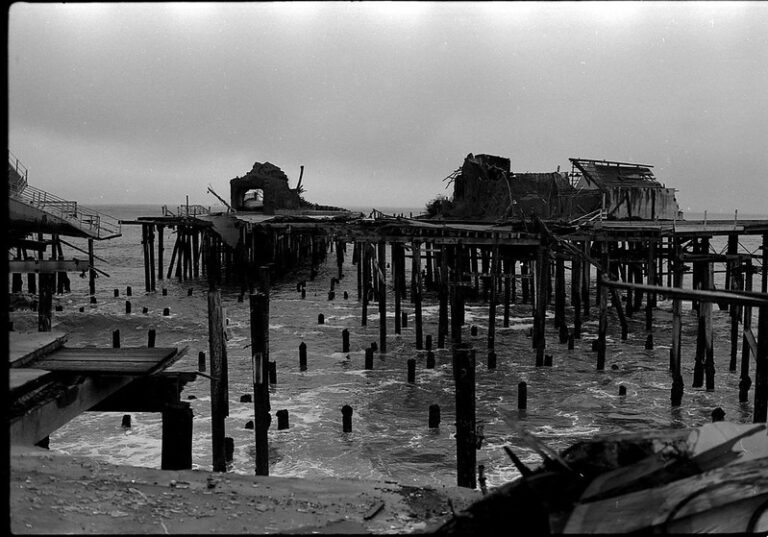
P.O.P. after the Fires, by Thomas Levanthal
Sharon K. McClain finds impetus to write from her unconventional childhood growing up in the beach cities of Southern California, alchemizing a painful past into healing and beauty. Themes prevalent in her writing range from trauma and grief to forgiveness and hope. Sharon’s work has been published in The San Joaquin Review, Academy of American Poets, and Our California, a joint project of California Poet Laureate Lee Herrick and the California Arts Council. Sharon is an MFA candidate in Creative Writing at California State University Fresno and supports her writing habit by working as a yoga therapist and medical librarian.