
The White Cranberry | Ashley Adler
Jack, my mother’s boyfriend, always enjoyed poking fun at my fear of pesticides. One evening he brought home a sample of warning labels from the shed where he kept all the pesticides to spread on the cranberry beds. The labels were full of skulls and crossbones, hazard triangles, unpronounceable chemical names, and lists of all the horrible things that would happen if one ingested, touched, or inhaled the chemicals —lung failure, heart failure, vomiting, death within minutes. He laughed as I shuddered. I pictured the gallons of pesticides in the shed a few hundred yards in one direction, and in the experimental bed a couple of hundred feet in the other direction, where the marsh workers tested new chemical cocktails.
Each summer at regular intervals, signs were posted at every entrance to the marsh, warning of pesticides being sprayed. I could see them from the house and when we drove along the road to town or school. Sometimes we’d have to stay off the marsh for only a day or two, but more serious pesticide applications would require three or four days for the chemicals to dissipate. During this time, I stayed in the house, hating the lockdown as I watched the crop dusters flying over the marsh, spreading their poison. Sometimes the pesticides were dispensed by a tractor with a huge canister on its back and fold-out wings with nozzles, looking like a giant version of the bugs it was supposed to kill.
There was danger in the marsh besides the chemicals, but I didn’t see it at first.
***
The first time I met Jack was just after my ninth birthday, two years before my parents divorced. He came for a surprise visit while my mother and I were on a camping trip. He was dressed to impress—black leather coat, sunglasses, and khakis, sliding out of a shiny black truck with a purposely noisy engine. My mother introduced him as a co-worker on the cranberry marsh where she worked, but I could see the hungry look in his eye.
Over the next two years, as my parents’ marriage fell apart, my mother’s friendship with Jack grew. Tucked in her lunch bag, I found the love notes they wrote to each other, playfully signed with their shared nickname: “Nobody.” Soon after, my mother divorced my father, believing she had a future with Jack. Jack also ended his marriage and moved my mother and me into his house on the cranberry marsh.
When I went to live there, at age eleven, it was an adventure. Of the thousands of acres to explore, only a few hundred were actually used to grow cranberries. The rest of the land consisted of reservoirs, forest, meadows, and sand—the cranberry’s vital support system. I loved standing on top of the giant sand hills in the summer and sledding down them in the winter, feeling no bigger than a queen ant in her sandcastle.
I also saw more wildlife than I had ever seen before: muskrats, foxes, and sandhill cranes, a protected species whose beaks, heads, and long necks resemble cranberry blossoms, giving cranberries their name. I saw snakes and frogs and, once, a black-and-blue salamander with mutated limbs that my mother rescued from a sea of cranberries, deformed, she said, because of the chemicals in the water. She brought the salamander home for a couple days so I could see its stumpy limbs. I ran my fingers over its smooth skin, marveling at its submissiveness, before she released it back into the wild.
Those wilds were the marshes of Wisconsin which, that year, 1999, produced record barrels of cranberries. With this surplus, cranberries became a regular part of our diet. My mother would eat them straight from the bags that Jack brought home, enjoying the tartness. I tried to like the cranberries, but the only way I could eat them was if they were covered in chocolate, or squeezed into juice, or hidden in pies. I never could stomach raw cranberries.
***
In the early years, Jack took us on canoe rides and fishing trips. He gave us tours of the entire marsh, showing us turtles and deer and a fox den. He took us walking among the boxes of bees that were brought in for pollination, our eyes squinting shut as the bees swarmed past.
As we sat around the campfire at night, he talked to owls with great skill, calling them, answering them, keeping it up for several minutes until the owls, lured in, came close enough to realize he wasn’t an owl at all but a man of average height in blue jeans with black hair and a mustache. He took us to see the sandhill cranes when the lanky-legged parents first brought their baby chicks into the world. Once he even caught one of the chicks for me to hold, ignoring the claws of the shrieking parents.
My favorite outings were when Jack took my mother and me swimming at the lake on the sandiest part of the marsh. After bulldozers had dug out the sand and piled it in huge hills for use in marsh operations, the hole left behind was filled with water, creating a deep, spring-fresh lake with pure, sandy beaches. I had never seen a swimming hole half so fine. I’d wait until 4:00 when Jack got off work, and, dizzy with anticipation, I’d watch his digital thermometer displaying the precise temperature in the cranberry beds as it crept from the 80s into the 90s, the hottest time of the day. I could picture the cranberries basking in their sandy beds, ripening and reddening. I could imagine the warm water, hot sand toasting my feet. At 4:02 we’d all pile into Jack’s truck, his golden retriever, Molly, in the back.
After a five-minute ride, Jack and I would get out of the truck and race Molly to the floating dock in the middle of the lake. All three of us hit the water at the same time, but Jack would reach the dock first, me second, Molly chugging in last. Molly would try to follow us up the steps onto the dock, but of course her four legs wouldn’t let her. “Doofus,” Jack teased her. “If you looked up ‘Doofus’ in the dictionary, your picture would be there.” He pulled Molly onto the dock, and all three of us jumped into the water again.
After swimming, Molly and I would climb the giant sand hills, panting up the windward side, blowing sand stinging our faces, sticking to our wet skin and hair. The wind erased our prints as we charted a course through shape-shifting dunes. Nothing in the sand was permanent. Once we reached the summit, we scrambled down the steep, leeward side—half running, half falling—and crashed into the water below, an avalanche of disrupted sand trailing us.
We would drive back home around 7:00, when the setting sun spread a warm glow across the marsh. Sitting in the back seat, admiring a clam shell I had found at the swimming hole, I crinkled my sand-covered feet. Seeing my mother and Jack in the front seat and Molly panting in the cargo bed, I realized we were becoming a family. There was an empty spot next to me in the backseat, which I thought might someday be filled by the baby my mother and Jack were considering.
I looked out the window at the bright blue reservoirs and rows upon rows of sand beds covered with cranberry vines, green with new growth. The little cranberries on the vines were no bigger than peas, still white and light pink, and barely visible as we drove past: tiny gemstones that sprang out of the sand beds like seeds forming a pearl in a clam.
***
All cranberries begin as tiny green buttons that slowly turn white, then eventually red, as they mature. By harvest time in October, most are a deep ruby color, their rich pigment brought to the surface of the skin by both warm sunlight and freezing temperatures. Some berries, shaded from the sun, remain pink or white. These white cranberries, sweeter and smaller than the other berries, haven’t been exposed to the sun or frost that would ripen them into full-size red cranberries.
***
On clear, crisp Saturday mornings in early October, I took Molly for our weekly walks on the marsh, though she usually took me for a run, chasing flocks of Canada geese getting ready to journey south. My feet pounded the sandy dirt of the dike, trying to keep pace as Molly yanked at the leash. The beds around us were dotted with crimson cranberries, and the vines had deepened to a purplish red. Soon, the cranberry beds would be flooded for the harvest.
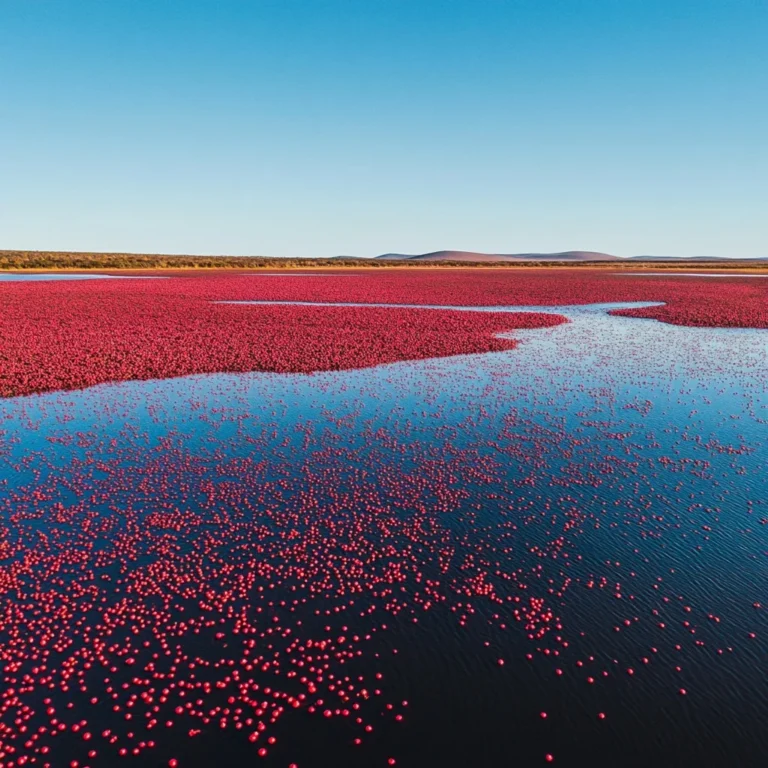
During the harvest, workers wearing waterproof overalls and rubber waders would use reeling machines, also called “eggbeaters,” to dislodge the berries from the vines. The berries, which have hollow pockets, bob to the surface and float, where they are corralled and harvested by workers on machines called “booms.” The whole harvesting process takes about two weeks and requires long hours by the regular employees (including Jack) and seasonal workers.
Even after the geese flew away, Molly continued to run. She treasured this time, after being penned all week while everyone was away at work or school. She was a hunting dog, but Jack didn’t take her hunting much anymore. In fact, he hadn’t been spending much time with my mother and me, either.
My mother said it was because her class schedule at community college, along with spells of vertigo, made it difficult to make plans. She also said Jack wasn’t happy with the long hours of his job. I noticed she and Jack had been arguing more, and Jack rarely spoke to me when he dropped me off each morning at the school bus stop. He was gone more often, but I wasn’t sure where.
I told myself Jack was just busy with work. This time of year, the frost alarms would go off nearly every night. When the temperatures in the bog dipped close to freezing on cold fall nights, the men were awakened and immediately reported to the marsh for “frost watch” duty, which involved turning on the irrigation system to protect the berries, their vines, and next year’s buds from the freezing temperatures. Frost watch was necessary until the cranberry beds were flooded and frozen for the winter. The alarms usually went off between one and three in the morning, piercing through the house with the urgency of a crying baby. From my room I would hear Jack in his bedroom, the epicenter of the noise, swearing and pulling on his clothes. He’d be out the door in five minutes, hopping into his truck and driving to the part of the marsh that needed irrigation. Sometimes he was gone for hours; sometimes he was back within the hour, only for the alarms to sound again.
Molly, finally tuckered out, slowed to a trot at the end of the first row of cranberry beds. I paused to catch my breath near one of the many pump houses, where the workers control the water levels in the beds and run the sprinklers during frost watch.
Watching the water pooling around the bulkhead, I wondered if Jack was going to leave his job. My mother had told me that Jack struggled, not only with the long hours, but also with the uncertain future of the cranberry industry. “Prices are down” had become a catchphrase in our household. At the time, accustomed to seeing prolific harvests of the bright red fruit, I didn’t understand the perilous economics of supply and demand.
The Ocean Spray Cooperative had introduced white cranberry juice in 2001, which I later learned was an attempt to market the glut that threatened the industry. White cranberries, harvested a couple weeks before their skin turns red, have the same health benefits as mature cranberries. My mother had started buying white cranberry juice because it didn’t leave stains like the red juice did, and I liked it because it was less tart. Jack, however, was not convinced that there was a future in growing white cranberries—or any cranberries.
Neither Molly nor I wanted to turn back toward the house. She wanted to explore the great unknown, and I wanted to keep walking until we reached the edge of the marsh—I knew it had an end, but it was so vast I couldn’t see it—because maybe once I got past the sand hills and the reservoirs and the cranberries, I would be able to see what Jack was doing when he wasn’t at home with us.
***
My mother and I had lived on the marsh for almost five years before we began to feel like intruders in a place we had thought of as home.
One night, my mother decided to surprise Jack at the company’s annual harvest party at a local country bar. She and I left a school concert early to stop at the bar and say hi to him. We surprised him, all right, and he surprised us. He and a strange woman—his other girlfriend, we later found out—were kissing in the crowded parking lot next to his truck when we drove up.
My mother and I sat in the car and gaped for what seemed like hours until the kiss ended and Jack turned around and saw us. He sauntered over to us, his face stern and defiant, not looking either of us in the eye. My mother got out of the car on wobbly legs, her breath coming in short bursts in the cold November air. She was barely five feet tall, but standing before him, limp with shock, she looked even shorter. Her brown eyes frozen wide, she blurted, “Are we all right?”
“Yeah,” Jack replied in an irritated, defensive voice, and I knew he was saying this more to avoid a scene than actual truthfulness.
We left shortly after that, and my mother kept shaking her head as she drove, raking her long black hair away from her face and gripping the steering wheel so tightly her knuckles turned white. She muttered to herself, in barely controlled panic, “We’re okay. He said we’re okay.”
Meanwhile, her driving was not okay, and I knew she did not believe the words she was repeating to herself, mantra-like. Her mind clearly on Jack, she was on autopilot as she took the curvy “Snake Trails” road home, giving me one of the longest rides of my life—or, actually, the shortest—because she was taking the curves at higher speeds than usual. She always drove fast through the curves, which carved their way around dense forest and cranberry marshes, because she was a good driver and knew the road well, but now she had the deadly instinct of a race-car driver. I squeezed my eyes shut as a 35-mph sign flashed into view and swerved out of sight as she jerked the wheel going at least 50 mph. I was glad that the stretch of road with water on both sides was a straight shot with no curves. As we zoomed past, I saw the triangular mud huts of the muskrats, and I realized it had been three years since Jack had taken us canoeing through them—now he was always busy with other things. The huts seemed thicker this year, as though the muskrats knew it would be a long winter.
We made it back to Jack’s, and as soon as she dropped me off, she left to go looking for him. I sat on my bed, reeling as though I had listened to a frost alarm for too long, trying to process what my mother was busy denying: Jack’s cheating meant we were just placeholders in his life. Somehow, in his eyes, she had become a “nobody.”
Jack returned half an hour later from the party, and I hid in my closet, not sure if he’d treat me differently now that I knew the truth. I heard him calling someone—his other girlfriend, I guessed—and talking for a couple minutes, but couldn’t hear what he was saying. Then, he cracked open a can of soda and sat in front of the television as though nothing had happened. I stayed in the closet until my mother returned home ten minutes later. Hearing my mother’s panicked voice demanding an explanation from Jack, I went to bed and pulled the covers over my head.
My mother spent the next couple of weeks losing weight, trying to make Jack like her again. I begged her to find a place to live so we could move away, but she kept putting it off. Jack told us we could stay for the time being but kept seeing his new girlfriend, even going to church with her. He was no longer stealthy about it, at least not around us. I found out that the other woman’s husband and kids didn’t know about the affair yet, so I assumed they remained stealthy on that end.
Winter snow fell. The lake froze, and snow covered the marsh, making it so white and flat, it was difficult to tell that beneath it were cranberry beds stretching for miles. They were frozen, cradled in a layer of ice, hidden from wind and predators and, ironically, protected from frostbite. My mother and I found out that the other woman’s kids now knew about the affair. I worried that our window to escape was slipping away, like sand in an hourglass. With the weather so cold, not many people were selling their houses. I packed my books and the good china, watched the last marsh geese go south for the winter, and waited for the time when we would fly.
Mid-December, I finally persuaded my mother to look for a new place. Shortly before Christmas, she saw a house for sale in the town where I attended high school. I was excited when I learned it was less than two blocks from school. My mother left a message for the owner asking to see the house, requesting specifically that he call her on her cell phone and not Jack’s home phone, although she gave him both numbers.
Two days later, my mother and I arrived home from work and school to find a message in Jack’s handwriting to call the owner of the house to schedule a time for a showing. We looked at each other fearfully. We hadn’t wanted Jack to know we were looking at houses.
A few days later, on Christmas Eve, Jack decided he wanted us out. He told my mother he was taking our things to the house in town. My mother had only seen the house’s interior briefly the night before and hadn’t decided to buy. She made an emergency phone call to the owner and asked if we could move in. Since no one was currently living there, he agreed.
While I carefully but swiftly packed the items in my bedroom, Jack began flinging my mother’s and my possessions around in the basement: his idea of packing. I was grateful I had packed the china weeks before. Not daring to go downstairs after I finished boxing my bedroom, I went outside to find my mother in the garage packing her tools and gardening equipment. “How’s it going?” she asked, her voice false-cheerful. I told her she looked disheveled, and she told me I looked spooked. “What should I pack next?” I asked. We were interrupted by a potted houseplant sailing through the first-floor window of the house, landing upside down in the bushes and spilling its dirt. “Go rescue my plants,” my mother said.
On Christmas Day, Jack took three truckloads of hastily packed boxes to the house in town. My mother and I took five carloads. In one of the boxes Jack had packed, I saw that my cell phone and a lamp had been smashed.
The next day, Jack called his best friend and together they moved the largest of my mother’s furniture. While my mother packed more of our things at Jack’s house, she left me at the house in town so I could open the door for him and his friend and keep an eye on them.
“Last time I’ll have to move this damn heavy thing around,” Jack grunted as he and his friend lifted my mother’s china cabinet. It teetered dangerously to the side, as though it couldn’t wait to get away from him, either.
***
Jack had us almost completely moved out in two days. Unpacking took much longer. At first, I was too busy digging through boxes and too happy to be away from Jack to notice or care much about the house, beyond the fact that it had four bedrooms and a basement. My mother told me it was eighty years old. As soon as the Christmas holiday was over, she contacted an inspector so she could get a better idea of the house’s value and condition.
Before the inspector even arrived, we noticed things. My first clue that something was wrong was when I saw that my bed rested on the floor at an odd angle.
“My room tilts!”
“So does the rest of the house,” she said. “Haven’t you noticed?”
I checked the two bedrooms next to mine and found that both tilted toward the backyard, away from the foundation, same as mine. The kitchen, in the center of the house, appeared not to tilt. I ran to the dining room, which turned out to be the worst: It tilted in five different directions and had a giant lump in the center, as though a seed was sprouting underneath and erupting against the floor. The living room and my mother’s bedroom, near the front of the house, also tilted in two different directions.
I also discovered that my room and the other rooms on the back end were colder than the rest of the house, as though the walls were thinner. “Come look at this,” my mother said, pointing to a stained bulge at one end of the kitchen ceiling. She stood on a stepstool and peeled back one of the ceiling panels. Bits of leaves, insulation, and other debris fell onto the floor, along with a few shelled acorns.
“A squirrel nest!” she yelled.
“That would explain the acorns I found in the kitchen cabinets,” I said.
“That also explains why this end of the house is so cold.” She held up a piece of chewed insulation with disgust. “I think the squirrels are using the insulation for their nest.”
We left the squirrel nest intact, fearing that removing it would bring down the entire ceiling. When the inspector arrived, all three of us walked through the house, puzzling over its cracked wooden foundation beams, tilted floors, lead-painted windows, ungrounded outlets, broken patio door, asbestos hanging in the basement, squirrels frisking in the walls, and wood chute wide open to let anyone or anything in. When the inspector handed her the report, full of scribbles, broken codes, and recommendations, he told us the house should be condemned. I felt the same sinking worry as when I learned Jack was kicking us out.
“We can’t buy this house,” she told me when he left.
“Where will we go?” I cried.
“We’ll figure something out.”
There weren’t many houses on the market, so my mother decided that we would rent the house until we found a different one to buy. We picked the nicest and warmest room of the house, the little parlor with bay windows, and hung some curtains to make it feel more like home. When we sat in our rocking chairs in the evenings, talking about our day with no mention of Jack or cranberries, I could almost pretend we were starting over.
***
The air in the house—much colder, damper, moldier, and smellier than I’d ever experienced—was giving me bronchitis. I knew it was, although I couldn’t prove it.
Something else was making me sick, too, something that was more bitter and sour to swallow than a raw tart cranberry: My mother kept seeing Jack. She only brought him around me a couple times, but I knew she was spending more time with him when I was away visiting my father. I knew she was still sleeping with him, even as he continued to see the girlfriend. I asked her about this, and she said the girlfriend and her kids were planning to move in with Jack after she left her husband.
Despite this, she continued seeing him, as rooted to him as a cranberry to the vine. At the time, I only vaguely understood that he was keeping her around in case his new girlfriend didn’t work out. At age sixteen, all I knew was that my mother and I were physically away from Jack, in a home of our own—no matter how nasty, tilty, and squirrelly—but she was not yet free from him.
Some of our belongings were still in Jack’s possession, too. In March, three months after we’d moved out of Jack’s house, my mother returned to Jack’s storage shed to gather our things that he had overlooked when initially moving us out.
Later, she told me what happened at the storage shed. She had said something to Jack’s girlfriend about his health. Enraged, he threw her down at his feet, tried to break her fingers, and smashed her head on the ground four times until she lost consciousness. She said she never saw it coming. She thought he was approaching to hug her.
***
After he beat her, my mother stopped seeing Jack.
I sometimes wondered what would’ve happened if Jack had killed my mother that day. She said the thing that saved her was the cranberries’ sandy ground, which was softer than ordinary soil when he smashed her head into it. Would he have turned himself in? What would he have done with the body he no longer wanted? I didn’t think he intended to kill her, but he came close.
There’s a lot I didn’t understand back then. One time when my mother and I were driving along a secluded road near the marsh, we saw trucks filled with cranberries backing into a path in the forest. I couldn’t fathom what was happening.
“What are they doing?” I asked.
“They’re dumping the berries,” my mother answered. She explained that the price of cranberries was low, and the marsh had produced too many berries. Dumping them would raise the price of the remaining berries.
Most of the berries from these trucks were a vibrant red color, spritzing the forest floor like remnants of a colossal food fight. When we drove past the dumped berries a week later, they had coagulated into a red-brown mass, their shriveled bodies too purulent for even the birds to eat.
***
The district attorney decided there was enough evidence to bring a criminal battery case against Jack, and a trial date was set. My mother requested to have it moved as late as possible because her brain was still healing from the beating, and she was having problems with concentration and short-term memory. She worried about speaking clearly and remembering all the details of that day in March. The trial date was finally set for November, even though she still suffered symptoms of traumatic brain injury.
The district attorney warned us it was difficult to get convictions in cases like ours, since the jury sometimes sympathized with men like Jack who had clean records and had lost their tempers in the heat of the moment, making a “mistake.”
The trial lasted all day. My mother and I were at home when the district attorney’s office called with the verdict: not guilty. I felt deflated, then began to cry. My mother was upset, too, but not nearly as upset as I was. She tried to talk to me, but I fled to my room, wanting to get away from everybody—my mother, Jack, the lawyers, the judges, the jury, even myself.
Sitting in my room, exhausted, I tried not to think about anything. But memories of the cranberry marsh replayed in my mind. I remembered all the times I had stayed in the house while crop dusters sprayed the marsh, watching the sun’s journey through my bedroom window and wondering when the lockdown would be over. I thought of Jack’s canoe hanging in the garage for three summers, filled with boxes and gathering dust because we had stopped using it. Now, all I could imagine was sledding down the sand hills in summer, when the reservoir below—that water-filled sand pit—was not covered with ice, and there was no barrier to keep me from sliding from air into water, all the way to the bottom, too deep, dark, and cold for even cranberries to grow.
Later my mother knocked on my bedroom door. “It’s just me,” she said. “Nobody.” I saw she was crying, too. She was wearing a wrinkled nightgown, and I had never seen her looking so helpless, like a frightened child who’d had a nightmare and needed to be comforted.
Weeks later she told me what she thought was the real reason Jack threw her to the ground and beat her. She had told him she was pregnant, and he didn’t want the baby. He also didn’t want his girlfriend to find out. She told me more, things I didn’t want to hear: how she had signs of a miscarriage after the beating, how Jack used to say that men are like buses and women are like bus stops, how he liked “the thrill of the hunt.”
My mother hadn’t mentioned the pregnancy during the trial because she wanted to keep the whole mess “clean.”
Although the jury’s verdict felt like an insult to everything my mother and I had been through, the trial’s conclusion meant we would never have to see Jack again. With this clean break, we could begin to heal. My wounds—manifesting as anxiety, perfectionism, and shyness—were less obvious than my mother’s physical injuries, but no less significant. Humiliated by Jack’s betrayal, I didn’t tell anyone what had happened. Like the time I spilled white cranberry juice on the carpet, but no one knew because white cranberries don’t stain red.
***
At harvest time, after being beaten from the vine, the cranberries floating in the bog are loaded onto trucks via conveyor belt. The marsh workers sort the berries from vegetation, sticks, and the occasional salamander. Then the berries are sent to the receiving station in the nearby town, where they are cleaned, washed, toweled off, and graded according to quality—a finishing school of sorts. Workers decide which of the remaining berries are too ripe, too squishy, too small. The unwanted berries are sorted from the others, and the rest are packaged to go out into the world. The white cranberries, prized for their natural sweetness, are kept for juices, wines, and desserts.
***
My mother healed from her injuries and bought a nice, normal house for us, far away from cranberry country. I finished high school at the top of my class and prepared for college. Although seas of red cranberries still found their way into my dreams at night, the only time I consciously thought about or ate cranberries anymore was when my mother bought jellied cranberry sauce from the store as a garnish for our Thanksgiving meal. As we ate turkey and stuffing, my mother asked me what I was thankful for. “That we survived,” I said.
***
Back in the days when I swam in the reservoir, I would paddle along the shoreline with my water goggles on, scoping out the sand below for clam shells. Some interesting plant life would invariably captivate me, and I would dive to the bottom for a closer view, then flip onto my back underwater, hold onto the seaweed to anchor myself, and look up. The water was deep, the current dense and slow, like amniotic fluid. It was cold down there, cold as the roots of a tree, cold as cranberry vines when the beds were flooded for winter. It was also dark, the sunlight filtered by the air-lake barrier. The rippled skin of the lake’s surface seemed miles away from the lakebed, with its rows of sand ridges twisting into nothingness like snake trails at nighttime. I wondered if anything could disrupt the dark and the deep and the cold.
But nothing in the sand was permanent. Inevitably the seaweed I was holding onto came loose from the lakebed, and I rose, a white cranberry, toward the sand hills, the bright blue sky, and the sunny world.

Ashley Adler earned a BA from University of Wisconsin – Green Bay in English/Creative Writing and an MA from Lakeland University. Her nonfiction has appeared in The Summerset Review (as Ashley Adler) and in Ascent, Delmarva Review, and Midway Journal (as Ashley Aquila). She lives, works, and writes in Central Wisconsin.