
Victory at Sea | Angela Townsend
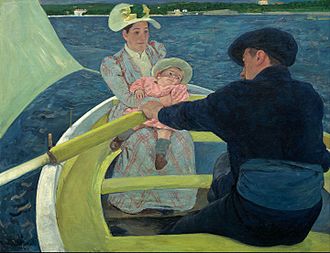
The Boating Party, Mary Cassatt
“We are going to keep her out of the hospital.”
Sometimes I wonder if it would have been better had Dr. Pipo not been successful. I don’t really mean that. I can’t look at the nine-year-old girl in bows the size of Belgium and tell her that I wish she’d had the salutary experience of ketoacidosis.
Besides, we were dealing with Dr. Lou Pipo, the Head of Pediatric Endocrinology at New York’s Westchester Medical Center. Fledgling Type 1 diabetics descended upon him from four corners of the world. We shared in the fast fellowship of the diagnosed. Formerly known as “juvenile diabetes,” Type 1 is often, but not always, diagnosed in childhood. Unlike Type 2, which affects 90% of diabetics, our diagnosis, “the bad kind,” is invariably insulin dependent. I played with new kindred spirits in the waiting room and added them to a photo album behind my eyes. Ajit smelled sweet and linked his arm through mine while we worked on a jigsaw puzzle. Chantal wore a pantsuit and let me braid her hair.
“Doctors do not have favorite patients,” Dr. Pipo explained as he attempted to measure my height. “But you are my favorite patient. We are going to get you on the cover of Diabetes Forecast.”
Dr. Pipo could not reach the top of my head to get an accurate measurement of my height, so from one quarterly visit to the next, I might go from five-foot-five to five-foot-two. He never acknowledged this variation, as though it were quite reasonable that I should grow and shrink like Alice in Endocrinological Wonderland. From my privileged position, I observed that his red hair was a single unit resting an inch above his head. I also observed that he looked like Paul Simon, who sang a song I liked called “Bridge Over Troubled Water.” Dr. Pipo took that comparison as a compliment. I brought him the novel I was writing, and he read an entire chapter even though children from many continents were waiting.
Dr. Pipo was there the night I was diagnosed. He announced that the only doors that had closed were flying a plane solo and becoming a Navy SEAL. Everything else was intact. Had I dreamed of those two measly things? No? Good. I informed Dr. Pipo that I dreamed of being the youngest published author and getting interviewed on the Today Show. I introduced him to my five stuffed cats. My mother informed him that she would be sleeping on the floor for the duration of my hospital stay.
The first several months of Type 1 diabetes are called “the honeymoon period.” Your beta cells are endangered, but they give their all. They have a sacred charge to brew insulin. As long as they endure, the new diabetic’s blood glucose is docile. Adhere to your meal plan and your insulin dose, and you will succeed in “good sugars” every day.
Then your last beta cells die off, and arithmetic becomes irrelevant.
My father recited “The Charge of the Light Brigade,” and I asked if one brave beta might survive the war. I thought of that cell, the last of its kind, accompanying me all my life. My father was certain. Yes, one would live forever.
But one cell would not be enough to prolong the honeymoon. Six months after diagnosis, my body realized it was married to an illness that wouldn’t go to counseling or respect yesterday’s compromise. Dr. Pipo had prepared us for insulin resistance, but it still felt like a betrayal. I held my syringes to the kitchen light as before, tapping the bubbles, with the orange cap between my teeth. But dinner now demanded fifteen units of insulin, not a modest seven. My plumb line turned Alpine. Normal blood glucose is 70–99 mg/dl. Gaudy readings of 400 found me under my blankets of compliance. Treating these highs invited daredevil lows: 50, 40, 20. My mother charted every peak and valley, color-coding hours and inputs. She presented her graph to Dr. Pipo. He tore it like Moses breaking the tablets of the Law. I started to cry.
“Save the logic for Statistics.” Dr. Pipo sighed. Having been there for thousands of bobbing buoys before me, he knew we could not count on old signposts. Learning to navigate by stars would take time.
Dr. Pipo knew my mother was in grad school to become a school psychologist. I told him about being her guinea pig as she learned to administer instruments for measuring narcissism or locus of control. I reported the most interesting results.
“I am highly neurotic and not a sociopath,” I told Dr. Pipo.
“I only trust neurotics,” he congratulated me.
Neuroticism was not bringing back my beta cells, but we would face this new chapter together. “You are what’s called a ‘brittle’ diabetic.” Dr. Pipo never sounded sad.
“So is Stacey from The Baby-Sitters Club.” I would not sound sad, either. I wrote a letter to the Baby-Sitters Club author, thanking her for making the diabetic the coolest and kindest baby-sitter.
“You can count on me.” Dr. Pipo stated the obvious. “We are going to keep you out of the hospital.”
In service to this goal, we acquired new numbers: Dr. Pipo’s personal phone lines. I already had both parents’ pager digits sewn into my backpack. Dr. Pipo gave us permission to call his house and his boat. “I do not give these numbers to everyone,” he told my mother. “But you can call me at any hour.”
I pictured Dr. Pipo on a ship like the Nina, the Pinta, or the Santa Maria, tiny Dr. Pipo mopping the deck beneath tall sails. Or maybe it was like the boat Jesus rode with the disciples. I imagined Dr. Pipo snoring in a thunderstorm, so tired from all his patients that he could sleep through anything. My father said it was probably more like a “James Bond boat,” which sounded too glamorous for Dr. Pipo in his wrinkly white coat.
I could not imagine we would ever have to call the boat. By the time I turned ten, we had to call the boat.
Without insulin as a chaperone, the body descends into delinquency. First, glucose will graffiti the bloodstream, stomping sticky footprints through the premises and making a microvascular mess. It will play volleyball in the parlor, spiking sugars and smashing chandeliers. All along, it will fancy itself a poet. High blood glucose feels like what it is, an awful recipe for caramelized limbs. The hapless host will drowse with nausea, as if she just ate all the fondant flowers on someone else’s birthday cake. Her arms will clog with syrup, and her baby teeth will grizzle with an invisible streusel. Glucose will spill over into her bladder, as though it wants to see what happens when you dump sugar packets in the lily pond. Her pee will become grog. Her breath will turn fruity, the business card of ketoacidosis. She will want nothing more than to sleep.
But Dr. Pipo knew how to win. He would not daydream in the captain’s chair while my body negotiated terms of surrender. Though not diabetic himself, after decades waist-deep in this maelstrom, he felt our roiling under his ribs. “You have to keep her awake. Hydrated. We are going to keep her out of the hospital. She must not go into DKA.”
Whether you are five-foot-two or five-foot-five, whether your hair is removable or long enough to sit on, you must not go into diabetic ketoacidosis, DKA. Dr. Pipo impressed this upon us like a sailor’s tattoo. You can stay home with a blood sugar of 500. You can sit like an elven queen in your parents’ bed if the urine stick stays beige. You can pee and pee until it seems you will float out your bathroom window. But once glucose spills toxic waste into your urine, you have to go to the hospital.
There is no reason you can’t succeed at staying out of the hospital.
All you have to do is drink a gallon of water an hour. You will stay ahead of the sugar. You will dilute the danger. You will greet the morning in your own bed, or, even better, your parents’ bed.
I did not sleep. I drank. Over the course of any one bad night, I drank three, four, five gallons, sometimes more. My stomach swelled like a cantaloupe. The water did its work. My mother acquired the entire oeuvre of Crystal Light to flavor the river. My father performed inaccurate renditions of The Proclaimers’ “I’m Gonna Be (500 Miles).”
High nights came without warning, but we perfected our protocol. We turned the tide every time.
My mother called Dr. Pipo with hourly updates. Awakened from slumber, he had to attend to his own little body first. “I heard him peeing!” she’d report, wearing the jaunty voice that inflated like a life vest when we were actively keeping me out of the hospital.
The liturgy became almost comfortable. My father carried the gallon jugs upstairs to the bedroom, and my mother brought me my plush cats and coffee table books. We read about Gnomes of Norway and Cathedrals of France. We discussed whether our family would have been elves or hobbits in Middle-Earth.
My parents did their best to keep things light. We turned on Country Music TV so my father, who preferred Vivaldi, could offer lively commentary: “This is both puerile and putrid. That man just used ‘honky-tonk’ as a noun, an adjective, and a verb. I would like to report his belt buckle to The Hague.” We laughed. I drank.
The procedure kept our heads above water. I drank a gallon an hour, held my parents’ forearms, and stayed out of DKA. When my stomach hurt too much to remain upright, Fig Newton, my first real cat, curled into a cinnamon roll on my solar plexus.
Fig Newton had been the consolation prize for my diagnosis. Until my beta cells started dying, the answer had always been “We have enough animals.” Our hamsters were proficient at replicating. But I dreamed of a cat. He came with the name of a cookie. I didn’t want to change it. My mother said he was an empath.
As each acidic night went on, my father attempted to match me gallon for gallon. He called Dr. Pipo on the boat. “She’s still pissin’ clear.” He did not tell Dr. Pipo that this was a line from a country song, and I laughed, which hurt.
We bested every five-gallon night. We called Dr. Pipo on the boat and in the bathroom. My mother put him on speakerphone so I could hear a world-famous doctor urinate without apology. I got sick of the cathedrals and gnomes. I never threw up. I started celebrating the anniversary of the last time I vomited, November 30 of the year before diabetes. My mother told me to stop doing that, but my father said it was okay. I asked Dr. Pipo if I would never vomit again. He said just to focus on writing my novel.
I wondered what would have happened if the pee stick turned purple and we couldn’t get it back to beige. My parents never seemed scared, except for one night when I was eleven. It was Country Music TV that did it.
We were snuggled in my parents’ bed, flipping channels and swashbuckling a blood glucose of four hundred fifty. Without warning, Country Music TV played a song that was not putrid or puerile. A man sang that he was sorry a woman cried at night. He “died a little each time” she cried. He could not help her while she “tried to hide all the fear she feels inside.” It was not written about a diabetic daughter, but all three of us heard the same thing at once.
My father’s big Johnny Cash body began to vibrate. His nostrils flared with unprecedented velocity. My mother leapt out of bed, but I had already seen her levees break.
“Mommy, come back.”
We sobbed and held each other. Fig Newton crawled onto my collar bone. We cried until I was thirsty, despite having three gallons of water on board. My mother pulled out the Encyclopedia of Bible Quotes and read from “Love of God, The” until I was under two hundred and peeing beige. We kept our perfect record. We thanked the Almighty and the one beta cell.
Twenty-nine years of nights later, I turned forty. I wrote thank-you cards to forty people who had saved my life. It was hard to narrow it down to forty. There was no question Dr. Lou Pipo would be among them. I did not tell him that my father had gone on to his reward. I did not tell him that I had not made it to the Today Show—yet. I thanked him for teaching me how to stay out of the hospital. I thanked him for staying with us across land and sea. He did not write back, but he might still.
Sometimes I hold my breath, wondering if I will keep my record. Type I diabetes does not get better. I still keep five-gallon vigils with cats and coffee table books. I text my mother before I get out of bed so she knows I have outlasted the night. There is no return to the honeymoon period. But time makes a marriage familiar, which can pass for comfortable. Doctors don’t use the word “brittle” anymore.
I am still afraid of ending up in the hospital. Would I have a different peace now if we had tasted defeat thirty-one years ago? We would have survived. I never gave my body the chance to learn that personally. I am still earning its trust. The leap of faith hits dry land.
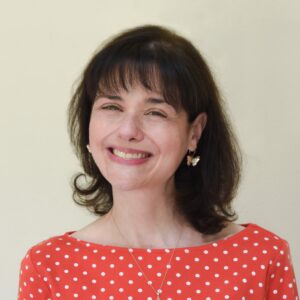
Angela Townsend is Development Director at Tabby’s Place: a Cat Sanctuary. She has an M.Div. from Princeton Theological Seminary and B.A. from Vassar College. She has lived with Type 1 diabetes for 33 years and makes sure to laugh with her mother every morning. Her work appears in Braided Way, Cagibi, Fathom Magazine, LEON Literary Review, and The Razor, among others. Angie loves life dearly.