
Weeds | Brett Ann Stanciu
From seemingly out of nowhere, in the middle of a sunny April afternoon not long before Easter, my mother called, gasping as if she had run up stairs with the phone against her face. “I have bad news.” I was irritated at her dramatic and simultaneously dreaded I would hear, This is it. My father is dead.
Not so. My father, who never cried, was crying in the kitchen. My sister, age forty-seven, had been diagnosed with breast cancer.
In utter denial of the Buddha’s mustard seed teaching, I immediately determined there must be some mistake, which I later amended to my own diagnosis, that my sister had a very minor variety of cancer. Perhaps, in fact, not really cancer at all. Like, let’s never, ever use that unspeakable word in our family again.
*
My sister’s right breast harbored a twisted mire of disease, spiraling through ducts that just a few years back had nursed her sons.
*
Shortly after I learned of her news, while my daughters were at school, I spent the better part of the day driving around, buying artisanal cheese and delicacies like macaroons, unusual pickles, smoked trout – items I didn’t usually buy; I bought a hundred dollars’ worth of yarn to knit a sweater for my sister; I chose books without regard to price. I spent as though, if I acted like a confident, run-of-the-mill, middle-class mother, I would only confront matching problems: perhaps a daughter’s less-than-perfect math score, a favorite shirt torn, a complaint about snacks. Fissures of fear threaded through me.
Driving home along a busy two-lane highway, I pulled over without thinking at a farm that had been abandoned for a few years. The fields, stretching down to a winding river, had once been planted in strawberries, but now in April lay black and bare in rough clumps, too wet for harrowing. Although no vehicles were in the circular drive, the sliding barn door had been left ajar, as if someone might appear from its interior darkness and step through. The farmhouse was a faded brick, fronted by a fancy veranda with four white-painted columns. In its time, the house had stood regally beside the road, bespeaking successful farming. Now the windows were boarded, blind within scalloped gingerbread, peeling in twisted curls, and the path to the door was no longer trodden down. A story I’d heard was the old man who lived here had farmed with hired labor, and the farm had grown ragged. When he died, none of the children wanted the farm, and the property was sold to an ambitious farmer in another county, who only wanted the fields to expand his own operation.
Cars and pickups and tractor trailers whooshed by on the highway, noisy and foul-smelling. I stood beside the shuttered farmstand where I once bought my daughters ice cream cones, chocolate or vanilla, with or without rainbow sprinkles. The stand’s Homemade Ice Cream! sign hung vertically by one nail.
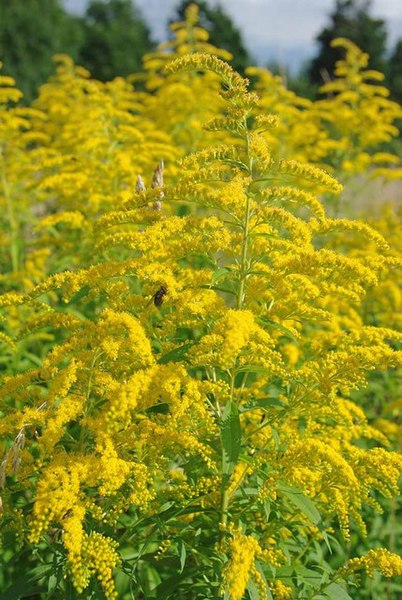
Along the house, last year’s weeds were dry and light brown, their feathery seed tops brushing the windowsills. They rustled a little in the breeze, like a lower natural wall between the earth and the house, a lovely pale russet in the ample sunlight. So early in the spring, the sunlight was unchecked by leaf shade, the sky swept clean of clouds. Although the road traffic roared without ceasing, I was in what seemed to be a very quiet and oddly private place, just me and the scattered gravel under my boots, the weeds in their wild glory, the sunlight and easy breeze around us. Worn down in my forties, in a washed up and troubled marriage, I realized how much I would hate to leave this life, so dearly beautiful. I stood there for the longest while, in a space not within time, mesmerized by those dry weeds, no longer even nameable to me in death— although likely I had known what they were in life—the breeze tickling strands of hair across my cheeks.
*
Arrange these weeds then, beside my sister’s back. My sister, her husband, and I are clustered in a surgeon’s office, her chest draped in a cotton robe. We’re talking removal, reconstruction, recovery, prognosis. None of this do we want to discuss. Yet we are all listening intently, her husband and I writing notes and questions. This is brutal business. Then my sister disrobes, and I see her back. My sister is forty-seven, not two years older than me, and I am transported back to our childhood, when I saw so much of my sister, her skin darker than mine, sprinkled all over with her flat dark moles. There’s nothing hairy and off-putting about her back; her skin is glossy and tanned and sleek with muscles that are not ostentatious but complement her body. Her moles are like glassy jewels, bits of variety in the landscape of her body, like the curls of opened seedpods in that wall of weeds. Part of me longs to lay my hands against her warm shifting skin and learn the constellation of her markings, the intricacies and mysteries of her beauty. As the younger and smaller sister, I was always trailing behind her, enamored. Among so much else, how much I envied her skin, how greatly I admired it, so smooth, so different from my unsatisfactory paleness. Studying her back, I realize how much I love my sister.
Later, flying away from her and her cancer, over the curve of our hard-stomped earth, I realized my sister’s back reminded me of those weeds against that abandoned house. How alive and beautiful my sister is. And yet within her—not to culminate this day, not next week, perhaps not for decades, life is long, life is long— her death is already growing. I had been reading Carl Hoffman’s writing about the Asmat in New Guinea, and in my grief-altered mind, I was able to veer slightly out of our so American and so practical, literal world, sensing how the realm of death infuses every bit of this tangible world around me. How the ebbing and lifelessness of my marriage rooted at its very inception. Even as the two of us walked down that grassy path to the white-painted trellis we were married beneath, the happiest I thought I could ever be, had I looked, I would have seen the thinnest strands of black rot.
*
The year I began living with the man I would marry, I wore a thrift store jean jacket. On the left shoulder was sewn an embroidered patch of the yin yang symbol. I saw that symbol in a hospital-corners kind of way, a variation of take a little of the bad with the good. That jacket has long since met its demise in a rag heap, but I snipped off the patch and saved it in a memento box of my earlier, more carefree days. In the very heart of the white teardrop I perceived as joy, I now see a center of despair and blackness. In the curve of decay and demise is the throbbing purity of life. Naively, I had always considered this everyday existence life; death was an experience to be encountered at some undetermined future date. I had blindly ignored the reality that from our very birth our bodies are already traversing the arc toward death.
This bodiness is what I return to, over and over. The body of that cancer eating the body of my sister. My sister’s body, her corporeal life.
Much as I like to believe I am commander of my destiny, captain of my sails, suffused as I am with American optimism and bravado, I know that if our society embraced death, I would be a different woman. If I slept like a Benedictine monk in my coffin, if, like the Asmat, the skulls of my ancestors were in my abode, rather than banishing death to the somehow maligned or unfortunate, boxed up in funeral homes and basement morgues, hidden away in the bowels of cement buildings, I would have known this with every bit of my being long ago. I would have seen an apple not merely as glossy skin and succulent juice; I would have seen it as a fruit to feed my teeth, but also as tree flesh that will smear through my intestines as putrid shit.
Or perhaps not. How inconceivable it is that each year I pass the anniversaries of my children’s treasured birthdays and simultaneously but ignorantly pass through the singular days of their unmet deaths.
In the end, perhaps, in the wider narrative where time and place slow down into the infinite stillness of a handclasp, there is no end. Our living days are but a small splash, a mere moment, of light.
*
Last night, as my family lingered outside in the long summery dusk, as day dove gracefully down into dusk and headed into dark, I sat on the steps and watched my daughters chase fireflies, their cupped hands catching the blinking creatures, and then magically opening their fingers and releasing their captives. As the country dark came down solidly, my two daughters disappeared into its blackness. Around the house, then beyond the apple tree, I heard my children’s voices, “Where are you? Sissy, where are you?” laughing at the darkness separating them. “Mommy,” my younger daughter called, “let’s stay out all night!”
Rave on, I thought to myself, oh, beloved daughters, rave on.
Brett Ann Stanciu is the author of Call It Madness (Regal House Publishing, 2026), Unstitched: My Journey to Understand Opioid Addiction (Steerforth Press, 2021), and Hidden View (Green Writers Press, 2015). A recipient of a 2020 Vermont Arts Council Creation Grant, her writing has appeared in numerous publications. She lives in Hardwick, Vermont, in a 100-year-old house surrounded by yellow flowers and received a 2024 Fellowship to the Vermont Studio Center for the Arts.