
Wound Care| Jason Prokowiew
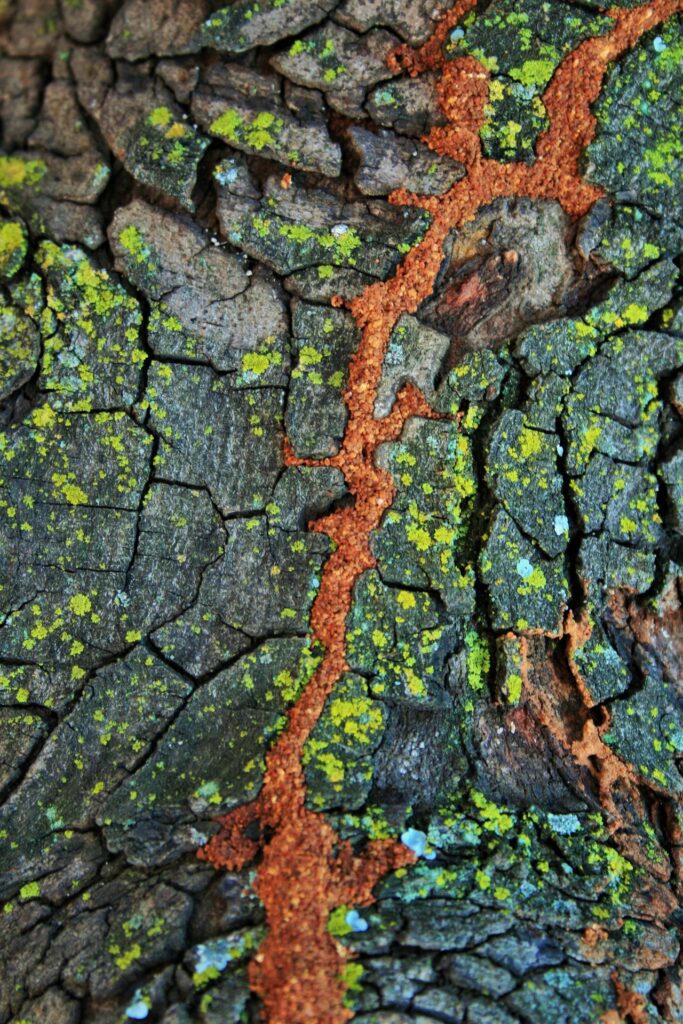
Photo by Lynn Greyling, Public Doman Pictures.net
I’m knee-deep in powdery snow, slick and untouched—stretching from the unfamiliar driveway I stand on to the front steps I shovel toward. Another man pulls up in a sedan, retrieves his own spade from the trunk.
We press the tools we were told to bring into the smooth, glistening white surface, cracking apart the perfection; as instructed, we don’t speak. I hear our shovels’ plastic edges scrape walkway cement underneath, the continuous thuds as we toss snow aside to clear a path.
Five minutes pass, my sweat turns cold under my flannel shirt, I look to the other man and note his backward baseball cap, his five o’clock shadow, his dimples when he raises his eyes to mine before dropping them again. I guess he’s close to my age of twenty-nine. We’ve nearly reached the steps when the man who called us here exits the split ranch home. He’s gray-haired, a good twenty years our senior, and mustached, clad in a robe, sweatpants, and slippers. He surveys us, cigarette in lips, from just outside the front door. No one says anything until we’ve cleared the walkway, and the other man and I stand before him.
He looks us over, up and down. Our coats un-buttoned, our perspiration-soaked shirts exposed to the rushing air.
“You stay,” he says to the other man. “You go,” he says to me. I nod and walk to my car, toss my shovel in the trunk.
They disappear into the house. I back my car out the driveway. It feels correct that he chooses him over me—he looked more rugged, more masculine—qualities I assume make him more universally attractive than me. As I set my car into drive, I look one last time at the house, as the man in charge closes the door and shuts me out. It’s a final blow, watching the glass outer-door seal against the outside world, against me.
It hurts under my skin. I melt into my seat and drive home in the quiet, just the woosh of my tires through the melting slush mixing with this sweet familiar feeling of not being chosen. It’s what I came for.
In another reality, he sends the other man away. He likes his boys more delicate. Inside, I follow him around the unknown interior, waiting for him to sit, spread his legs, pull open his robe, and tell me to suck his dick. I suck it to completion, probably swallow—because who is going to choose spit over swallow—but the choice would be his, not mine.
I’d have liked that, but it’s not what I want today. I want to be in my car, rejected, rushing home to return to my bedroom—darkened even at mid-day because I’ve pulled closed all the curtains, because I want the sparse light to match how I feel inside. I pull my laptop onto my thighs as I sit on the floor, back against my bed, and log on to the hookup site again, scroll through profiles of headless torsos, exposed bodies, sometimes faces, descriptions of what each person wants, looking for more of the same, looking to scratch at a wound almost as old as I am. If I’m going to call this a good day, I’ll find one more opportunity to claw at the insides of myself, at the pain that so badly wants to be aggravated—not healed. It’s what I know to do to it right now, as it reminds me that I’m alive.
***
Growing up, my family helped me carve out this place in myself. Dad drank almost a whole bottle of Jack Daniels daily and turned cruel. Mom kept us close to him. I locked myself away, alone, behind my bedroom door most nights, while they raged a decades-long battle in the rest of the house. Every night he called her and us “stupid” or “ugly” or “useless.” “All you do is spend my money; you bring nothing to the table.”
An hour before he arrives home from work and starts pouring lowballs of Jack, it’s just me and Mom. I’m seven, watching from one of the wrought-iron seats on the other side of the kitchen island as she sautés ground beef for a chili con carne or empties a can of Campbell’s Cream of Mushroom soup over a panful of raw chicken breasts and sliced yams. I play with my He-man action figures on the island, thrusting their muscular bodies at each other while I watch her, and she watches me, and we have a nice time. When Dad’s Town Car pulls into the driveway, I use the bathroom before I scurry to my room, where I stay until he passes out around 10 pm. From my side of the door that separates us, I hear screaming—his and hers—that soaks into the contours of my little brain, teaching me to fear home, that home is loud and dangerous. If I need to pee, I hold it until a time when a googly-eyed, wobbling drunk won’t pounce on me for moving through his house.
I want us to leave. I don’t understand that we need the money he makes, or that we only have one car, or what I’ll know eventually: we’ll never go.
One morning when I’m seven, while I’m loading my backpack with homework and a few Care Bear figures, Mom races from her bedroom into the living room where I stand, my father just behind her, chasing her down but not quite aggressively. There’s timidity to his face and gait. He must have done or said something really bad to have switched my mother from just taking it to looking like she’ll keep moving forward and never look back, like she looks just now. When he catches her arm and turns her body toward him, it’s almost gentle, or looks gentle on the spectrum of violence in our home. In one fluid motion her body turns to his, her arms lift, she makes fists and pounds them against his chest, and she spits, “I hate you, I hate you, I want you out of my life.”
It’s the first and only time I hear her say what I knew immediately I longed to scream.
I don’t go to school today. My oldest sister Renee, born twenty-two years before me, comes from forty-five minutes away. She, like most of my ten siblings, left this house as soon as she could. It’s just me, the youngest, and my sister Chantel, five years older than me, who prepare to go with Renee. My brother David, eight years older than me, stays behind, sleeping over at friends’ houses more often than not. The others, they’ve already escaped. Mom, Chantel, and I load garbage bags full of clothes and toys into the cab of Renee’s pickup truck. I ride between my sisters and mother, silent as the morning radio station pours bad jokes and Top 40 music from Michael Jackson and Whitney Houston into the void we don’t otherwise fill. Renee transports us to her house, where she lives with her parakeet Buddy. She has only one bed, so Mom and I sleep in sleeping bags on her living room floor, Chantel sleeps in Renee’s room. We don’t speak of home, of how it’s scary, how my father’s fists bruise and break his children’s skin. These stories are off limits. We watch the latest episodes of Golden Girls and Who’s the Boss? Mom’s teary, I’m happy, stretching my legs out on the floor, existing out in the open with Mom, hearing Buddy’s occasional chirps.
In an alternate world, we stay here. Mom lands a job or takes Dad to court and makes him pay for my He-man figures and Coco Puffs. We live with Renee, and Buddy’s my best friend. I transfer to the local school, eventually graduate. We find a bigger place with a room for each of us. My father stays in the rear-view.
In reality, a week after we arrive at Renee’s, we leave, clothes and toys once again tossed into bags. We return to unsafe, to fraught, to my nerves always at the ready, waiting for the grizzly man with the scratchy gray mustache and liquor sweats always on his brow, to come home.
They trace a blade over my fresh white skin, Mom and Dad. He punctures it first, and the blood flows. He pours whiskey into the gash, letting me know his drink is more important than my well-being. I won’t know what well-being is, not from the home I grow up in. When Mom brings me back to his house, it widens the tear, lets me know that it’s better she stays married—that she fights with him for five hours a day while I hide—than go it alone.
***
When I finally left for college in 1998, I moved halfway across the country, from Massachusetts to Ohio, to give myself space from them—though I hardly understood that at the time. I carried the wound with me, searching unconsciously for those who knew how to help me keep it open. My closest new friend, another freshman named Acacia, kept canceling plans with me for the entirety of our first year at school when she liked a boy, then another boy, then another. I offered my friendship, my constancy, and she reveled in it, calling me “best,” laughing, connecting with me, until the next boy came around, and she left me for him, no matter what.
I’ll say to her what I never said to my mother: I hurt.
Toward the end the year, I invite her for lunch at a local restaurant where customers order fat, succulent burgers and tater tots. When I open my mouth to tell her we have a problem, that she keeps abandoning me, my eyes won’t stop shedding tears that pool on my plate alongside salty vinegar tots. I don’t cry easily—I still don’t—but there, far-removed from the starting-place of the wound, exposed to a friend, I unleash decades of pain, for the first time in my life, and can’t stop. It’s embarrassing. Surprising. Acacia’s face pales. She moves beside me in the restaurant booth, pulls endless napkins from the silver dispenser on the table, dabbing my eyes, wiping my chin, rubbing my back. I don’t recognize myself bawling, my body doing what it hasn’t allowed itself to before there in the crowded Midwest restaurant, as my friend blushes, hears me when I observe how she puts every boy she fancies above our friendship. She promises it won’t happen again, but in almost no time, it does, and again, and again.
It happens again and again in other friendships, and with lovers.
My first college boyfriend chooses his friends when I don’t fit into their group dynamic easily.
My next boyfriend, a boy I adore, with almond-shaped spaces that hold his brown-sugared eyes, smokes a lot of pot. I’m twenty-one, straight-edged, and between our long make-out sessions in my twin bed, come up against my belief that weed use sullies one’s character. When we talk about it, I declare that the pot is a deal-breaker for me. The sugar dissolves from his eyes, but his mouth is sweet as he says he’ll stay with the pot over me.
It’d been twenty-one years of this for me, so I got it. It wasn’t a matter of “if,” but when—and what—would matter more. The wound throbs, telling me a story about how sugar eye’s choice reflects on my worth. We break up outside under a streetlight, no one else around; I grip the lapels of his jacket, not sure I want to let go.
“I’m sorry,” I say.
“Not everything is your fault,” he says, and his words remain for me to unpack later and for years.
I understand now, as a man approaching fifty—more than twenty-five years later—that he didn’t keep smoking weed because I was innately unlovable, though that’s what the wound whispered. I believed its lies, and that he, Acacia, my family, saw the truth of my unworthiness, my inherent lack—which was my fault—and acted accordingly, like anybody would.
***
I was nearly thirty when I returned home from shoveling the stranger’s driveway.
I didn’t know how to heal the wound and couldn’t imagine life without it. Without it, how could I bear the weight of life’s loneliness? So, I touched it: a press of my finger into the hole, I exhaled slowly. There you are. You never leave me—I can always find you just under the surface. I flicked my finger inside. It comforted me to slide a hand under the open skin, and feel what was always there. It was me. I was it. We at least had each other.
In an alternate storyline, I identified the wound sooner. Though it tempted me with its familiarity, to just keep living with and irritating it, I didn’t. Perhaps in my twenties, I found help, maybe a therapist, and worked my way through the trauma. I heeded advice to stop picking at the wound and let it heal. Observed it, but didn’t encourage it. This is fiction.
In reality, I drove through my twenties—down the highways connecting my home in the suburbs to my job in Boston’s heart—certain I was marred. Siblings and friends made new families and left me behind. I’d been alone since childhood, and nearly three decades by myself left me certain this was life. I wasn’t totally alone, because loneliness, like the wound, felt tangible—a friend that rode shotgun and always would. It sat heavy on my chest, satiated when I considered whether anyone would care if I disappeared, if I just stopped being at all. I tried fending the loneliness off with success, with busyness, with all-night clubbing, with exercise. It was always unshakably with me—like a dense cement cradling my organs.
***
I dated a kind man in my mid-twenties for four unsteady years. Our chemistry was energizing—we constantly unloaded his balls into me or mine into him, cracked our heads together from sex that demanded our bodies be forever finding new ways into each other, but after the sex, he became one with his video games or slept away whole days. After our sex I felt it again: alone, and perhaps that’s why I stayed so long. He got me off, but he fed my wound. He was familiar, he was family as I knew it.
“Stop playing video games,” I demanded eventually, afraid of a life I’d seen lived at home where something parasitic—outside the people in a relationship—becomes more important. The wound delighted in its own relevance each time he disappeared, for days, into a pixelated world.
“See, you need me,” it said, as I called my boyfriend’s name, and he struggled to turn his head from the screen.
“Talk to me. Focus on us. Turn off the game and go for a walk with me. Change,” I said.
“I can’t change any more than I already have,” he said, and at my age of twenty-eight, that wasn’t enough for me.
The wound “tsked” its tongue, suggesting I stay.
What a gamble, to believe that by leaving the place with my boyfriend where I felt alone, with just an emotional rip for company, I’d move toward something else, something better. I left, despite decades-worth of evidence that life was always going to be some version of the same. And just because I left, didn’t mean I wouldn’t feel called to find some other similar situation, where the wound and loneliness could thrive.
***
The therapist I see in my early thirties asks me to write down my most traumatic childhood memories. She assigns me a book called Getting Past Your Past, written by Dr. Francine Shapiro, who suggests there are five or six memories that most people carry around with them like pocketed stones, weighing them down, anchoring them to their past.
I list seventeen such memories.
In one, I’m about ten, at the end of a lunch period in my grammar school cafeteria, surrounded by other misfit boys who make up my friend group. I’m the fattest boy in school, my friend Mike the second, our friend Steve has the biggest ears, and Ian’s British—his accent reason enough for kids to look askance at him in our suburban Boston town. As the hundred or so children at lunch discard empty brown paper bags into garbage bins before scattering outside for recess, our grade’s worst bully Russ towers over our table, commenting on fat-boy boobs, dumbo ears, and weird voices. We weirdos take it in silence until I snap, tell Russ to leave us alone. He focuses his vitriol on me and my boy breasts. I lick the edges of an ice cream sandwich, and he inquires whether “Fatty really needs” the sugar.
This is like any other day of fifth grade for me; what happens next distinguishes the memory. Russ spits on the edges of my sandwich, and in defiance I bite away the part where he unloads. Only, I lie, even to myself when I recall it as spit. In truth, Russ covers one of his nostrils and blows a booger onto my food, which I don’t realize as I run my tongue over the glob. For years, it feels easier to call it spit. After I lick the booger away and swallow it, its round hardness courses down my throat. Russ names it out loud as what it is, for his friends and mine. It’s too late to spew it out, it’s in me. His friends laugh, call me gross.
My therapist asks what language lives in my brain now because of then.
“I’m worthless. I’m insignificant,” I say.
If my family created the wound, much of my community enforced the idea that I was of such little worth in a fat body, I was a physical place for others to discard their trash.
A wound is also a hole where trash collects.
I equal the wound.
My therapist asks me to sit in the memory, to let the spectrum of feeling that fans out as I remember, to wash over me—fear, anger, sadness, loneliness. All the hurt I learned at home or school to suppress, in my thirties, I open to.
I’d already come to understand that Russ was an asshole, that he acted callously. My brain logically knew this, but I lived frozen in that time and place for over twenty years, until I sat with, verbalized, and felt the underlying beliefs that lived within the memory. The wound hums quietly through this process. I’m unsure what it will be on the other side of these sessions.
After a while revisiting the trauma, my therapist asks that I rate the sting of the memory on a scale of one to ten, where ten suggested the pain is nearly unbearable. Through several revisits to the memory, I shift its power from a seven to a three, a number I can better live with, and a memory I can perhaps get in front of. My present doesn’t need to be just a reverberation of before.
I speak back to the moment, tell it squarely that, even though the event happened, I was worthy and significant regardless.
The memory is a psychological totem to the wound, evidence of the worthlessness I hold as truth about myself. The memory tumbles from its place as proof positive of my worthlessness to a thing that happened more so because of external factors—a bully, a school where bullies went unchecked, a time when bullies thrived. Making sense of the time and place that birthed a memory is one way my wound begins to heal.
With this therapist, I observe the wound’s roots: my father’s wartime loss is massive. At ten years old, he was at summer camp outside of Minsk, Belarus, when the Nazis invaded his country. He returned with his camp counselors and friends to the edge of their city, now occupied and burning. His counselors sent the children into the city to find their families, promising they’d meet them at the edge again tomorrow if they couldn’t find anyone. My father found his apartment in shambles, himself alone, and the next day, no counselors or campers met him. From then, he was alone, never saw his mother again. With the family he creates with my mother, he will always need the greatest share of oxygen in a room; my mother’s needs in her family of origin, forsaken for her father’s alcoholism—her mother committed to staying with him—Mom just replayed with me what she’d known from her own mother.
From these starting places with my parents, I see that I have no idea what being put first feels like. I have no models, so I imagine, for three years in therapy, what that might be like.
I abstain from picking and pulling at the damaged tissue, letting it be, though it aches for me to rip at it, to open it once more to the air and let it wheeze. For three years it calls to me, “pay attention to me, touch me,” and for three years I bite my lip, wanting to scratch and bleed.
Each day is different: days when I forget about the wound; days when I lie in bed with it taunting me, “Scratch me, scratch me, I am always going to be here. Find another driveway to shovel, another man to remind you what you’re worth.”
My therapist cautions on the hardest days, “Mental health is a journey, not a destination,” encourages me to just get through the moments when the wound screams its loudest.
Some days look like rising, some look like crawling on the floor, as I try to want something different, as I coax my nerves to consider new paths.
***
I meet my now-husband Dave through a dating website in 2010, when I am thirty-three, and he’s thirty, after three years in therapy spent locating the wound, naming it as such, exploring its contours and behaviors, and shifting how I interact with it.
In our early days together, Dave and I go away with his friends and I don’t fit into their dynamics. We laugh at different things. I’d been there before, so I try breaking up with him outside a cabin in Maine. I tell him, “I don’t fit in with your friends,” and he says something I’ve never heard before, something like, “So we won’t hang out with them again like this.”
And we don’t, and he changes the structure of how he hangs out with them, so that he keeps the friendships but also me.
After we crest six months together, I’m driving in my car alone down the long, monotonous stretch of Route 2 that connects Boston to my home in central Massachusetts, and I can’t feel it—the loneliness of a whole lifetime. I lower my radio to investigate, to tread the well-worn path to the coldness. I can’t. Whatever that vastness was, is gone or dormant. Whatever had always said, “you’re on your own, I am all you have,” says nothing. I cry a bit, because I’ve never felt life without its cling.
When Dave and I move into our first apartment together two years after meeting, my sister and Dave’s parents help us carry boxes into the flat. When my hand catches on a nail protruding from a doorframe, and blood gushes from the hole, Dave drops what he carries to find a first-aid kit. He tends to my wound with antibiotic ointment and a bandage, like there’s nothing in the world but the trauma he needs to care for. My sister, perhaps harboring a similar internal wound of her own, herself married to a man I’ve never seen put her first, watches.
“The day my husband cares for me like that…” she says, her voice trailing off as she exits the room.
I’m surprised to learn that my presence soothes Dave’s wounds. I, who for decades believed himself not worth much, lessen for him a grief he felt before me. His is not grief given to him by his parents, like mine. He’s felt the solitary sadness of his Queerness—his childhood through young adulthood spent concerned that his family’s love isn’t big enough to hold the real him. But before he turns twenty, he tells them who he is, and the love expands to hold this part of him, too. The love expands again, making room for one more, when he and I fall in love. Still, Dave knows grief, and I know how to be kind to it. Each of us gently touches the other, careful with our softest spots where precarious, translucent scar-tissue formed.
Through our years together I learn new ways to tend my wound—firstly, by allowing him to tend it for me and with me. I explain it to him as I learn of its depths and breadth.
Wound care is the cup of tea he steeps for me unasked; the way we find each other’s hands at night in our sleep and squeeze; the way he gets on the ground next to me and rubs my back on the days when I crawl—when a passing thought about my childhood turns into my weeping and careening into blight, questioning out loud, and to no one in particular, why no one cared; how, as I begin to untangle myself from a family that will never treat me with the respect I want for myself, he stands aside as I figure it out, never pushing me to engage again with my attackers, even as a society at large and well-meaning people opine, “family is everything.”
Wound care is the family we build together, the ancient ideas we dismantle, even as our knuckles bleed from the deconstruction, and the space we leave for wounds to breathe, and for laughter to break through rough days. Wound care is the community we build amongst friends, healers, and doctors, so that it’s not just us carrying the weight.
The old path to my hurt persists, but there are other ways to exist, and to live in truce with the remains. I know I could cut myself open now, and feel that old, familiar version of alive again, hollow and eerie. I could find another man’s snow to shovel and never be let inside. I could surround myself with my family of origin, and go unheard, unseen, be told “shhhhh” when I yelp in pain. There are ways back there. But I’ve learned of choice, of the option to live with a scar rather than an open wound. Day by day, I choose scar.
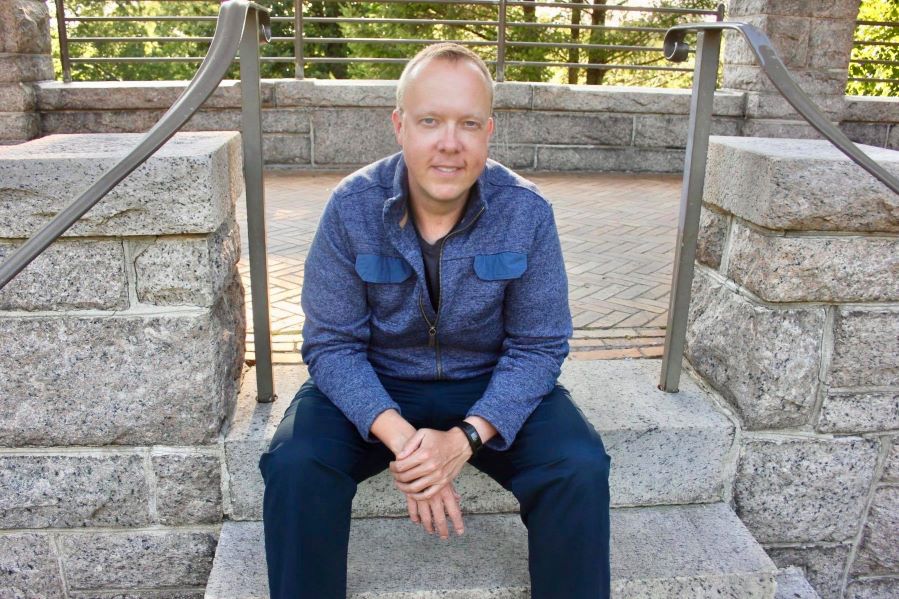
Jason Prokowiew received the PEN America/Jean Stein Grant for Literary Oral History and Fulbright Scholar Award for War Boys, his braided memoir about his Russian father’s adoption by Nazis during World War II and the trauma he carried into parenthood. War Boys won the 2025 Aurora Polaris nonfiction Award and will be published by Trio House Press in 2026. His writing has appeared in The North American Review, The Guardian, Salon, Roxane Gay’s Emerging Writer Series, “The Audacity,” and Brevity. He’s a recovering attorney who lives in Connecticut with his husband Dave and their greyhound Champ.